
Fall Cleanup Checklist for NJ Homeowners
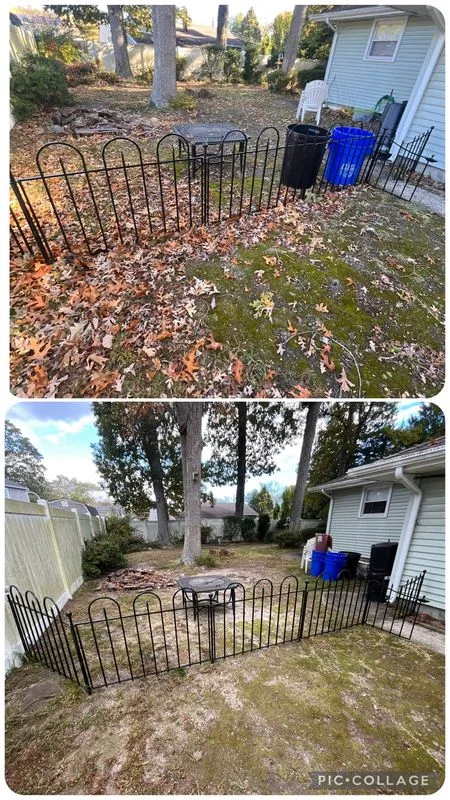
Fall in South Jersey is one of the most beautiful times of year. The oaks, maples, and sweetgums across Atlantic County light up in shades of red, orange, and gold. But once those leaves start dropping, the clock starts ticking on your fall cleanup window. Getting your property ready for winter is not just about curb appeal -- it is about protecting your lawn, landscaping, and hardscapes from the freezing temperatures, ice, and heavy precipitation that New Jersey winters deliver.
Whether you live in Egg Harbor Township, Galloway, Hammonton, or anywhere else in the Atlantic County area, this comprehensive fall cleanup checklist will walk you through everything your property needs before the first frost. And if the list feels overwhelming, remember that the team at Sean Patrick Services handles fall cleanups for homeowners across the region every season.
Why Fall Cleanup Matters More Than You Think
Many homeowners treat fall cleanup as an optional chore -- something to get to if there is time. In reality, skipping fall maintenance can lead to costly problems that show up in spring. Layers of matted leaves left on your lawn over winter will suffocate the grass beneath them, creating dead patches that require reseeding or resodding. Debris left in garden beds can harbor pests and fungal diseases that attack your plants when they are most vulnerable.
Here in South Jersey, our climate creates a unique set of challenges. We get enough cold weather to stress warm-season grasses, but our falls can be mild enough that weeds keep growing well into November. The sandy, acidic soils common in the Pine Barrens region and along the coast drain quickly, which means fall is your last chance to add organic matter and nutrients before everything goes dormant.
A thorough fall cleanup also sets the stage for a much easier spring. When you clear debris, trim back perennials, and protect your beds before winter, you will spend far less time and money getting your yard back in shape once the weather warms up again.
Leaf Removal: The Foundation of Fall Cleanup
Leaf removal is the single most important task on your fall cleanup list. In Atlantic County, peak leaf drop typically happens between late October and mid-November, though some oak species hold their leaves well into December. Waiting until every last leaf has fallen might seem efficient, but allowing thick layers to accumulate on your lawn for weeks causes serious damage.
Here is what you need to know about effective leaf removal:
- Do not let leaves sit for more than a week. A thin layer of leaves can block sunlight and trap moisture against your grass, encouraging snow mold and other fungal diseases. Once leaves get wet and matted down, they become much harder to remove.
- Mulch light layers directly into your lawn. If you have a light scattering of leaves, running over them with a mulching mower breaks them down into small pieces that decompose quickly and actually feed your soil. This only works for thin layers -- if you cannot see the grass through the leaves, you need to remove them.
- Blow or rake leaves out of garden beds. Leaves packed into the crowns of perennials or piled against the base of shrubs create perfect conditions for rot, pests, and disease. Clear your beds thoroughly.
- Keep leaves off hardscapes. Wet leaves on driveways, walkways, and patios create a slipping hazard and can stain concrete and pavers. They also clog drainage channels and cause water to pool where it should not.
- Clear leaves from storm drains. Clogged street drains lead to flooding during fall and winter storms. Keeping the drains near your property clear is a simple step that protects your home and your neighbors.
For larger properties or heavily wooded lots common throughout Galloway and Hammonton, professional leaf removal services can save you days of work. Our crews use commercial-grade blowers and vacuum systems that clear an entire property in a fraction of the time it takes with a homeowner-grade rake and tarp.
Garden Bed Cleanup and Cutting Back Perennials
Once your leaves are handled, it is time to turn your attention to your garden beds. Fall bed cleanup is about removing spent growth, managing plant health, and setting up protection for the colder months ahead.
What to cut back in fall:
- Hostas and daylilies -- Once the foliage has yellowed and died back naturally, cut it down to a couple of inches above the soil line. Leaving dead hosta leaves over winter invites slugs and snails to lay eggs in the debris.
- Perennial geraniums, catmint, and salvia -- These can be cut back to tidy mounds. They will regenerate vigorously in spring.
- Iris -- Trim the fans to about six inches. Removing the dead foliage reduces the risk of iris borer, which is a common pest in New Jersey gardens.
- Spent annuals -- Pull out all dead annuals, including their roots. Add healthy plant material to your compost pile, but discard anything that showed signs of disease.
What to leave standing through winter:
- Ornamental grasses -- Their dried plumes add winter interest and provide shelter for beneficial insects. Cut them back in early spring before new growth emerges.
- Coneflowers and black-eyed Susans -- Their seed heads feed birds through winter and look attractive covered in frost or snow.
- Sedum -- The dried flower heads hold up well through winter and add texture to the garden.
- Evergreen perennials -- Plants like coral bells and heuchera retain their foliage and should not be cut back.
While you are working through your beds, this is also a good time to pull any lingering weeds. Weeds that go to seed in fall will create major headaches next spring. Edge your beds cleanly, and you will have a sharp, well-maintained look even through the dormant months.
Fall Aeration and Overseeding Your Lawn
If you only do one thing for your lawn in fall, make it aeration and overseeding. Fall is the absolute best time to aerate and overseed your lawn in New Jersey, and missing this window means waiting an entire year for the next opportunity.
Why fall is the ideal time:
- Soil temperatures are still warm enough for seed germination, but air temperatures are cooling down, which reduces stress on young grass plants.
- Weed competition drops significantly in fall. Summer annual weeds are dying off, and winter weeds have not established yet.
- Fall rain provides consistent moisture without the intense evaporation of summer.
- New grass has the entire fall and following spring to establish a deep root system before the stress of summer heat.
The aeration and overseeding process:
- Core aerate first. A core aerator pulls plugs of soil out of your lawn, relieving compaction and creating channels for air, water, and nutrients to reach the root zone. This is especially important for the heavy-traffic areas of your yard and for properties with clay subsoil beneath the sandy topsoil common in parts of Atlantic County.
- Spread seed immediately after aerating. The holes left by the aerator are perfect seed-to-soil contact points. Use a high-quality tall fescue or fescue-bluegrass blend suited to South Jersey's transition zone climate.
- Apply a starter fertilizer. A phosphorus-rich starter fertilizer gives new seedlings the boost they need to establish quickly.
- Water consistently. Keep the seeded areas lightly moist for the first two to three weeks. Light, frequent watering is better than deep, infrequent soaking until the seeds germinate.
Our lawn care team performs aeration and overseeding throughout September and October across Atlantic County. Timing matters -- the ideal window in South Jersey is typically mid-September through mid-October, when soil temperatures are between 50 and 65 degrees Fahrenheit.
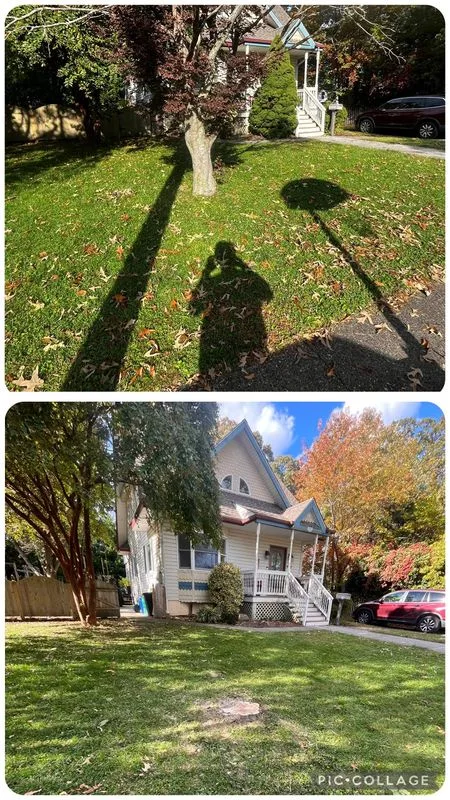
Mulching for Winter Protection
A fresh layer of mulch applied in late fall serves a different purpose than the mulch you put down in spring. While spring mulch is primarily about moisture retention and weed suppression, fall mulch acts as insulation for your plant roots during the freeze-thaw cycles that are common in South Jersey winters.
Here is how to mulch effectively for winter:
- Apply two to three inches of shredded hardwood mulch around trees, shrubs, and perennial beds. Avoid piling mulch directly against tree trunks or the crowns of perennials -- leave a two-inch gap to prevent rot.
- Mulch newly planted trees and shrubs heavily. First-year plantings are especially vulnerable to frost heaving, where freeze-thaw cycles push plant roots out of the ground. A generous layer of mulch moderates soil temperature swings and keeps roots insulated.
- Consider mulching over root zones of tender plants. If you have borderline-hardy plants like certain hydrangeas, gardenias, or crape myrtles, a thick mulch layer over the root zone can mean the difference between survival and replacement in spring.
- Do not use fresh wood chips. Fresh chips rob nitrogen from the soil as they decompose. Use aged, shredded hardwood mulch instead.
You can also use shredded fall leaves as a free mulch alternative. Run them through your mower or a leaf shredder, then spread them over your beds. Whole leaves tend to mat together and repel water, but shredded leaves break down beautifully and add organic matter to your soil.
Gutter Cleaning and Drainage Maintenance
Clogged gutters are one of the leading causes of water damage to homes in the fall and winter months. When leaves, twigs, and debris fill your gutters, rainwater has nowhere to go but over the sides -- and that water ends up pooling against your foundation, seeping into your basement, or freezing into ice dams that damage your roof.
Your fall gutter maintenance checklist should include:
- Clean all gutters and downspouts thoroughly. Remove all debris by hand or with a gutter scoop, then flush the system with a hose to check for proper flow and spot any leaks.
- Check that downspouts direct water away from your foundation. Downspout extensions should carry water at least four to six feet away from your home. If your extensions are cracked or missing, replace them before winter.
- Inspect gutter hangers and brackets. Heavy, ice-filled gutters can pull away from your fascia board. Tighten or replace any loose hardware now, while the weather still allows for comfortable outdoor work.
- Consider gutter guards. If your property has a lot of trees close to the house, gutter guards can significantly reduce the amount of debris that accumulates and cut down on how often you need to clean.
- Clear yard drains and French drains. If your property has any in-ground drainage systems, make sure the inlets are clear and the pipes are flowing freely.
Water management is critical in South Jersey, where heavy fall rainstorms can dump several inches in a single event. Making sure your property drains properly before winter prevents foundation issues, landscape erosion, and ice hazards on walkways and driveways.
Preparing Irrigation Systems for Winter
If your property has an in-ground sprinkler system, winterizing it before the first hard freeze is essential. Water left in the pipes, valves, and sprinkler heads will expand when it freezes, cracking pipes and breaking components that are expensive to repair in spring.
The winterization process, also called a sprinkler blowout, involves:
- Shutting off the water supply to the irrigation system at the main valve.
- Draining the system. Open manual drain valves at the low points of the system to let gravity remove as much water as possible.
- Blowing out remaining water with compressed air. A professional-grade air compressor forces any remaining water out of the lines, valves, and heads. This step requires the right equipment and technique -- too much pressure can damage PVC pipes, while too little leaves water behind.
- Insulating above-ground components. Wrap the main shutoff valve, backflow preventer, and any exposed pipes with insulation tape or foam covers.
In Atlantic County, the first hard freeze (temperatures below 28 degrees Fahrenheit for several hours) typically arrives sometime in November, though it can come as early as late October. Plan to have your system winterized by mid-November at the latest. Many irrigation companies book up quickly in fall, so scheduling early is a good idea.
Trimming Shrubs and Protecting Trees
Late fall is an appropriate time to do some selective pruning, but it is important to know what to trim and what to leave alone. Pruning at the wrong time can remove next year's flower buds or stimulate new growth that will be killed by frost.
Safe to prune in late fall:
- Dead, damaged, or diseased branches on any tree or shrub -- these should be removed any time you notice them.
- Summer-blooming shrubs like butterfly bush, Rose of Sharon, and crape myrtle, which bloom on new wood produced in spring.
- Overgrown hedges that need shaping. A light trim in fall will hold their shape through winter without stimulating a flush of tender new growth.
- Deciduous trees -- once fully dormant (all leaves dropped), late fall through winter is actually the best time for structural pruning of shade trees.
Do NOT prune in fall:
- Spring-blooming shrubs like azaleas, rhododendrons, forsythia, and lilac. These set their flower buds in late summer and fall. Pruning now removes those buds and eliminates spring blooms.
- Hydrangeas (most varieties) -- bigleaf and oakleaf hydrangeas bloom on old wood. Wait until after they flower next year to prune.
For young trees, consider wrapping the trunks with tree wrap or plastic guards to prevent sunscald and damage from animals. Deer are particularly active in fall and winter across much of Atlantic County, and they will rub their antlers on young tree trunks, stripping bark and potentially killing the tree.
Also, take time to stake any newly planted trees that might be vulnerable to winter winds. South Jersey can experience strong nor'easters and coastal storms that produce sustained high winds capable of uprooting trees that have not yet anchored themselves with a mature root system.
Final Steps: Putting Your Property to Bed
With the major tasks handled, there are a few final items to check off your fall cleanup list:
- Store or cover outdoor furniture. Clean your patio furniture, then store it in a garage or shed. If storage is not an option, invest in quality waterproof covers.
- Drain and store garden hoses. A hose left connected to an outdoor spigot can freeze and cause the pipe inside your wall to burst. Disconnect all hoses, drain them, and store them indoors.
- Turn off outdoor faucets. Locate the interior shut-off valve for each outdoor spigot and close it, then open the outdoor faucet to drain any remaining water.
- Clean and store lawn equipment. Drain fuel from your mower and string trimmer (or add fuel stabilizer), clean the decks and blades, and store everything in a dry location.
- Apply a late-fall fertilizer. A winterizing fertilizer applied in November gives your lawn a reserve of nutrients that promotes root growth through the dormant season and fuels a fast green-up in spring.
- Stock up on ice melt. Before the first storm hits, make sure you have pet-safe and landscape-safe ice melt products on hand for your walkways and driveway. Check out our guide on winter snow removal tips for South Jersey for more on choosing the right de-icing products.
Fall cleanup can feel like a lot when you look at the full list, but tackling it systematically -- or hiring a professional crew to handle it -- pays off enormously when spring arrives. A property that goes into winter clean and protected comes out of winter healthier, more attractive, and far less expensive to restore.
Need Help With Your Property?
Sean Patrick Services provides professional fall cleanup and landscaping services across Atlantic County, NJ. From leaf removal to bed cleanup to complete property winterization, our crew handles it all so you do not have to. Call us at 609-783-5287 or get a free estimate online.