
When to Aerate & Overseed Your Lawn in New Jersey
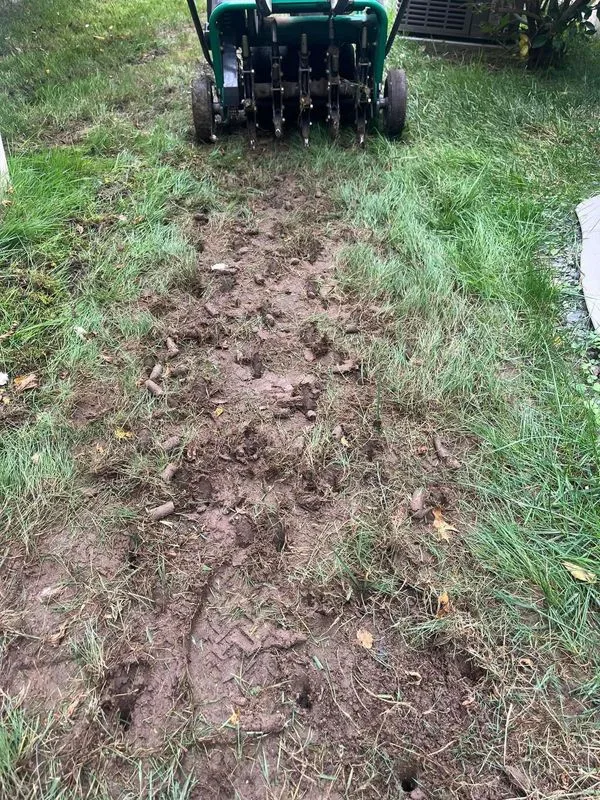
If your lawn is looking thin, patchy, or just tired despite regular mowing and watering, the problem is likely underneath the surface. Compacted soil prevents air, water, and nutrients from reaching grass roots — and no amount of fertilizer will fix that. Aeration and overseeding are two of the most effective lawn care treatments available, and when done at the right time, they can transform a struggling lawn into a thick, healthy stand of turf within a single growing season.
For homeowners across Atlantic County — from Egg Harbor Township to Hammonton, Galloway to Absecon — understanding when and why to aerate and overseed is the key to getting real results. Here is everything you need to know.
The Best Time to Aerate and Overseed in New Jersey
Timing is the single most important factor in the success of an aeration and overseeding project. Get it right, and you will see dramatic improvement. Get it wrong, and you will have wasted your time and money.
Fall Is the Gold Standard: September Through Mid-October
For South Jersey lawns, the optimal aeration and overseeding window is September 1 through October 15. This timing works because of several converging conditions:
- Soil temperatures are ideal. Cool-season grass seed (the type that grows in New Jersey) germinates best when soil temperatures are between 50 and 65 degrees Fahrenheit. In Atlantic County, soil temperatures typically hit this range in mid-September and hold steady through mid-October.
- Air temperatures support growth. Daytime highs in the 60s and 70s with nighttime lows in the 40s and 50s create the perfect conditions for young grass plants to establish without heat stress.
- Reduced weed competition. Summer annual weeds like crabgrass are dying off naturally in the fall, which means new grass seedlings face far less competition for space, sunlight, and nutrients.
- Natural rainfall increases. Fall typically brings more consistent rainfall to South Jersey compared to the hot, dry stretches common in July and August. This reduces the amount of supplemental watering needed during the critical germination period.
- Time to establish before winter. Grass seed planted in September has approximately 6 to 8 weeks of active growing conditions before the first hard frost, which is usually enough time for seedlings to develop strong root systems that will survive winter dormancy.
The Spring Aeration Debate
Many homeowners ask about spring aeration, and it is a valid question. Spring aeration — typically March through early May in South Jersey — can help relieve compaction after a long winter. However, overseeding in spring comes with significant challenges:
- Weed pressure is intense. Crabgrass and other summer annuals germinate at the same soil temperatures as desirable grass seed. You cannot apply pre-emergent crabgrass preventer and overseed at the same time — the pre-emergent will prevent your new grass from germinating too.
- Summer heat stress. Young grass seedlings planted in spring must survive their first summer with shallow, undeveloped root systems. New Jersey's July and August heat often kills spring-planted seedlings before they have a chance to mature.
- Shorter establishment window. Spring-seeded grass has only a few months before extreme summer temperatures arrive, compared to fall-seeded grass that gets a full fall growing season, a dormant winter recovery period, and then another spring growing season before its first summer.
Our recommendation: aerate in spring if your primary goal is compaction relief, but save overseeding for the fall when germination success rates are dramatically higher. If you are planning a full spring lawn care program, aeration fits perfectly alongside fertilization and weed control — just skip the seed until September.
Signs Your Lawn Needs Aeration
Not every lawn needs aeration every year. However, most South Jersey properties benefit from it annually or every other year due to our soil types and climate. Here are the clearest signs that your lawn is overdue:
Compacted Soil
Try pushing a screwdriver or pencil into your lawn's soil when it is moderately moist. If it meets significant resistance and will not penetrate easily to a depth of 3 to 4 inches, your soil is compacted. Heavy foot traffic areas — around play sets, along walkways, and in areas where pets run — compact fastest. Clay-heavy soils, which are common in parts of Atlantic County, compact more readily than sandy soils.
Thatch Buildup
Thatch is the layer of dead and living organic material that accumulates between the grass blades and the soil surface. A thin layer (under half an inch) is actually beneficial, insulating roots and retaining moisture. But when thatch exceeds three-quarters of an inch, it becomes a barrier that prevents water and nutrients from reaching the root zone. Pull back a section of grass and look at the brown, spongy layer at the base — if it is thick and matted, aeration will help break it down.
Poor Drainage and Puddles
If water pools on your lawn after moderate rainfall or irrigation and takes a long time to soak in, compacted soil is almost certainly the cause. Healthy, well-aerated soil absorbs water readily. When the soil structure is compressed, water has nowhere to go and sits on the surface, which in turn promotes fungal disease and shallow root growth.
Thin, Patchy Areas
Bare spots and thinning turf are the most visible signs that your lawn needs attention. While thin grass can result from many causes — shade, disease, insect damage, or poor fertility — compacted soil is often an underlying factor that makes every other problem worse. Aeration combined with overseeding addresses both the root cause and the visible symptom.
Your Lawn Gets Heavy Use
If your yard is the neighborhood gathering spot, if you have kids and pets running on it daily, or if it was established on compacted fill soil after new construction, annual aeration is virtually a necessity. Even lawns that look reasonably healthy on the surface will perform significantly better with regular aeration in these high-traffic scenarios.
The Core Aeration Process Explained
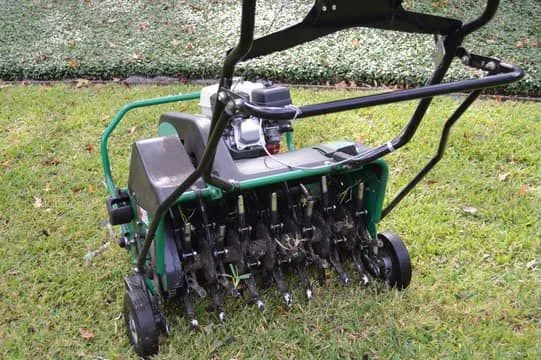
Core aeration — also called plug aeration — is the only type of aeration that provides meaningful, lasting results for compacted lawns. Here is what happens during a professional aeration service.
How It Works
A core aerator is a heavy, motorized machine with rows of hollow tines (metal tubes) that punch into the soil and extract small plugs of earth. Each plug is typically 2 to 3 inches deep and about three-quarters of an inch in diameter. The machine is run across the entire lawn in overlapping passes, leaving thousands of these small holes across the turf.
What Those Plugs Do
The extracted soil plugs are left on the lawn surface — do not rake them up. They break down naturally over 1 to 2 weeks, returning nutrients and beneficial microorganisms to the soil. The holes left behind serve several critical functions:
- Air exchange: Oxygen reaches the root zone, which is essential for healthy root respiration and growth.
- Water infiltration: Water penetrates directly to the root zone instead of running off the surface.
- Nutrient absorption: Fertilizer and soil amendments reach the roots where they are actually needed.
- Root expansion: Grass roots grow into the loosened soil channels, creating a deeper, more resilient root system.
- Thatch decomposition: The holes introduce soil microorganisms into the thatch layer, accelerating its natural breakdown.
Spike Aeration vs. Core Aeration
Spike aerators — including those strap-on sandals with spikes sold at garden centers — simply poke holes in the soil without removing material. This can actually make compaction worse by compressing the soil around each hole. Core aeration is the only method that genuinely relieves compaction because it physically removes soil from the ground. Always insist on core aeration for meaningful results.
Preparation Before Aeration
- Water your lawn 1 to 2 days before the scheduled service. The soil should be moist but not saturated. Dry, hard soil makes aeration less effective and can damage the machine's tines. Overly wet soil creates a muddy mess and clogs the tines.
- Mark all irrigation heads, invisible fence wires, and shallow utility lines. The aerator tines penetrate 2 to 3 inches into the soil, which is deep enough to hit irrigation components and pet fence wires.
- Mow the lawn slightly shorter than usual — about 2 to 2.5 inches — to allow the aerator better access to the soil surface.
Overseeding After Aeration: The Perfect Combination
Aeration alone improves your lawn's health, but combining it with overseeding is where the real transformation happens. The freshly aerated holes create the ideal environment for seed-to-soil contact, which is the single most important factor in successful germination.
Choosing the Right Seed
South Jersey falls in the transition zone between cool-season and warm-season grass regions, but our climate is best suited for cool-season varieties. The most successful seed blends for Atlantic County lawns include:
- Tall fescue: The workhorse of South Jersey lawns. Tall fescue has deep roots that tolerate heat and drought better than most cool-season grasses. It handles moderate shade and heavy traffic well. Look for turf-type tall fescue varieties with high NTEP ratings.
- Kentucky bluegrass: Prized for its deep green color and ability to self-repair through underground runners (rhizomes). It requires more sunlight and water than tall fescue but creates a beautifully dense lawn in full-sun areas. Often blended with tall fescue for the best of both worlds.
- Perennial ryegrass: Germinates faster than any other cool-season grass — often within 5 to 7 days — making it an excellent component in overseeding mixes. It provides quick coverage while slower-germinating species establish. It has excellent wear tolerance but is less heat-tolerant than tall fescue.
- Fine fescue: The best option for heavily shaded areas under trees. Varieties like creeping red fescue and chewings fescue thrive in low-light conditions where other grasses thin out. They also require less fertilizer and water, making them a low-maintenance option for difficult areas.
For most Atlantic County properties, a blend of 80 to 90 percent tall fescue with 10 to 20 percent Kentucky bluegrass and perennial ryegrass provides the best overall performance across varying sun, shade, and traffic conditions.
Seeding Rates and Application
For overseeding into an existing lawn after aeration, apply seed at a rate of 4 to 6 pounds per 1,000 square feet for tall fescue blends. For a bare-ground renovation, increase to 8 to 10 pounds per 1,000 square feet. Spread the seed evenly using a broadcast or drop spreader, making two passes in perpendicular directions for the most uniform coverage. After spreading, lightly rake or drag the lawn to work the seed into the aeration holes.
Soil Amendments That Boost Results
Aeration is also the perfect time to apply soil amendments because they can work directly into the root zone through the aeration holes:
- Starter fertilizer: A fertilizer high in phosphorus (the middle number) supports root development in young seedlings. Apply immediately after seeding.
- Lime: South Jersey soils tend toward acidity, and most lawn grasses prefer a soil pH between 6.0 and 7.0. A soil test will tell you exactly how much lime to apply — do not guess. Lime applied after aeration reaches the root zone much faster than surface applications alone.
- Compost topdressing: A thin layer (one-quarter inch) of quality compost spread over the lawn after seeding provides organic matter, improves soil structure, retains moisture around seeds, and introduces beneficial microorganisms. This is one of the most effective things you can do for long-term soil health.
Aftercare: Watering, Mowing, and What to Expect
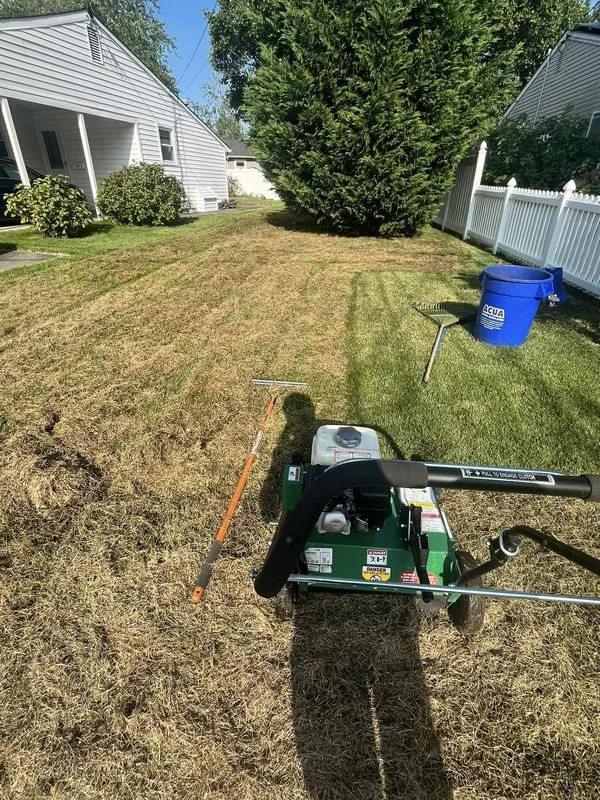
The work you put in after aeration and overseeding is just as important as the treatments themselves. Proper aftercare during the first 4 to 6 weeks determines whether your investment pays off.
Watering Schedule for New Seed
This is where most homeowners either succeed or fail. New grass seed requires consistent moisture to germinate, but overwatering is just as harmful as underwatering.
- Days 1 through 14 (germination phase): Water lightly 2 to 3 times per day — just enough to keep the top half inch of soil consistently moist. Each watering session should be brief, roughly 5 to 10 minutes per zone. The goal is a damp surface, not standing water. Early morning, midday, and late afternoon are ideal times.
- Days 15 through 28 (establishment phase): Once you see green seedlings emerging, gradually reduce watering frequency to once per day while increasing the duration. This encourages roots to grow deeper in search of moisture.
- Days 29 through 42 (transition phase): Shift to watering every 2 to 3 days with deeper soakings of 20 to 30 minutes per zone. By this point, the young grass should be developing a root system capable of accessing moisture deeper in the soil profile.
- After 6 weeks: Transition to a normal lawn watering schedule — about 1 to 1.5 inches of water per week, applied in 1 to 2 deep sessions rather than frequent light sprinklings.
When to Mow After Overseeding
Resist the urge to mow too soon. Allow the new grass to reach 3.5 to 4 inches in height before the first mow, then cut it back to about 3 inches. This typically takes 3 to 4 weeks after germination begins. Use a sharp mower blade — a dull blade tears young grass plants rather than cutting them cleanly, which stresses the plants and opens them to disease. For the first few mowings, use a walk-behind mower rather than a riding mower to avoid compacting the recently aerated soil with heavy equipment.
What You Will See and When
- Week 1: The aeration plugs will be visible on the lawn surface and will look messy. This is normal. Do not rake them.
- Weeks 1 through 2: Depending on the grass species, you may start to see the first seedlings emerge. Perennial ryegrass germinates fastest (5 to 7 days), followed by tall fescue (10 to 14 days), and Kentucky bluegrass (14 to 21 days).
- Weeks 3 through 4: The aeration plugs will have broken down and disappeared. Young grass seedlings should be visible across most of the lawn. Thin areas may still show bare soil.
- Weeks 5 through 8: The new grass thickens and begins to blend with the existing turf. This is when the lawn starts to look noticeably improved.
- Following spring: The real payoff comes the following April and May, when the fall-seeded grass enters its first full growing season with an established root system. This is when thin lawns become thick, patchy lawns become uniform, and the difference from the previous year is dramatic.
What to Avoid During the Establishment Period
- Do not apply weed killer for at least 8 weeks after seeding. Herbicides — even selective broadleaf products — can damage or kill young grass seedlings.
- Minimize foot traffic on newly seeded areas. Young grass plants are fragile and can be pulled out of the soil easily.
- Do not rake aggressively. Light leaf removal is fine (a blower on low works well), but vigorous raking can pull up seedlings and disturb seed-to-soil contact.
- Do not skip the late fall fertilization. A winterizer fertilizer application in November helps new grass build root reserves for winter dormancy and fuels vigorous growth the following spring.
Spring vs. Fall Aeration: Making the Right Call
We addressed this briefly above, but the spring-versus-fall debate deserves more detail because it is one of the most common questions we receive from homeowners across South Jersey.
When Fall Aeration Is the Clear Winner
- You plan to overseed (fall is the only practical time for this in New Jersey)
- Your lawn has significant thin or bare areas that need renovation
- You want to apply lime or soil amendments for maximum root-zone penetration
- Your primary goal is lawn thickening and overall improvement
When Spring Aeration Makes Sense
- Your lawn is already thick and healthy but the soil is heavily compacted
- Drainage is your primary concern, and you want to relieve compaction before the wet spring season
- You missed the fall window and want to address compaction issues sooner rather than waiting another year
- You are not planning to overseed (so the weed competition issue is less relevant)
Can You Aerate Twice a Year?
Yes, and for severely compacted lawns — especially those on heavy clay soil or newly constructed properties where fill soil was machine-compacted — aerating in both spring and fall can accelerate improvement. The spring aeration loosens the soil and improves drainage heading into summer, and the fall aeration prepares the lawn for overseeding and winter recovery. After 1 to 2 years of twice-annual aeration, most lawns can transition to an annual fall aeration schedule.
Why Professional Aeration Delivers Better Results
While rental aerators are available at equipment rental shops and some home improvement stores, there are meaningful differences between a DIY approach and professional service.
- Equipment quality: Commercial aerators used by lawn care professionals are significantly heavier and more powerful than consumer rental units. They pull deeper cores at closer spacing, resulting in better compaction relief and more seed-to-soil contact points. A professional machine may pull 12 to 16 cores per square foot compared to 6 to 8 from a rental unit.
- Consistency of coverage: Professional operators make multiple overlapping passes to ensure uniform coverage, adjusting speed and pattern based on the lawn's specific conditions. They know which areas need extra attention — high-traffic zones, slopes, and areas near hardscaping where compaction is worst.
- Seed selection and application: A professional can assess your lawn's specific conditions — sun exposure, soil type, traffic patterns, existing grass species — and select the optimal seed blend. They also apply seed at the correct rate for your situation, which makes a measurable difference in results.
- Soil testing and amendments: Professional lawn care services can test your soil pH and nutrient levels, then apply the right amendments at the right rates to give your new seed the best possible start.
- Time and physical effort: Running an aerator is physically demanding work. The machines are heavy, difficult to transport, and require multiple passes across the entire lawn. What takes a homeowner several hours of hard labor takes a professional crew a fraction of the time with better results.
The cost of professional aeration and overseeding is one of the best values in lawn care when you consider the long-term impact on your property's appearance and value. It is also the perfect complement to a comprehensive lawn care program that includes proper fall cleanup and year-round maintenance.
Need Help With Your Property?
Sean Patrick Services provides professional lawn aeration, overseeding, and complete lawn renovation services across Atlantic County, NJ. Whether your lawn needs a simple fall aeration or a full renovation from the ground up, our experienced team will get your turf back on track. Call us at 609-783-5287 or get a free estimate online.