
When to Start Mowing Your Lawn in Atlantic County, NJ
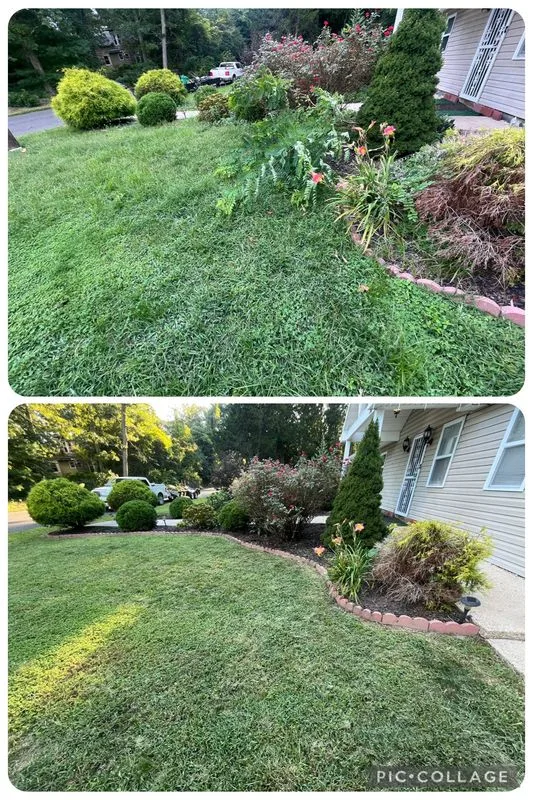
Most homeowners in Atlantic County start thinking about mowing when the grass looks shaggy or a neighbor fires up their mower. That's the wrong trigger. The real signal is soil temperature — and if you mow before the ground is ready, you stress the turf and set yourself up for a weak season. Getting the timing right is straightforward once you know what to watch for in South Jersey conditions.
Atlantic County's coastal climate works in your favor here. The moderating effect of the Atlantic and the back bays means soil temperatures in Egg Harbor Township, Galloway, and towns along the shore typically climb a week or two ahead of inland and North Jersey locations. That usually puts the first mow somewhere between mid-March and early April — earlier along the barrier island and mainland coast, a little later inland toward Hammonton and Mays Landing.
What soil temperature actually triggers grass growth?
Cool-season grasses — tall fescue and Kentucky bluegrass being the most common lawn types in Atlantic County — break dormancy and begin meaningful shoot growth when soil temperature at the 2-inch depth reaches 45°F to 55°F. Below that threshold, the plant is still conserving energy. Mowing dormant or barely-active grass tears leaf blades without any recovery benefit and can compact still-cold soil.
You can track soil temps through NOAA's network or a basic probe thermometer from a garden center. A few consecutive days at or above 50°F at 2 inches is the reliable green light. Grass blades growing noticeably taller — not just stray culms from fall — confirms it.
Why does coastal South Jersey get an earlier start than the rest of the state?
The Atlantic Ocean and the interconnected bays moderate both air and ground temperatures through winter and early spring. Soil in Somers Point or Margate doesn't freeze as deeply or hold cold as long as soil in central or northern New Jersey. Combined with Atlantic County's sandy soil makeup — which drains fast and warms faster than heavy clay — you genuinely have a longer early-season window than most of the state.
Sandy soil is both an advantage and a management consideration. It warms early, which is great for timing. But it also dries out faster, so if a dry stretch follows your first mow, the turf can go under stress quickly. Clay-heavy pockets, more common in some parts of Galloway and Mays Landing, hold moisture longer and stay cooler deeper — factor that in if you've got a heavier soil type on your property.
What height should you set for the first mow of the season?
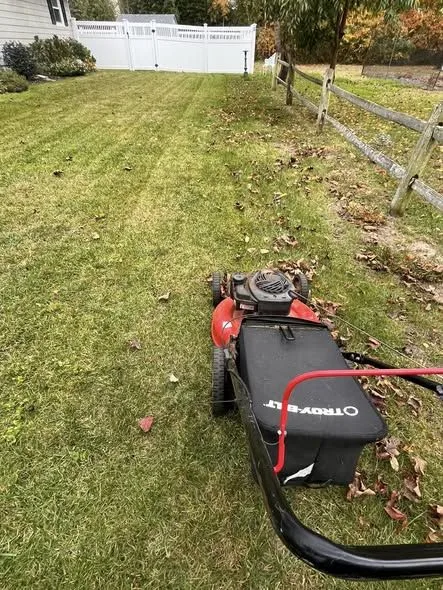
Set the deck to cut at 3 inches for the first mow. Coming out of winter, cool-season grass benefits from slightly longer leaf blades — they capture more sunlight for early-season photosynthesis and shade the soil surface to slow weed germination. Scalping the lawn short in March because "it'll grow back" is one of the most reliable ways to thin out turf and invite crabgrass.
Apply the one-third rule from day one: never remove more than one-third of the blade length in a single pass. If the lawn came through winter and early spring at 4.5 inches, cut to 3. If it's at 5 inches after a wet stretch, cut to no lower than 3.3 inches and go back in a few days for a second pass. Removing too much at once shocks the plant and stalls root development.
Does blade sharpness actually matter for a spring first cut?
It matters more for the first cut than almost any other. A dull blade tears grass rather than cutting it cleanly, leaving ragged tips that turn brown and create entry points for fungal disease — a real concern in South Jersey's humid spring conditions. Sharpen or replace your mower blade before the season starts, not halfway through it.
- Sharp blade signs. Clean, straight cut across the blade tip; no fraying or browning within a day or two of mowing.
- Dull blade signs. Torn or shredded tips, whitish or tan discoloration across the lawn within 24–48 hours, uneven cut height.
- Service interval. A residential blade typically needs sharpening every 20–25 hours of run time, or at least once per season for average-sized lawns.
For a weekly mowing program, professional equipment is resharpened on a regular schedule — that consistency matters across the whole season, not just in spring.
Should you wait if the lawn is wet or the ground is soft?
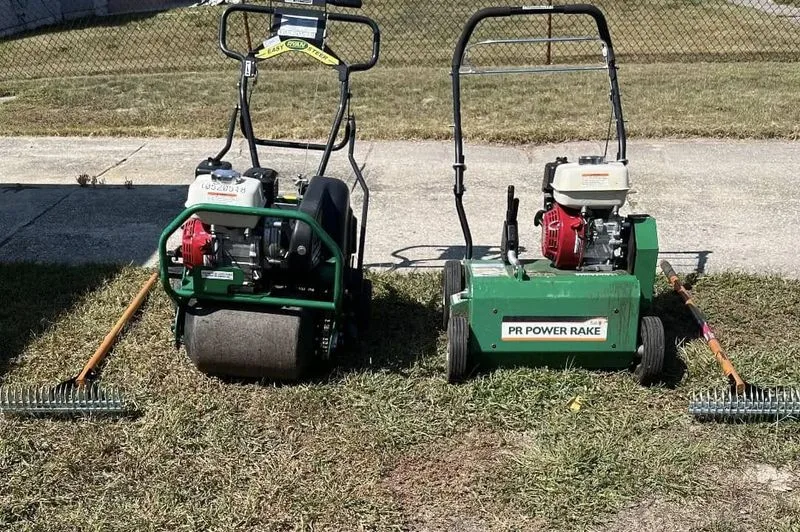
Yes. Mowing on saturated ground compacts the soil, leaves ruts, and clogs the deck with clippings that clump and smother the turf beneath. In early spring, Atlantic County gets its share of sustained rain and the water table in lower-lying areas around Absecon, Pleasantville, and parts of Northfield can sit high for days after a wet spell. The turf looks ready but the ground isn't.
A simple test: step firmly on the lawn. If your foot sinks noticeably or you leave visible impressions, wait. Two to three days of dry weather after a soaking rain is usually enough for well-draining sandy soil. Clay-heavy or low spots need more time. Patience here protects the soil structure you've built and avoids undoing spring aeration work.
How do you build a reliable weekly cadence from the first mow on?
Once the grass is actively growing — usually by mid-April in most of Atlantic County — it needs consistent cutting on a 5–7 day cycle through spring. Cool-season turf grows fastest in the 60–75°F air temperature range, which is exactly the April–June window here. Skipping cuts during that stretch means you're constantly playing catch-up with the one-third rule and the lawn never settles into an even, dense stand.
Read our spring lawn care guide for what to pair with early mowing — fertilization timing, pre-emergent application, and overseeding thin spots all work together with your mow schedule. And as temperatures push into summer, the cadence shifts; the summer lawn maintenance guide covers raising the mow height during heat and managing drought stress in South Jersey conditions.
Need Help With Your Property?
Sean Patrick Services handles lawn care, landscaping, drainage, cleanups, and outdoor improvements across Atlantic County, NJ. Call 609-783-5287 or get a free estimate online.