
Summer Lawn Maintenance Tips for Atlantic County NJ
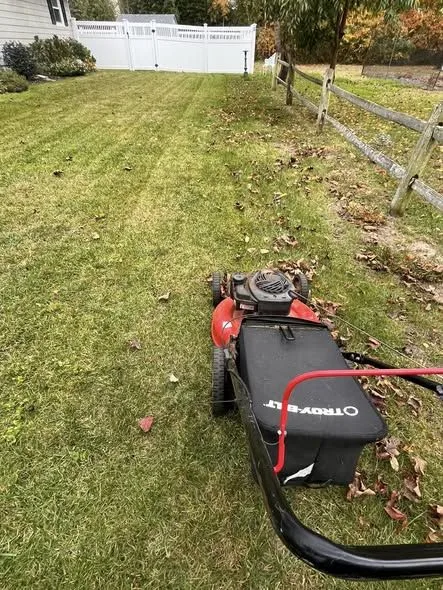
Summer in Atlantic County means long days, high humidity, and stretches of heat that can push your lawn to its limits. The cool-season grasses that dominate South Jersey lawns -- tall fescue, Kentucky bluegrass, and perennial ryegrass -- thrive in spring and fall but naturally slow down and stress during the hottest months. The good news is that with the right maintenance approach, you can keep your lawn looking healthy and green from June through September without overworking it or yourself.
At Sean Patrick Services, we maintain lawns across Egg Harbor Township, Galloway, Somers Point, Northfield, Linwood, and throughout Atlantic County all summer long. These are the practices we follow and recommend to every homeowner in our region.
Mowing Height: The Single Most Important Factor
If you take only one piece of advice from this entire article, let it be this: raise your mowing height. During summer, your lawn mower blade should be set to cut at 3.5 to 4 inches. This is the single most impactful thing you can do to help your lawn survive South Jersey summers.
Here is why mowing height matters so much in the heat:
- Taller grass shades the soil. This reduces soil temperature and slows moisture evaporation, which means your lawn needs less water and stays cooler at the root zone where it counts most.
- Deeper roots follow taller blades. There is a direct relationship between grass blade height and root depth. A lawn mowed at 4 inches will have roots roughly twice as deep as one mowed at 2 inches. Deeper roots access more water and nutrients, giving the grass far greater resilience during drought.
- Weed suppression. A thick, tall canopy of grass blocks sunlight from reaching the soil surface, which prevents many weed seeds -- especially crabgrass -- from germinating. Short-mowed lawns are open invitations for weeds.
- Less stress on the plant. Every time you mow, the grass has to redirect energy from root growth to blade regrowth. Removing more than one-third of the blade height at a time causes significant stress. At a 4-inch setting, you have more margin before you need to mow again.
Follow the one-third rule religiously: never remove more than one-third of the grass blade in a single mowing. If your lawn gets ahead of you during a rainy week and shoots up to 6 inches, mow it down to 4 inches, then wait a few days and mow again if needed. Scalping a tall lawn down to 3 inches in one pass will shock the grass and turn it brown.
Also, always mow with a sharp blade. This is worth repeating because it is so often neglected. A sharp blade makes a clean cut that heals quickly. A dull blade tears and shreds the grass tips, leaving them ragged, brown, and vulnerable to disease. Sharpen or replace your blade at least once during the summer season.
Watering Best Practices for South Jersey Lawns
Proper irrigation is the second pillar of summer lawn care, and it is an area where most homeowners get it wrong. The common instinct is to water a little bit every day, but this approach actually weakens your lawn over time. Here is how to water correctly in Atlantic County.
Water deep and infrequent. Your lawn needs about 1 to 1.5 inches of water per week during summer, including rainfall. The key is to deliver this water in two or three deep soaking sessions rather than light daily sprinkles. Deep watering encourages roots to grow downward in search of moisture, building a drought-resistant root system. Shallow daily watering keeps roots near the surface where they are most vulnerable to heat.
Water early in the morning. The best time to water is between 4:00 AM and 9:00 AM. At this time of day, temperatures are cool, winds are calm, and the grass blades have the entire day to dry. Watering in the evening or at night leaves grass wet for extended periods, which is a recipe for fungal diseases like brown patch and dollar spot -- both common in our humid South Jersey summers.
Additional watering guidelines for Atlantic County homeowners:
- Use the tuna can test. Place several empty tuna cans around your yard while the sprinklers run. When they have collected about three-quarters of an inch of water, that zone has received one good watering session. This also helps you identify dry spots where sprinkler coverage is uneven.
- Sandy soils need more frequent watering. If you live near the shore in Margate, Ventnor, Longport, or parts of Egg Harbor Township with sandy soil, water may drain through faster than the roots can absorb it. In these areas, splitting your watering into two shorter sessions (morning and early afternoon) can improve absorption.
- Clay soils need slower application. In areas with heavier soil like parts of Mays Landing and Hammonton, water can pool and run off if applied too fast. Use a sprinkler setting with a lower flow rate, or cycle your zones in shorter intervals with breaks in between to let the water soak in.
- Watch for signs of drought stress. Before your lawn turns brown, it gives you warning signs. Grass blades that fold or curl inward, a blue-gray color shift, and footprints that remain visible after you walk across the lawn all indicate the grass needs water soon.
- Do not overwater. More lawns are damaged by overwatering than by drought. Soggy, constantly wet soil drowns roots, encourages fungal disease, and attracts grubs and other pests. If your lawn feels spongy underfoot, cut back on irrigation.
Summer Fertilization: Less Is More
Summer fertilization for cool-season lawns in South Jersey requires a light touch. Unlike spring and fall when your grass is actively growing and hungry for nutrients, summer is a period of slowed growth and increased stress. Heavy fertilizer applications during hot weather can burn your lawn and cause more harm than good.
Here is our recommended approach to summer feeding:
- If you fertilized properly in spring, your lawn has reserves. A well-timed slow-release application in May should carry your lawn through June and into July. If you followed the schedule outlined in our spring lawn care guide, your grass has the nutrients it needs.
- Avoid high-nitrogen fertilizer in July and August. Pushing growth during peak heat forces the grass to burn more energy than it can produce. This weakens the plant and makes it more susceptible to disease and insect damage.
- If you do fertilize, go organic and slow-release. A light application of organic fertilizer like Milorganite in early to mid-June is safe and effective. It releases nutrients slowly and will not burn the lawn even in hot weather. Apply at about half the bag rate.
- Consider a potassium boost. Potassium helps grass tolerate heat, drought, and disease. A summer application of potassium sulfate (0-0-50) at 1 pound of potassium per 1,000 square feet can strengthen cell walls and improve stress tolerance without pushing growth.
- Leave grass clippings on the lawn. Grasscycling (mulching clippings back into the lawn) returns nitrogen and organic matter to the soil naturally. Over the course of a season, clippings can contribute about 1 pound of nitrogen per 1,000 square feet -- a free, perfectly timed feeding.
Weed Control Strategies for Summer
Summer weeds in Atlantic County are aggressive. Crabgrass, nutsedge, spurge, and clover are the most common invaders we see in South Jersey lawns, and each requires a slightly different approach. The best defense against summer weeds is a thick, healthy, well-mowed lawn, but even the best lawns sometimes need targeted weed management.
Crabgrass: If you applied a pre-emergent herbicide in early April as part of your spring lawn care routine, you should have good crabgrass prevention through most of the summer. However, pre-emergent barriers can break down by July, especially in heavy rainfall years. If you see crabgrass popping up, spot-treat with a post-emergent product containing quinclorac. Treat crabgrass while it is young and small -- mature crabgrass is much harder to kill.
Nutsedge: Yellow nutsedge is a perennial sedge (not technically a grass) that thrives in wet areas and is extremely common in South Jersey landscapes. You can identify it by its light yellow-green color and triangular stem. Regular herbicides do not kill nutsedge -- you need a specialized product like sulfentrazone or halosulfuron. Since nutsedge indicates excess moisture, also look at fixing drainage issues in the affected area.
General summer weed control tips:
- Spot-treat rather than broadcast. Blanket herbicide applications stress the entire lawn during summer heat. Instead, target individual weeds or small patches with a pump sprayer or ready-to-use product.
- Avoid herbicide applications when temperatures exceed 85 degrees. Most broadleaf herbicides carry a label warning against application in extreme heat because they can volatilize and damage desirable plants, or because the stressed grass cannot tolerate the chemical.
- Hand-pull when practical. For small infestations, pulling weeds by hand (getting the entire root) is effective and has zero impact on the surrounding lawn. Pull after rain when the soil is soft and roots come out more easily.
- Maintain a thick lawn canopy. Circle back to mowing height. A lawn maintained at 3.5 to 4 inches with good density is your best long-term weed prevention strategy. Weeds exploit bare and thin spots -- healthy turf crowds them out naturally.
Managing Heat Stress and Drought
South Jersey summers regularly deliver stretches of 90-plus-degree days paired with high humidity. During these periods, cool-season grasses naturally slow their growth and may begin to go dormant. Understanding how your lawn responds to heat stress -- and when to intervene versus when to back off -- is essential.
Signs of heat stress:
- Grass blades wilt or curl inward during the afternoon, even if the lawn was watered recently.
- The lawn takes on a dull, blue-gray appearance rather than its normal bright green.
- Growth slows dramatically or stops. You may notice you do not need to mow for 10 to 14 days during peak heat.
- Brown patches appear, particularly in full-sun areas, south-facing slopes, and along sidewalks and driveways where radiant heat is highest.
When to back off mowing: If your lawn stops growing during a drought or extended heat wave, stop mowing. Mowing a dormant or semi-dormant lawn serves no purpose and causes unnecessary stress and physical damage. Check the lawn every few days. When growth resumes, resume mowing at your normal high setting.
Should you let your lawn go dormant? Cool-season grasses can survive four to six weeks of summer dormancy without permanent damage. The grass blades turn brown, but the crowns and root system remain alive. If you choose to let your lawn go dormant during an extended drought, commit to it -- do not alternate between watering and not watering, which forces the grass to repeatedly break dormancy and re-enter it, exhausting its energy reserves.
If you want to keep your lawn green through the summer, water consistently using the deep and infrequent method described above. Supplemental watering of 1 to 1.5 inches per week should keep cool-season turf actively growing through most Atlantic County summers. Just be aware that water restrictions may apply during severe drought conditions -- always check with your local municipality.
Pest and Disease Awareness
The combination of heat and humidity in South Jersey summers creates ideal conditions for several lawn diseases and pests. Being able to identify early symptoms allows you to take action before significant damage occurs.
Common summer lawn diseases in Atlantic County:
- Brown patch (Rhizoctonia): The most common summer disease in our area. It appears as irregular circular patches of brown grass, often with a darker ring at the border ("smoke ring") visible in early morning. Brown patch thrives when nighttime temperatures stay above 65 degrees and humidity is high. Avoid evening watering and excess nitrogen to reduce risk.
- Dollar spot: Shows up as small, silver-dollar-sized tan spots scattered across the lawn, sometimes merging into larger affected areas. Dollar spot is common in lawns that are underfertilized or drought-stressed. Adequate nitrogen and proper watering usually prevent it.
- Red thread: Produces pinkish-red thread-like strands on grass blades, usually in patches. It is most common in cool, wet weather but can appear in summer during humid stretches. It is mostly cosmetic and resolves on its own with improved growing conditions.
Common summer lawn pests:
- Grubs: Japanese beetle and European chafer grubs feed on grass roots from mid-summer through fall. Signs include irregular brown patches that peel back like carpet, increased bird and skunk activity (they dig for grubs), and spongy turf. If you had grub damage last year, a preventive application of chlorantraniliprole (GrubEx) in late May or June provides season-long control.
- Chinch bugs: These small insects suck sap from grass blades, causing irregular yellow and brown patches that are often mistaken for drought stress. Chinch bugs prefer hot, sunny areas and are most active in July and August. Part the grass at the edge of a damaged area and look for tiny black-and-white bugs scurrying on the soil surface.
- Sod webworms: The larvae of lawn moths, sod webworms chew grass blades close to the soil surface, creating irregular thin and brown areas. You may notice small moths fluttering above the lawn at dusk. Damage is usually most visible in July and August.
For most pest and disease issues, cultural practices -- proper mowing, watering, and fertilization -- are the first line of defense. A healthy, well-maintained lawn can often outgrow minor damage. For severe infestations, targeted treatment may be necessary. Our lawn care team can diagnose and treat pest and disease problems as part of your ongoing service plan.
Preparing for Fall Recovery
As August winds down and you start thinking about Labor Day, it is also time to start thinking about fall lawn care. The period from late August through October is the most important time of year for cool-season lawn renovation in South Jersey, and the decisions you make in summer set you up for success.
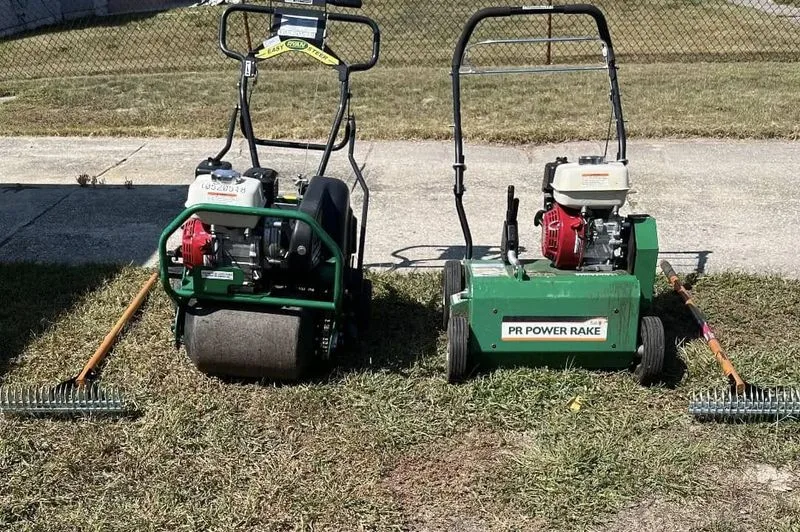
- Start planning aeration and overseeding. If your lawn has thinned out over the summer, early fall is the ideal window for aeration and overseeding in New Jersey. Schedule your service now -- fall fills up fast for lawn care companies.
- Reduce watering frequency gradually. As temperatures cool in late August and September, your lawn needs less supplemental water. Gradually taper your irrigation schedule to avoid overwatering as the heat subsides.
- Resume normal fertilization. Plan your first fall fertilizer application for early September when nighttime temperatures drop below 65 degrees consistently. This is the most important fertilizer application of the entire year for cool-season lawns -- it drives root growth and recovery heading into winter.
- Address bare spots now. Note areas where the lawn has thinned or died back over the summer so you know exactly where to focus overseeding efforts in September.
- Lower mowing height gradually. Starting in mid-September, begin lowering your mowing height in small increments, working down to about 2.5 to 3 inches for the final mow of the season. This prevents matting under fallen leaves and reduces the risk of snow mold over winter.
Summer can be tough on Atlantic County lawns, but it does not have to be a disaster. By mowing high, watering smart, staying light on fertilizer, and watching for problems early, you can keep your lawn in solid shape and set it up for a strong fall recovery.
Need Help With Your Property?
Sean Patrick Services provides professional lawn maintenance across Atlantic County, NJ. From weekly mowing at the correct height to full-season lawn care programs that keep your yard healthy year-round, we take the guesswork out of lawn care. Call us at 609-783-5287 or get a free estimate online.