
Best Native Plants for Landscaping in Galloway, NJ
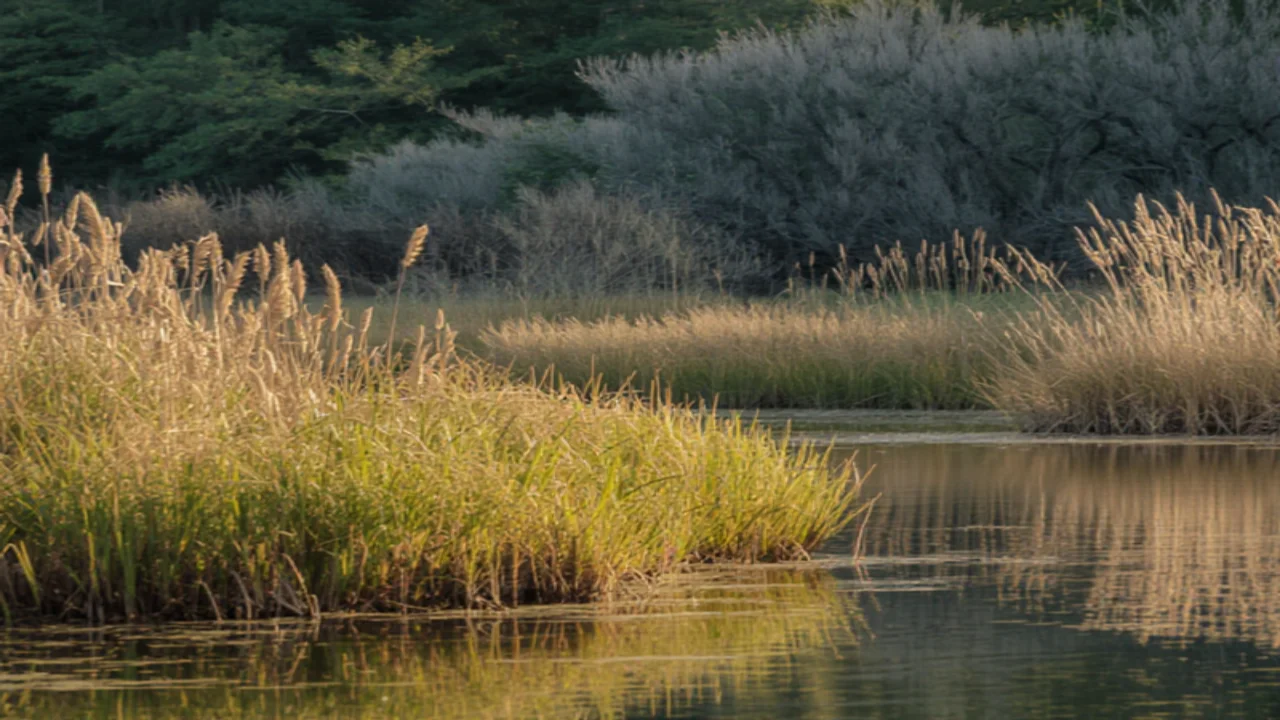
Stand at the intersection of Jimmie Leeds Road and Route 9 on a clear morning and look in both directions. To the west, pine forest. To the east, salt marsh stretching flat to the horizon. Somewhere between those two views sits your yard, and the plants that belong in it depend entirely on which direction your property leans.
That is the central truth about gardening in Galloway Township. This is not a single landscape. It is a seam between two worlds, the Pine Barrens uplands and the coastal salt marsh, stitched together by Nacote Creek, Lake Fred, and the slow tidal pulse of the Mullica River watershed. The Stockton University campus straddles both sides. The Edwin B. Forsythe National Wildlife Refuge claims the eastern marshes. And the residential neighborhoods along Pomona Road, Pitney Road, and Oceanville sit right in the middle of it all.
Your Yard Is Part of a Wildlife Corridor
This is not abstract environmentalism. Galloway borders a national wildlife refuge because the land here is irreplaceable habitat. Migratory songbirds, raptors, and shorebirds follow the corridor between the Pine Barrens interior and the coastal marshes every spring and fall. When you plant native species on your property, you turn your lot into a rest stop along that migration route. A cluster of bayberry shrubs on a Jimmie Leeds Road yard feeds the same yellow-rumped warblers that spend their days in the Forsythe Refuge. A stand of Joe-Pye weed along your back fence draws the same swallowtails that float over Lake Fred in August.
From a practical angle, going native in Galloway also means your yard maintenance drops substantially. These plants do not need fertilizer, most do not need watering after the first year, and they skip the endless cycle of spraying, amending, and replacing that exotic landscaping demands.
Reading Your Site Before You Plant
Before you buy a single plant, walk your property and answer three questions.
First: what is your soil doing? Scoop up a handful. If it runs through your fingers like sugar and feels gritty, you are on Pine Barrens sand. If it clumps, feels heavier, or has a slightly sulfurous smell, you are on marsh-influenced soil with some salt content. Properties near the Route 30 corridor and west of Route 9 tend toward the dry sand. Properties east of Route 9, especially near Oceanville and the Refuge boundary, lean salty.
Second: where does water go after a hard rain? Galloway properties near Nacote Creek, the low areas along South New York Road, and the neighborhoods between the college and Route 9 often have drainage that lingers. Other yards, particularly the sandy upland lots near Pomona, drain so fast that puddles vanish in an hour. Your wet spots and dry spots determine which natives belong where.
Third: how much wind and salt does your property catch? If you can smell the bay on a south wind, your plants need salt tolerance. If you are tucked behind a wall of pines off Zurich Avenue, salt is not your concern, but shade probably is.
The Pine Barrens Side: Plants for Sandy, Acidic Uplands
Western and central Galloway sit firmly in the Pine Barrens zone. The soil is white sand with a pH around 4.5, essentially devoid of nutrients by conventional standards. Most garden center plants starve here. The following species consider this poverty a feature.
Vaccinium corymbosum -- Highbush Blueberry. South Jersey grows blueberries commercially for a reason: the soil is perfect for them. The native highbush species reaches six to twelve feet tall and delivers four full seasons. White bell flowers in April. Sweet berries you can actually eat in July. Foliage that turns fire-engine red in October. Exfoliating reddish bark in winter. Plant a row along your back fence and you have a hedge that feeds you and every songbird in the neighborhood. No lime, no fertilizer, no soil amendment. Just plant it in the sand and stand back.
Clethra alnifolia -- Summersweet. There is a moment in mid-July when you are driving up Moss Mill Road with the windows down and a scent hits you. Sweet, heavy, unmistakable. That is summersweet blooming in the understory. The fragrant white flower spikes draw bees and butterflies from across the township. This shrub grows six to eight feet tall, spreads gently by suckers, and thrives in the moist, shaded pockets at the base of sandy slopes where most other shrubs languish. If you have a low corner of your yard that collects drainage and sits in afternoon shade, summersweet will transform it.
Schizachyrium scoparium -- Little Bluestem. Walk any Pine Barrens clearing in October and the coppery-bronze tufts glowing in late afternoon sun are little bluestem. It grows two to three feet tall, turns from blue-green in summer to amber-red in fall, and produces feathery seed heads that catch the light like fiber optics. Mass plant it in full sun where your lawn has given up. It demands nothing -- no water, no fertilizer. Rich soil actually makes it floppy and weak. The starved sand of Galloway's uplands produces the stiffest, most colorful stands.
Quercus marilandica -- Blackjack Oak. Most people overlook this small, tough tree, but for Galloway's driest, poorest sand it is an outstanding choice. Blackjack oak rarely tops 30 feet, develops a broad, irregular crown, and tolerates conditions that would kill a red oak. Its thick, leathery leaves resist drought and its acorns feed wild turkey, deer, and blue jays. On a small lot where a full-sized oak would overwhelm the house, blackjack oak provides shade and wildlife value at a manageable scale.
The Marsh Side: Plants for Salt, Wind, and Wet Ground
Eastern Galloway is different country. The neighborhoods off Route 9, the areas near Oceanville, and any property within a mile of the Forsythe Refuge feel the bay's influence. The water table is higher, the soil carries salt, and the wind off the marsh is persistent. Plants that thrive in the Pine Barrens sand often burn and wilt here. You need species with coastal blood.
Morella pensylvanica -- Northern Bayberry. The one plant that bridges both of Galloway's ecosystems. Bayberry grows in bone-dry sand and in salt marsh edges equally well. It reaches five to ten feet, forms dense thickets, and produces the waxy gray berries that give it its name. Crush a leaf. That aromatic, resinous scent is Galloway bottled. Bayberry also fixes atmospheric nitrogen, slowly enriching the poor soils where it grows. Use it as a privacy screen, a windbreak, or a mass planting along your property line. It handles whatever the bay throws at it.
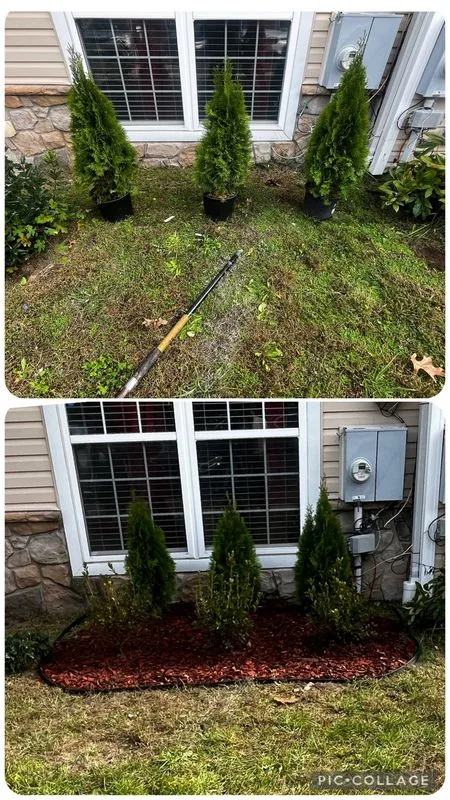
Juniperus virginiana -- Eastern Red Cedar. Forget arborvitae. Forget imported spruce. Eastern red cedar is the evergreen that actually works in Galloway. It tolerates sandy soil, salt exposure, drought, and wind without browning or thinning. It grows 30 to 50 feet with a dense columnar form that makes a genuine windbreak. The blue berry-like cones feed cedar waxwings all winter. Drive Route 9 through Galloway and count the red cedars colonizing every abandoned lot and field edge. That is your proof of performance.
Spartina patens -- Saltmeadow Cordgrass. Look across the Forsythe Refuge marsh and those swirling, cowlick-patterned grass mats are saltmeadow cordgrass. It dominates the high marsh zone. In your yard, it works as an ornamental grass in rain gardens, stormwater basins, or any spot that occasionally floods with brackish water. It grows one to three feet tall and tolerates salt levels that would kill every turf grass species on the market. For properties with back bay exposure, cordgrass plantings also stabilize soil and filter runoff.
Baccharis halimifolia -- Groundsel Tree. Walk the edges where Galloway's roads meet the salt marsh and you will see groundsel tree everywhere. Silvery-green foliage most of the year, then clouds of white cottony seed heads in October that glow against the autumn sky. It grows six to twelve feet, tolerates extreme salt, and establishes fast on disturbed ground. For new construction lots near the bay that need quick screening, groundsel tree fills in faster than almost any other native shrub.
For the In-Between: Plants That Handle Both Worlds
Many Galloway properties do not fit neatly into either category. Central Galloway, the neighborhoods along South New York Road, the developments near Stockton, and the residential areas between Routes 30 and 9, sits in a genuine transition zone. The soil may be sand on the surface with clay pockets below. The salt influence varies block by block. Here are two versatile natives for these ambiguous sites.
Itea virginica -- Virginia Sweetspire. Fragrant white flower clusters in June. Fall foliage in red, orange, and purple that holds color deep into November. Three to six feet tall. Handles wet clay, sandy uplands, and everything between. It is the plant that refuses to fail regardless of where in Galloway you put it. Use it as a foundation shrub, a rain garden anchor, or a mass planting under existing trees.
Eutrochium purpureum -- Joe-Pye Weed. Five to seven feet of dusty-pink flower domes from July through September. A single stand will draw every swallowtail, fritillary, and monarch in the zip code. Joe-Pye weed wants moist soil and sun, making it ideal for rain gardens, drainage edges, and the low spots along Nacote Creek where the ground stays damp. Combine it with switchgrass and ironweed for a late-summer meadow effect that stops traffic.
The Galloway Planting Calendar
Timing matters here more than in most of Atlantic County because of Galloway's inland-to-coastal temperature gradient. Properties near the bay stay warmer in fall and cooler in spring compared to the Pine Barrens interior.
- October through mid-November is the prime planting window for woody shrubs and trees. Cooler air means less transplant stress, and fall rains push roots deep before the ground cools.
- March through mid-April works best for perennials and grasses. Wait until you see red maple buds swelling along Nacote Creek as your signal that the soil is warming.
- Mulch immediately after planting. Pine straw for upland Pine Barrens sites. Shredded hardwood leaves for transitional areas. Avoid dyed mulch everywhere.
- Water new plantings weekly for the first full growing season. After that, most of these species are on their own. Detailed seasonal maintenance timing is covered in our fall cleanup checklist.
Let Sean Patrick Services Match the Plant to the Place
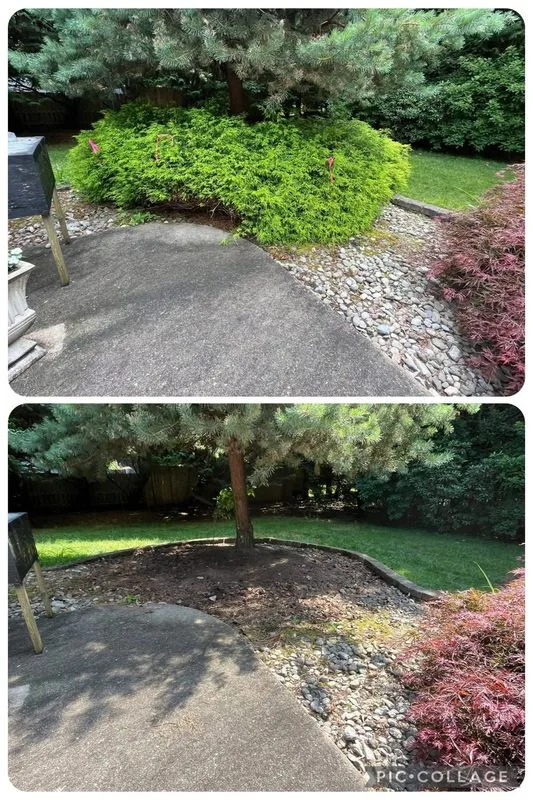
Galloway is the one township in Atlantic County where getting the site assessment right matters more than anywhere else. A plant that thrives on a Pomona Road lot might die on an Oceanville property ten minutes away. We walk your specific site, test the soil conditions, evaluate sun, wind, and drainage patterns, and build a native plant design that fits your property rather than guessing from a generic plant list.
We source native-genotype plants from Pine Barrens nurseries, install with attention to the specific soil and moisture conditions on your lot, and provide the first-year care and monitoring that ensures every plant establishes strong roots. Whether you are on a wooded half-acre near the Pinelands or a quarter-acre near the Refuge, we have worked sites like yours throughout Galloway.
Want to see how native plant recommendations shift as you head toward the coast or deeper inland? Read our guides for Egg Harbor Township and Atlantic City to compare the differences.
Need Help With Your Property?
Sean Patrick Services provides professional lawn care and landscaping across Atlantic County, NJ. From native plant installations and landscape design to weekly mowing and seasonal cleanups, we handle it all so you can enjoy your yard without the work. Call us at 609-783-5287 or get a free estimate online.