Best Native Plants for Landscaping in Egg Harbor Township, NJ
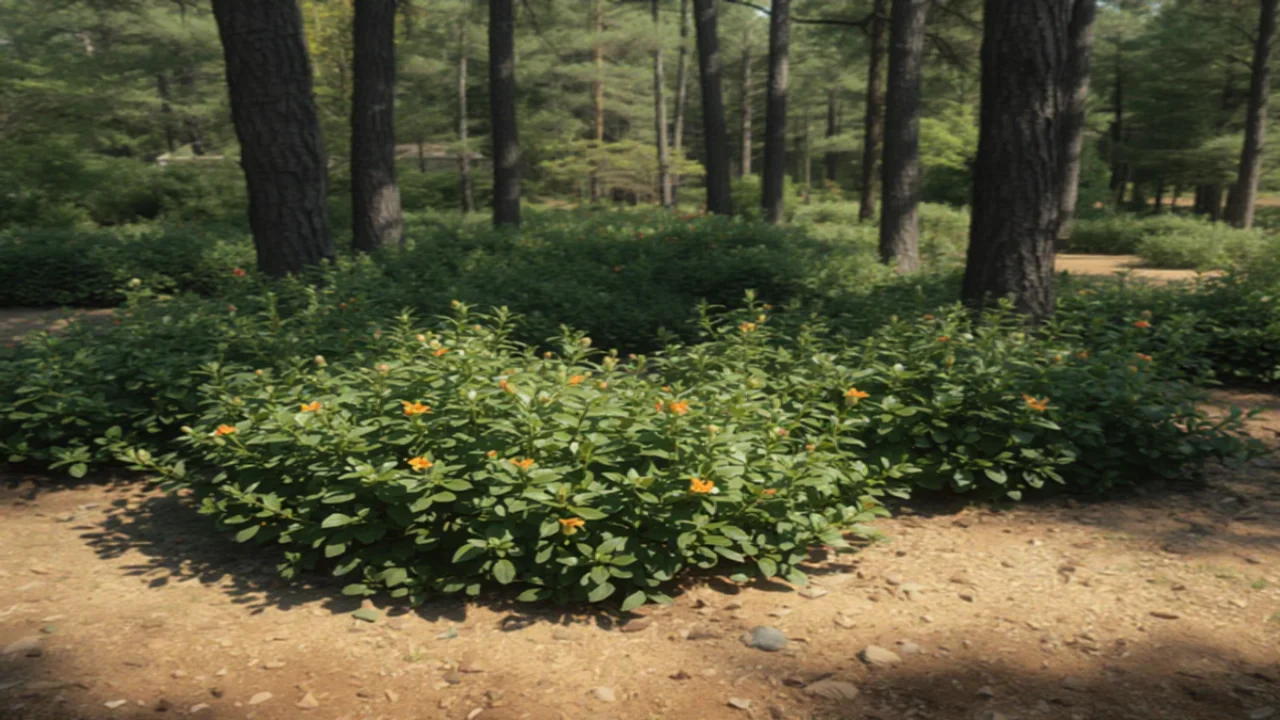
There is a stretch of road along English Creek Avenue, just past the fire station, where the houses thin out and the pitch pines close in. The air smells different there. Sharper. Resinous. You can feel the ground shift under your feet from compacted suburban fill to the loose, sugar-white sand that has been here since the last ice age pushed the Atlantic coast into its current shape. That edge, where the neighborhoods of Egg Harbor Township meet the Pine Barrens, tells you everything about what should be growing in your yard.
EHT is the largest municipality in Atlantic County, spanning from the Black Horse Pike commercial corridor through Cardiff and Bargaintown, down to the wetland edges along the Great Egg Harbor River. The soil under most of these neighborhoods is essentially the same: acidic sand, pH hovering between 4.5 and 5.5, draining so fast that a thunderstorm disappears into the ground within minutes. Thousands of homeowners fight this soil every year, dumping lime, importing topsoil, running sprinklers on lawns that never quite look right. There is a better approach.
Stop Fighting the Sand
The plants that already grow in the woods behind your development did not need any of that help. They have spent millennia adapting to exactly the conditions in your yard. Their roots reach deep into loose sand to find moisture that turf grass never touches. Their chemistry runs on acidic soil without lime corrections. They feed the pine warblers, the red-bellied woodpeckers, the tiger swallowtails, and the spring peepers that make EHT sound like EHT on a warm evening.
Going native also means your lawn care costs drop. No fertilizer bills. No fighting crabgrass in sand where fescue barely survives. No weekly mowing of areas that could be filled with plants that actually want to be here. The savings compound, year after year.
What to Plant Where: A Neighborhood-by-Neighborhood Approach
Egg Harbor Township covers so much ground that a single plant list does not do it justice. What works on a shaded half-acre lot backing up to the pines off Somers Point Road is different from what thrives on a sunny corner lot in West Atlantic City, which is different again from a streamside property near the Great Egg Harbor River. Here is how to think about native plants based on where in EHT you actually live.
Cardiff, Bargaintown, and the Western Pine Barrens Edge
If your property backs up to woods, or you can see pitch pines from your kitchen window, you are in the Pine Barrens transition zone. The soil here is the most acidic and nutrient-poor in the township. This is a strength, not a problem.
Pitch Pine (Pinus rigida) is the tree that defines this part of EHT. Its twisted, sculptural form looks nothing like a manicured spruce, and that is the point. A pitch pine on your property ties your yard to the landscape that surrounds it. It grows 40 to 60 feet tall, provides year-round screening, and supports dozens of bird species. If you have a larger lot along Moss Mill Road or up near the Pinelands border, pitch pine belongs in your landscape plan.
Underneath, lowbush blueberry (Vaccinium angustifolium) makes a remarkable groundcover. It grows only one to two feet tall, produces sweet berries in July, and turns brilliant scarlet in October. It spreads slowly through sandy soil without becoming aggressive. Pair it with bearberry (Arctostaphylos uva-ursi), a mat-forming evergreen that hugs the ground at six inches tall, and you have a living carpet that replaces lawn under pine trees where grass will never thrive.
For fragrance, nothing in South Jersey matches sweet pepperbush (Clethra alnifolia). Drive along the wooded sections of Route 559 in July and you will smell it through your car windows. Those white flower spikes draw every bee and butterfly in the neighborhood. Sweet pepperbush reaches six to eight feet, tolerates shade, and thrives in the moist pockets where drainage collects at the bottom of sandy slopes. If you have a low spot in your yard that stays damp after rain, this is the plant for it.
Black Horse Pike Corridor and Established Neighborhoods
The older neighborhoods between the Black Horse Pike and the Tilton Road area tend to have more mixed soils. Decades of development, fill, and lawn maintenance have altered the original sand somewhat, but the underlying drainage pattern remains fast. Sun exposure varies, too. Mature oaks and sweetgums shade many yards here, while cleared lots along the commercial strip bake in full sun.
For sunny front yards, butterfly weed (Asclepias tuberosa) is the showpiece you did not know you needed. Clusters of electric-orange flowers from June through August stop people on the sidewalk. Monarch butterflies lay eggs on the foliage, and you can watch caterpillars transform on your own property. It has a deep taproot that anchors in sand and refuses to be moved once established, so choose the location carefully. Full sun, no irrigation, no fertilizer. It could not be simpler.
Alongside a driveway or foundation, consider inkberry holly (Ilex glabra) instead of the Japanese hollies that half the neighborhood already has. Inkberry is native to the Pine Barrens bog edges, so acidic sandy soil is exactly what it wants. It stays evergreen year-round, reaches four to eight feet with light pruning, and its small black berries feed cedar waxwings and mockingbirds through the winter. It handles both the dry spells of summer and the soggy ground after a heavy nor'easter without missing a beat.
For a property-line screen that actually looks interesting, mix switchgrass (Panicum virgatum) with wild bergamot (Monarda fistulosa). The switchgrass grows three to five feet tall with airy seed heads that catch late-afternoon light, while the bergamot adds lavender flower clusters and a scent that hummingbird moths cannot resist. Together, they form a living fence that changes character with the seasons and never needs to be trimmed into a box shape.
West Atlantic City, English Creek, and the River Edge
Properties in the eastern part of EHT, particularly along tributaries feeding the Great Egg Harbor River, face a different challenge. The soil is still sandy, but the water table sits closer to the surface. Yards near Mill Road, along parts of Ocean Heights Avenue, and in the low areas of West Atlantic City can get genuinely soggy after sustained rain. Tidal influence from the river system also means slightly less acidic soil in some spots.
Swamp milkweed (Asclepias incarnata) is the wet-site counterpart to butterfly weed. Its pink flower clusters bloom from June into August and serve the same critical role as monarch habitat. Unlike butterfly weed, swamp milkweed has fibrous roots that thrive in consistently moist ground. Plant it along drainage ditches, at the edges of detention basins, or in rain gardens where it will get the moisture it craves.
Blue flag iris (Iris versicolor) brings striking violet-blue flowers to wet spots every May and June. It naturalizes along pond edges and streams, and a drift of blue flag blooming at the margin of a rain garden or along a backyard swale is as beautiful as any cultivated iris, without the fussy growing requirements. It tolerates standing water and the occasional tidal soak that properties near the river experience.
For structure in these wetter areas, red maple (Acer rubrum) is the native tree that does it all. It tolerates soggy soil, grows quickly into a shade canopy, and turns the most vivid red in Atlantic County every October. You can see mature specimens along the Great Egg Harbor River corridor, proving they belong here. A red maple anchors a landscape design the way no imported ornamental can.
The Pine Needle Advantage
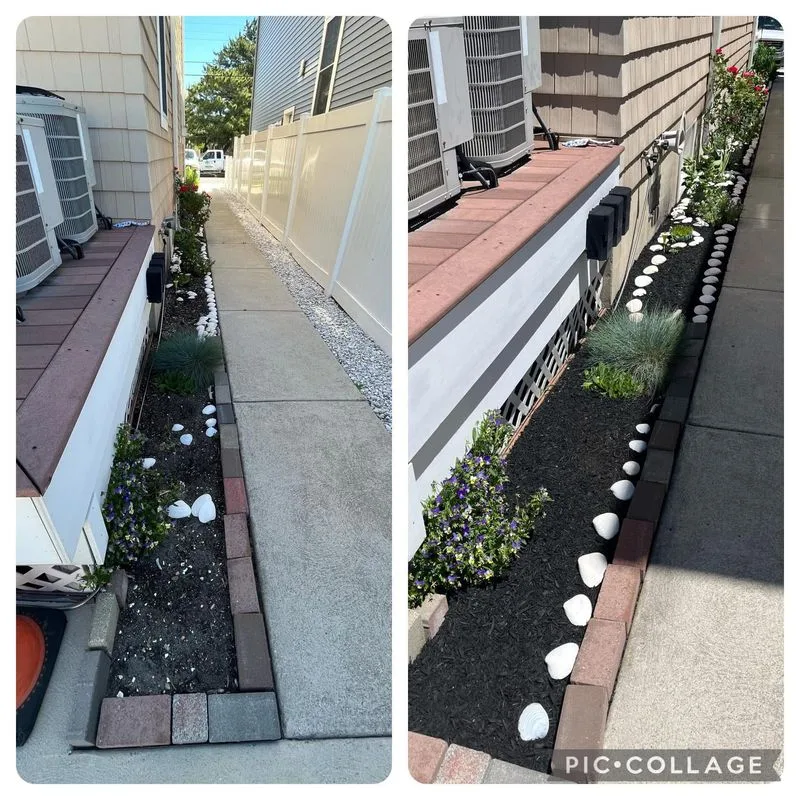
Most EHT homeowners have an unlimited free mulch supply and do not realize it. Pine needles. They fall from the pitch pines and Virginia pines that shade half the properties in this township, and most people rake them up and bag them. Instead, spread them two to three inches deep around your native plantings. Pine straw holds the acidic pH your plants prefer, allows rainwater to pass straight through to the roots, and breaks down slowly enough that you only need to top it off once a year. It is the one mulch material that actually belongs on EHT soil. Bark mulch works too, but it does not have the same chemistry match.
Getting Started: Timing and Approach
September through mid-November is the ideal planting window in Egg Harbor Township. The summer heat breaks, fall rains keep the ground moist, and new plants have the entire cool season to push roots deep into the sand before facing their first summer. Spring planting works for most species, but you will need to water more frequently through July and August to get plants through their first dry season. For detailed seasonal timing, see our spring lawn care guide.
Start small if a full yard overhaul feels overwhelming. One native plant bed replacing a patch of struggling lawn. One rain garden in the low spot that always puddles. One section of privacy screen along the fence. Each planting builds on the last, and within a few seasons, the birds and butterflies will tell you that something has changed.
Sean Patrick Services Knows EHT Soil
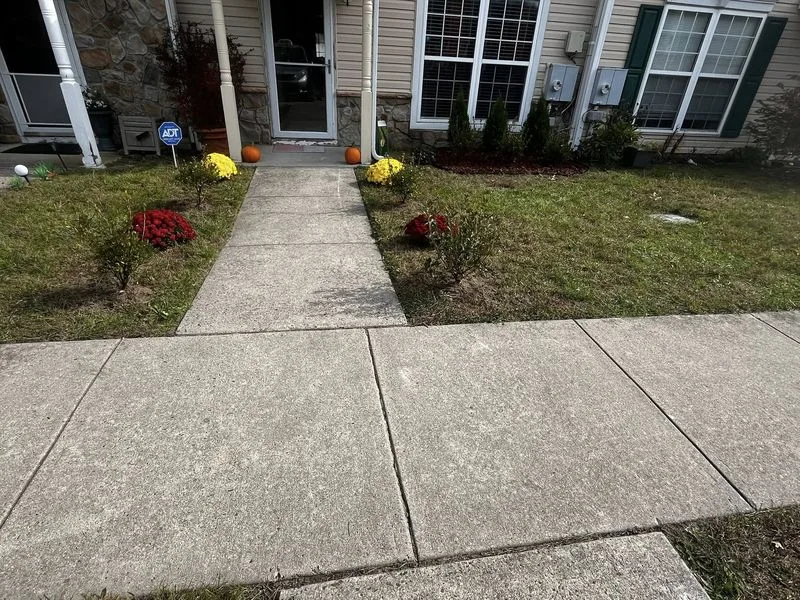
We have installed native landscapes on properties from Cardiff to West Atlantic City, from Bargaintown cul-de-sacs to riverfront lots off Ocean Heights Avenue. We know that the sand behind a house on Fernwood Avenue drains differently than the fill soil on a newer lot off Fire Road. That kind of local knowledge matters when you are choosing plants and designing beds.
Sean Patrick Services handles the full process: site assessment, native plant design, sourcing from regional Pine Barrens nurseries, installation, and first-year establishment care. We also provide seasonal cutbacks, mulching, and weed management to keep your native plantings clean as they fill in.
Curious how plant selection shifts as you move toward the coast? Our guides to native plants in Galloway and native plants in Atlantic City show how dramatically the right plant choices change over just a few miles.
Need Help With Your Property?
Sean Patrick Services provides professional lawn care and landscaping across Atlantic County, NJ. From native plant installations and landscape design to weekly mowing and seasonal cleanups, we handle it all so you can enjoy your yard without the work. Call us at 609-783-5287 or get a free estimate online.