
The 5-Round Lawn Fertilization Program, Explained
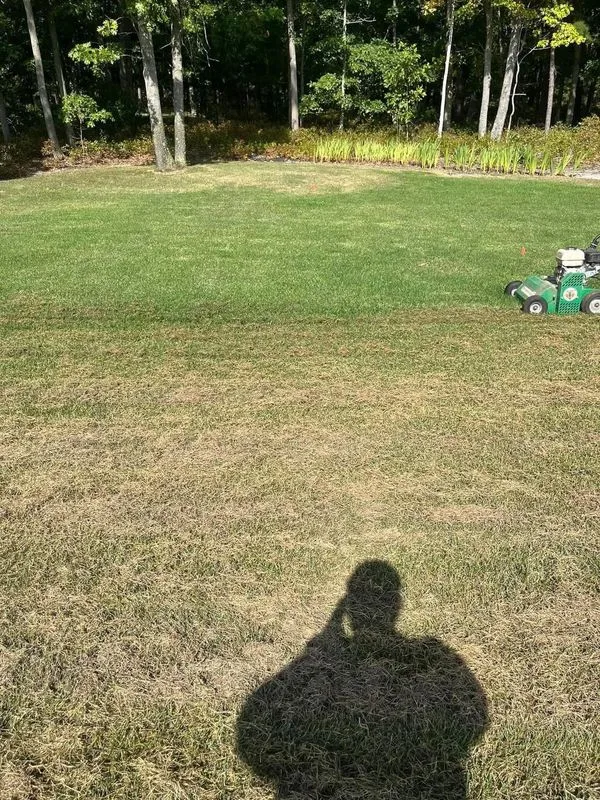
Most South Jersey lawns run on cool-season grasses — tall fescue, Kentucky bluegrass, perennial ryegrass — and those grasses have a growth calendar that is nothing like what you see in the midwest or the south. They push hard in spring and fall, go semi-dormant under summer heat, then recover again before winter. A single bag of fertilizer thrown down in April does not account for any of that. It feeds one phase and leaves the rest of the season to chance.
A five-round program matches nutrients to the turf's actual needs through the whole year. Timing, nitrogen form, and application rate all matter. Get them right and you build a lawn that crowds out weeds, handles Atlantic County summers, and comes back dense every fall. Get them wrong and you get a flush of weak top growth, thatch buildup, and a lawn that opens itself up to disease. Here is how each round works and why it is worth doing correctly.
Why Does a Timed, Multi-Round Program Outperform One Application?
Grass roots can only take up so much nitrogen at once. Dump a heavy rate in a single pass and most of it either burns the turf, leaches past the root zone, or runs off before the plant uses it. Splitting the same annual nitrogen budget across five targeted applications keeps a steady, moderate supply available through each growth phase without the spike-and-crash cycle that weakens turf over time.
There is also the question of what the lawn actually needs in each season. Spring green-up calls for phosphorus and a modest nitrogen kick to get roots moving. Summer is about stress protection, not growth. Fall is recovery and storage — the most important feeding window of the year for cool-season turf. One application cannot serve all three goals. A structured lawn fertilization schedule can.
What Happens in Each of the Five Rounds?
Each round has a specific job:
- Round 1 — Early Spring (late March to mid-April). The goal is green-up and root development, not a nitrogen push. A lower-nitrogen, higher-phosphorus blend gets the root system moving before the canopy takes off. Going heavy on nitrogen here produces fast top growth that is thin and disease-prone.
- Round 2 — Late Spring (May to early June). Nitrogen rates increase slightly as the turf is actively growing. This is also the window for crabgrass pre-emergent if that is part of the program. The lawn should be thickening and color should be deep green without the blueish, watery look that signals over-feeding.
- Round 3 — Summer (late June to August). Slow-release nitrogen only — or no nitrogen at all on stressed lawns. The goal is protection, not growth. Potassium goes up here to improve heat and drought tolerance. Pushing nitrogen in July in Galloway or Egg Harbor Township is a way to invite brown patch fungus.
- Round 4 — Early Fall (September). The most important application of the year. Cooler nights trigger a growth response and roots are aggressively pulling in nutrients to store for winter. A higher-nitrogen application now supports recovery from summer, fills in thin spots, and builds carbohydrate reserves in the crown of the plant.
- Round 5 — Late Fall Winterizer (late October to November, before hard freeze). A final nitrogen application after the turf has stopped actively growing above-ground. The plant stores this nitrogen in the crown and root tissue. It drives earlier, denser green-up the following spring without any growth flush in the off-season.
What Role Does Slow-Release Nitrogen Play?
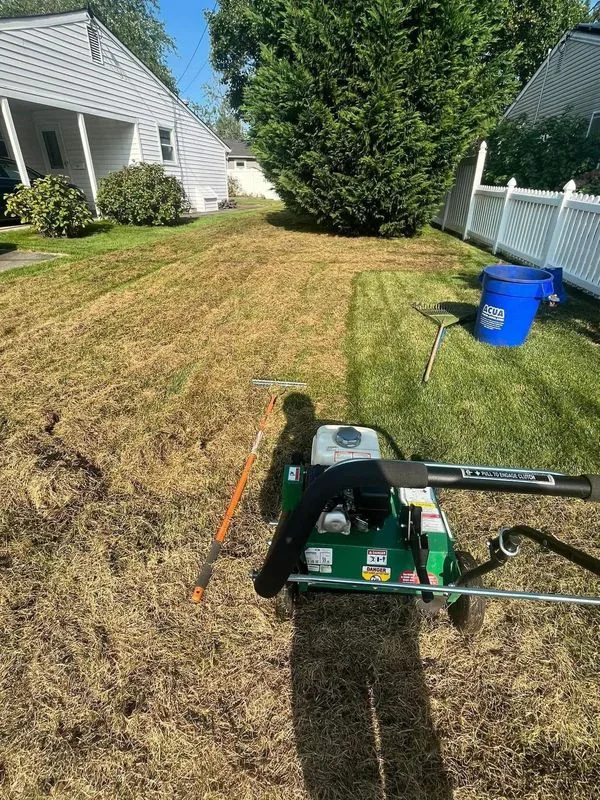
Fertilizer labels list nitrogen as a percentage of total weight, but they do not always make clear how fast that nitrogen releases. Fast-release (soluble) nitrogen is cheap, gives a quick green response, and is out of the root zone in two to three weeks. It also spikes growth, increases mowing frequency, and leaves the lawn hungry again fast. Slow-release nitrogen — whether polymer-coated urea, sulfur-coated, or organic-based — feeds over six to ten weeks and keeps uptake more even.
For a lawn care program to actually build turf quality over time, slow-release nitrogen needs to be the dominant form in at least three of the five rounds. It costs more per bag, but the difference in turf density and disease resistance over two to three seasons is measurable. It also reduces the risk of fertilizer running off into storm drains before the roots absorb it — which matters both for turf performance and for compliance with New Jersey fertilizer law.
What Does New Jersey Law Require Around Fertilizer Applications?
New Jersey's Fertilizer Law (the Fertilizer Act of 2011) is not optional and it applies to licensed contractors and homeowners alike. The main requirements that affect a fertilization program in Atlantic County:
- Phosphorus restriction. Phosphorus fertilizers cannot be applied to established lawns unless a soil test documents a deficiency. Most Atlantic County soils already have adequate phosphorus levels.
- Setback buffers. No fertilizer within 25 feet of any water body. Given how many properties in Somers Point, Margate, and Brigantine back up to tidal waterways or drainage ditches that eventually reach the bay, this is a real constraint that has to be managed on every job.
- Storm drain buffers. Fertilizer cannot be applied within 10 feet of a storm drain inlet. Sweep any product off pavement immediately — fertilizer on driveways and sidewalks goes straight into the storm system.
- Slow-release requirement. Any application over 0.7 lbs of nitrogen per 1,000 sq ft must use at least 20% slow-release nitrogen.
- Application timing. No applications between December 1 and March 1.
A licensed contractor manages all of this automatically. A homeowner doing their own program needs to read the law before they apply anything near a water feature or inlet.
Should Aeration Be Paired With the Fertilization Program?
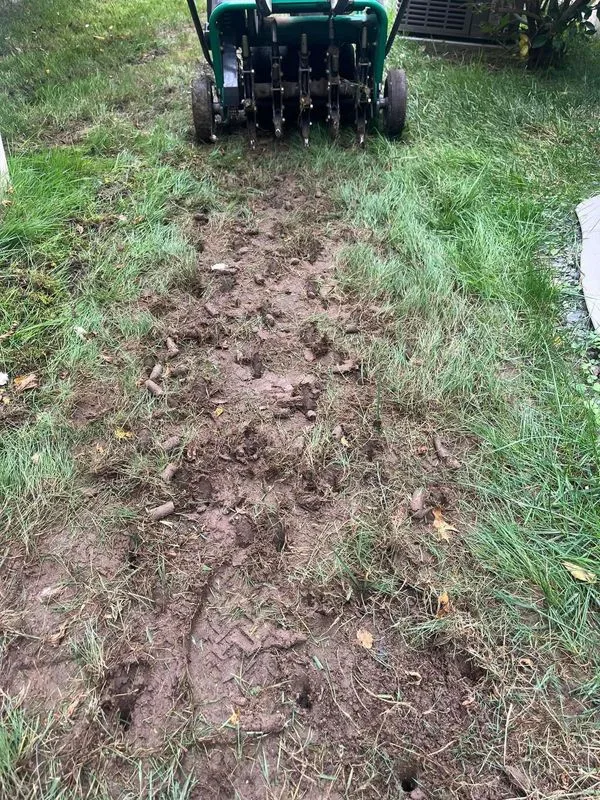
Yes — particularly on the Atlantic County soils that most lawns here are sitting on. Sandy coastal soils drain fast, which sounds good until you realize nutrients leach through them quickly too. Compacted clay-loam soils in inland areas like Hammonton hold water and lock fertilizer away from roots. Core aeration opens channels directly into the root zone so that fall fertilizer applications actually reach the plant instead of sitting on the surface.
The best pairing is core aeration in early September, followed immediately by Round 4 fertilizer. If overseeding is part of the plan, that goes in at the same time. The aeration cores break down over two to three weeks and the seed and fertilizer work their way into the holes. For lawns that have heavy thatch — which is often a sign of past over-fertilization with fast-release nitrogen — annual aeration is the mechanical fix while adjusting the fertilizer program addresses the root cause. Learn more about pairing these treatments in our full summer lawn care guide.
Is a Soil Test Worth the Time Before Starting a Program?
A Rutgers Cooperative Extension soil test runs about twenty dollars and tells you the actual pH, phosphorus level, potassium level, and organic matter percentage of your soil. Without that baseline, a fertilization program is educated guessing. Atlantic County soils vary significantly — beach-side properties in Ventnor or Northfield often have high pH and sandy texture that affects how nutrients behave, while inland properties closer to Mays Landing can run more acidic with higher clay content.
pH is the most overlooked factor in fertilization programs. If your soil pH is below 6.0, grass cannot absorb nitrogen efficiently no matter how much you apply. The fix is lime, not more fertilizer. If your pH is above 7.0, micronutrient availability drops. Applying a standard five-round program on top of a pH problem is throwing money into the ground. The Rutgers test tells you what to correct first, then a program built around those results actually works.
Need Help With Your Property?
Sean Patrick Services handles lawn care, landscaping, drainage, cleanups, and outdoor improvements across Atlantic County, NJ. Call 609-783-5287 or get a free estimate online.