
Crabgrass and Weed Control Timing for South Jersey Lawns
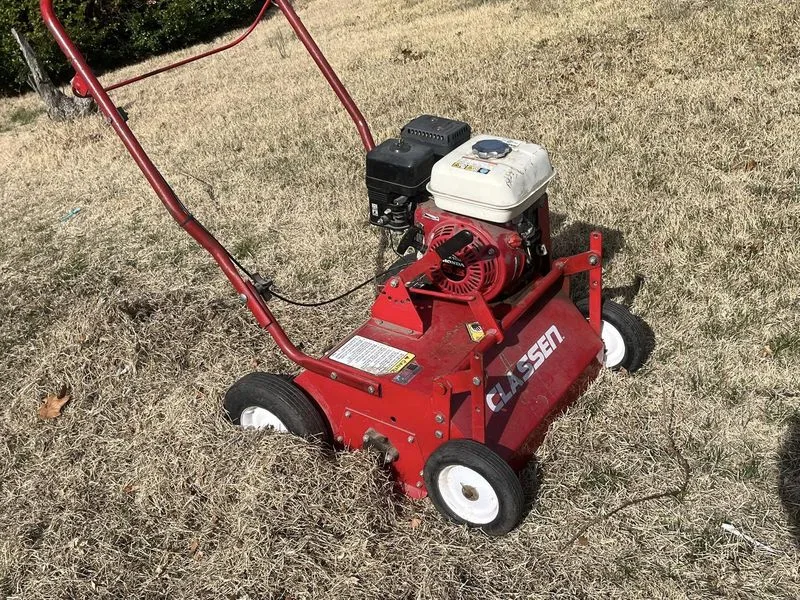
Weed control in South Jersey is a timing game more than anything else. Miss the window by a week or two and you spend the rest of the summer chasing crabgrass instead of getting ahead of it. Atlantic County's climate gives us a narrow but predictable target every spring, and knowing how to hit it makes the difference between a clean lawn in July and one that looks like a parking lot median.
What trips up most homeowners is treating weed control as a single event rather than a seasonal program. Pre-emergent, post-emergent, mowing habits, and lawn density all work together. Get one piece wrong and the others carry less weight. Here is how to think through each step for lawns in Galloway, Northfield, Egg Harbor Township, and the rest of Atlantic County.
When Exactly Should You Put Down Pre-Emergent in South Jersey?
The trigger is soil temperature, not a calendar date. Crabgrass germinates when the soil at a two-inch depth holds at or above 55°F for several consecutive days. In Atlantic County that typically happens in early April, though a warm March can push it earlier and a cool spring can delay it into mid-April. Watching the calendar and assuming April 1 is your date works some years and burns you in others.
Soil thermometers are cheap and worth owning. Check the reading a few mornings in a row — you want the trend, not a single spike from a warm afternoon. If you don't want to monitor it yourself, forsythia bloom is a rough proxy that many turf managers still use: when forsythia is finishing its bloom, soil temps are usually approaching the germination window.
- Target window. Apply pre-emergent before soil temps reach 55°F at a two-inch depth — aim for the 48–52°F range to build a barrier ahead of the flush.
- Product activation. Most granular pre-emergents need moisture to activate. Water them in if rain isn't in the forecast within a day or two of application.
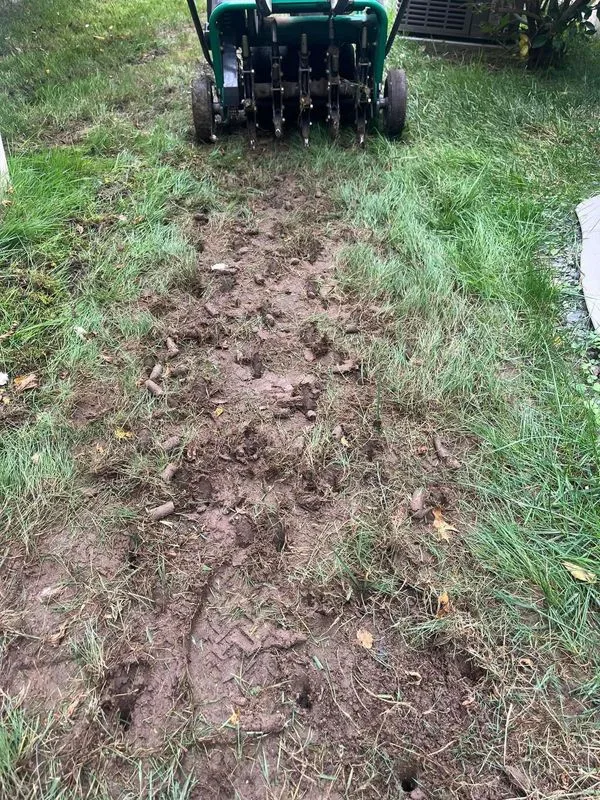
- Barrier integrity. Avoid aerating or raking aggressively after application — physical disruption breaks the chemical barrier in the soil.
What Is Actually Happening When Crabgrass Germinates?
Crabgrass is a summer annual. It germinates from seed each spring, grows aggressively through the heat, produces thousands of seeds by late summer, and dies at first frost. Every plant you allow to mature in August is seeding next year's problem. Pre-emergent herbicides work by creating a chemical layer in the top inch or two of soil that kills the germinating seedling before it can establish — they do nothing to existing plants or seeds already dormant in the ground.
This is why one year of good pre-emergent timing doesn't immediately solve a crabgrass problem. A lawn with years of seed bank built up will still have pressure even with a well-timed application. Consistent treatment over two to three seasons draws down that seed bank and gets progressively easier to manage.
Can You Overseed and Use Pre-Emergent at the Same Time?
No — not with standard pre-emergents. The same barrier that stops crabgrass seedlings stops grass seedlings. If you apply a conventional pre-emergent and then overseed, the new turf seed either won't germinate or will germinate and die before it gets going. These two goals genuinely conflict in the spring calendar.
The practical solution for lawns that need both weed prevention and thin-spot repair is to separate them. Do fall overseeding instead of spring — late August through September is actually the better window for cool-season turf in South Jersey anyway, with warm soil, cooling nights, and reliable rainfall. Then apply pre-emergent the following spring once that new turf has had a full growing season.
There is one exception worth knowing: mesotrione, sold under the trade name Tenacity, can be used as a pre-emergent while simultaneously overseeding with certain grass species, including Kentucky bluegrass and tall fescue. It works by a different mechanism and won't suppress the new seed in the way conventional pre-emergents do. It's not a magic fix — it requires correct rates, proper timing, and knowledge of which species it's safe with — but it gives you an option when fall seeding isn't feasible. Talk through this with a professional before going that route. For more on the seeding side of this equation, see our page on aeration and overseeding.
How Do You Handle Broadleaf Weeds Like Clover and Dandelion?
Broadleaf weeds require a different tool: post-emergent herbicides. Pre-emergent does nothing to clover, dandelion, plantain, or chickweed that's already growing. Post-emergent products are absorbed through the leaf tissue and translocated to the root, which is why timing and application conditions matter.
- Temperature range. Apply when air temps are between 60°F and 85°F. Below that range the weeds aren't actively growing and uptake is poor; above it you risk volatilization and off-target drift.
- Dry conditions. Don't apply before rain — you need the product to stay on the leaf surface long enough to absorb. Wait at least 24 hours after application before watering.
- Clover specifically. Clover is a legume that fixes its own nitrogen and thrives in lawns with low fertility. Killing it with herbicide without addressing the soil conditions usually means it comes back. Proper fertilization discourages re-establishment.
- Repeat applications. Mature dandelions with deep taproots often require two treatments. Don't expect one spray to eliminate a heavy infestation in a single shot.
A well-structured weed control treatments program sequences pre-emergent in early spring, spot post-emergent applications through May and early June, and repeats broadleaf control in early fall when weeds are actively drawing energy back to the root — that's when post-emergents are most effective at killing the whole plant.
Why Is a Thick Lawn Your Best Long-Term Weed Defense?
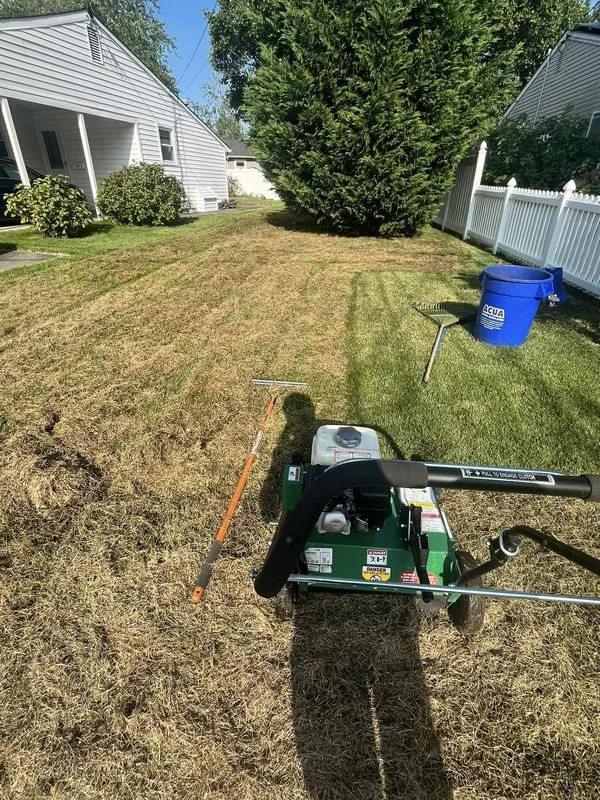
Herbicides manage weeds. A dense, healthy stand of turf prevents them. Weeds establish in gaps — thin spots, compacted areas, bare patches, and stressed turf left short by scalping. When desirable grass is vigorous and growing at the right height, it shades the soil surface and outcompetes weed seedlings for light and moisture. A lawn with 90% turf coverage and minimal thatch is a poor environment for crabgrass to get started, regardless of the seed bank in the soil below.
This is where the full lawn care program — fertilization, aeration, proper irrigation, and seasonal overseeding — pays off. Chasing weeds on a thin, undernourished lawn is a losing battle. Building a lawn that doesn't give weeds a foothold is the exit ramp.
Does Mowing Height Actually Affect Weed Pressure?
Yes, and it's one of the most underrated variables in a lawn care program. Tall fescue and bluegrass lawns in South Jersey should be cut at 3.5 to 4 inches during the growing season. Homeowners who mow at 2 inches because they want that short, tight look are removing the canopy that shades out weed seedlings and putting chronic stress on the root system. Scalped lawns heat the soil faster in spring — accelerating crabgrass germination — and dry out faster in summer, stressing the turf and creating more open ground for weeds to colonize.
Raise the deck. Keep blades sharp so you're cutting cleanly, not tearing. Never remove more than one-third of the blade height in a single mowing. These habits cost nothing and reduce weed pressure meaningfully over a season.
What Should You Know About Applying Herbicides Near Water in NJ?
Atlantic County has a lot of drainage infrastructure — detention basins, storm drains, tidal ditches, and direct connections to the back bays and wetlands that run through Northfield, Egg Harbor Township, and the barrier island communities. New Jersey's Pesticide Control Act imposes buffer requirements around surface water, and some products require a licensed applicator's certification to apply legally near those features.
As a practical matter: don't spray or spread granulars within 10 feet of storm drain inlets, drainage channels, or standing water, even if a product label doesn't call it out explicitly. Runoff from a treated lawn can carry herbicide residue into waterways where it causes real harm. Calibrate your spreader correctly so you're not over-applying — excess product doesn't improve results, it just increases runoff risk. If your property backs up to a wetland or tidal feature, talk to a licensed applicator about what's permissible before treating those edge zones.
Need Help With Your Property?
Sean Patrick Services handles lawn care, landscaping, drainage, cleanups, and outdoor improvements across Atlantic County, NJ. Call 609-783-5287 or get a free estimate online.