
Best Native Plants for Landscaping in Somers Point, NJ
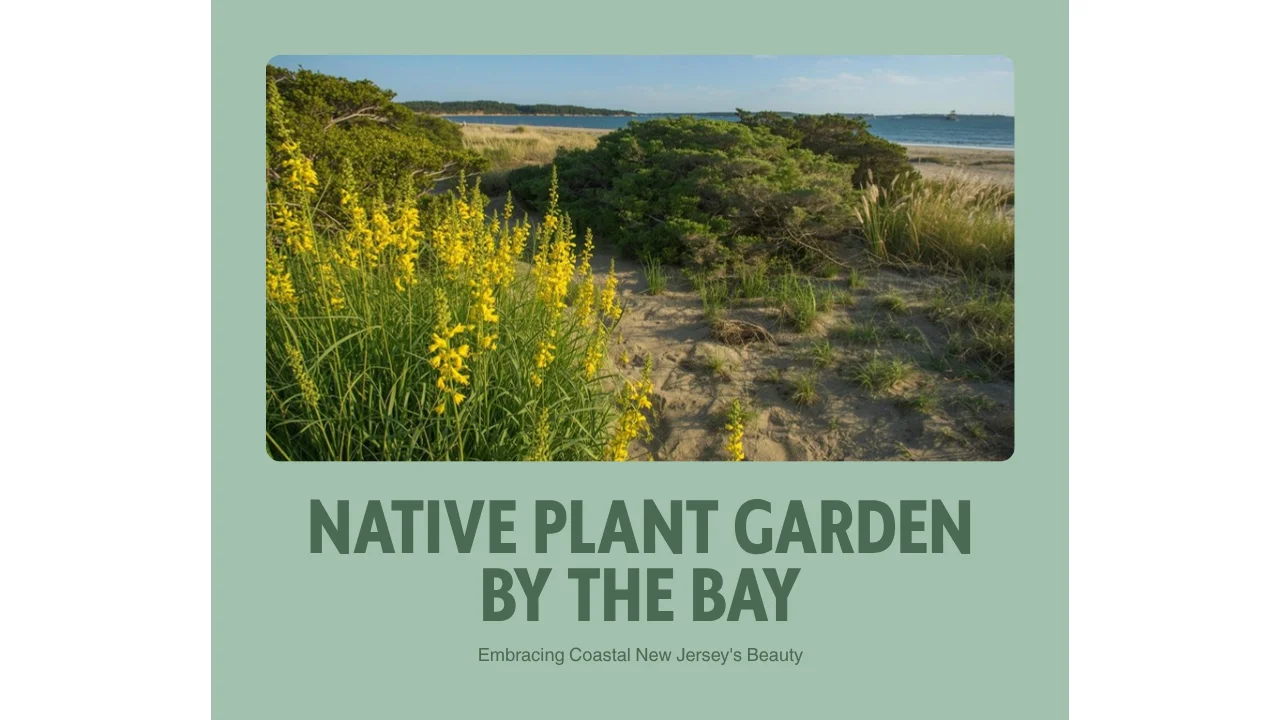
Stand at the foot of the Route 52 causeway and look back toward town. The wind comes off Great Egg Harbor Bay at an angle, carrying salt, carrying sand, carrying the smell of pluff mud at low tide. Every plant on every Somers Point property has to negotiate with that wind. The ones that cannot -- the imported hydrangeas, the ornamental cherries, the tidy little boxwood hedges -- show it by midsummer. Scorched leaf margins. Bare patches. The slow brown creep of salt damage working its way through foliage that was never engineered for this coast.
The native species that grow wild in the marshes along Shore Road and in the sandy lots behind Bay Avenue do not negotiate with the salt wind. They were shaped by it. Planting them is not a compromise. It is how you build a landscape that actually matches the place you live.
Three Tiers of Exposure: Picking Plants by Where You Live in Somers Point
Not every lot in Somers Point faces the same intensity of coastal stress. A house on Higbee Avenue with an open line to the bay absorbs far more salt spray than a property tucked behind Kennedy Park off MacArthur Boulevard. The smartest way to plan a native landscape here is to identify your exposure tier and choose accordingly.
Tier One: Direct Bayfront (Bay Avenue, Higbee Avenue, Goll Avenue, Shore Road Waterfront)
These properties catch the full brunt of what Great Egg Harbor Bay delivers. Southwest winds push salt spray across front yards, wrap around houses, and deposit a fine crystalline film on everything from car hoods to leaf surfaces. Only species with genuine coastal armor survive here long-term.
American Beach Grass (Ammophila breviligulata) -- The first line of defense. Two to three feet of wiry, blue-green blades that bend with the wind instead of breaking. Beneath the surface, a dense web of rhizomes knits the sand together and prevents the erosion that eats away at bulkhead edges and unprotected slopes along the waterfront. Beach grass does not care about soil fertility because it evolved on pure sand. It does not care about irrigation because it pulls moisture from deep in the substrate. Space transplants a foot apart along any bay-facing border, and within two seasons the planting will close into a solid, self-maintaining screen that stabilizes the ground and buffers whatever you plant behind it.
Groundsel Bush (Baccharis halimifolia) -- The second layer, rising five to twelve feet behind the beach grass. This deciduous shrub thrives in the salt marsh margins that ring Somers Point's perimeter, and it brings that toughness directly into the residential landscape. Dense, irregular branching breaks the wind before it reaches the house. In October and November, clouds of silvery-white seed tufts catch the low autumn light over the bay -- a visual effect that photographs beautifully from a back deck on Higbee Avenue. Groundsel bush asks for nothing: no fertilizer, no irrigation, no fussing. A spring pruning keeps it shapely if you prefer clean lines, but plenty of bayfront homeowners let it grow in its natural, loose form and like it better that way.
Saltmeadow Cordgrass (Spartina patens) -- The grass of the salt marshes themselves. Fine, wiry stems one to three feet tall that lay over in swirling patterns, creating a living carpet that tolerates tidal flooding, direct salt contact, and bone-dry sandy soil with equal indifference. Along bulkhead transitions, in bioswale channels that direct stormwater away from foundations, or as a naturalistic ground layer in open sandy areas facing the bay, saltmeadow cordgrass is essentially unkillable once established. Its spreading rhizome network holds soil in place better than any engineered solution short of hardscape.
Tier Two: Near-Bay Residential (Streets Off Shore Road, the Bike Path Corridor, Route 52 Approach)
A block or two back from the waterfront, salt exposure drops but does not disappear. Nor'easters and strong southwest sea breezes still carry saline mist into these neighborhoods. The soil remains sandy and quick-draining. But existing structures, fences, and taller vegetation create pockets of shelter that open up the plant palette considerably.
Bayberry (Myrica pensylvanica) -- A semi-evergreen shrub reaching five to ten feet that combines salt tolerance with genuine landscape refinement. The leathery, aromatic leaves resist salt damage through their waxy surface coating, and the gray berries produced in fall are a critical food source for tree swallows and yellow-rumped warblers moving through the bay region. Bayberry does something almost no other landscape shrub can claim: root bacteria fix atmospheric nitrogen and deposit it in the surrounding soil, slowly building fertility in the nutrient-starved sand that underlies every Somers Point property. Use it as a hedge along the property line, a mass planting at the back of the yard, or a standalone anchor at the corner of the house. Bayberry matures into an increasingly handsome plant over the years and never needs fertilizer, pesticides, or supplemental water.
Seaside Goldenrod (Solidago sempervirens) -- Thick, fleshy leaves with a waxy sheen distinguish this coastal specialist from its inland relatives. From August through October, plumes of rich golden-yellow flowers rise two to five feet above the foliage, providing one of the last and most important nectar sources of the season for migrating monarchs and native bees. Seaside goldenrod grows wild along the sandy road shoulders and marsh edges throughout Somers Point -- you have almost certainly seen it without knowing its name. In a garden bed, it provides bold, vertical late-season color that pairs strikingly with the bronzing grasses and cooling autumn light along the bay. And no, it does not cause allergies. That is ragweed, a different plant entirely, which happens to bloom at the same time.
Shore Juniper (Juniperus conferta) -- A spreading evergreen groundcover that stays low -- twelve to eighteen inches tall -- while extending six to eight feet outward. Dense mats of blue-green needles suppress weeds, hold sand, and provide green through the winter months when most of the landscape goes dormant. Shore juniper handles salt, wind, drought, and nutrient-poor soil without flinching. Along driveways, around mailbox posts, flanking front walkways, or carpeting a sunny slope near the street, it creates the kind of clean, structured base layer that makes the rest of the landscape read as intentional. Once established, maintenance amounts to an occasional trim if it oversteps its bed boundary.
Tier Three: Inland Residential (MacArthur Boulevard, Bethel Road, Streets Behind Kennedy Park)
The interior blocks of Somers Point still sit on sandy soil, but buildings, trees, and distance from the open bay provide meaningful wind and salt protection. This is where the plant palette expands most significantly, and where you can incorporate species that would struggle in the front row along Bay Avenue.
Butterfly Weed (Asclepias tuberosa) -- Vivid orange flower clusters from June through August, held on sturdy one-to-two-foot stems above narrow foliage. This compact milkweed relative is among the most drought-tolerant native perennials available -- its deep taproot reaches far below the fast-draining surface sand to access stable moisture. Monarchs depend on milkweed species for reproduction, and Somers Point's position along the Atlantic flyway makes every milkweed planting ecologically significant. Butterfly weed handles moderate salt in the air but performs best with some buffer from the hardest coastal exposure, making inland beds and the sheltered side yards of near-bay homes ideal locations. Group five or more plants together for the kind of visual mass that draws butterflies and attention in equal measure.
Inkberry Holly (Ilex glabra) -- Broadleaf evergreen foliage, dense and dark green, that holds through winter when deciduous shrubs leave the landscape bare and exposed. At five to eight feet, inkberry provides the year-round screening and structural backbone that every residential landscape needs but that few coastal-adapted plants can deliver. Native to both the Pine Barrens and the coastal wetland margins, inkberry tolerates sandy soil, occasional wet feet, and moderate salt. The 'Densa' cultivar holds a tight, rounded form without constant pruning. Plant it as a foundation shrub, a side-yard privacy hedge, or a backdrop for lower perennials and grasses. Small black berries feed songbirds through the lean winter months.
Eastern Red Cedar (Juniperus virginiana) -- The tall evergreen anchor for Somers Point lots that need vertical screening or a windbreak on the inland side. Reaching thirty to fifty feet with a narrow, columnar profile, eastern red cedar provides year-round privacy without consuming much ground area -- a meaningful advantage on the tighter lots behind Kennedy Park and along the Bethel Road corridor. Blue-gray berries feed cedar waxwings and robins through winter, and the dense foliage shelters songbirds during storms. Red cedar thrives in sandy, nutrient-poor soil and handles moderate salt and wind. It is one of the few tall evergreens that actually prefers the lean conditions found throughout Somers Point over the richer soils of inland communities.
Putting It All Together: The Layered Approach
The most successful native landscapes in Somers Point work like natural coastal plant communities -- layered from tough to refined as you move from the bay toward the house. Beach grass and saltmeadow cordgrass anchor the most exposed edge. Behind them, bayberry and groundsel bush form a mid-height wind buffer. Closer to the house, inkberry, seaside goldenrod, and butterfly weed provide the color, texture, and evergreen structure that make the landscape feel finished and cared for. Each row shelters the next, creating microclimates that let you grow species further from the bayfront that would otherwise burn out in direct exposure.
This layered model also protects Great Egg Harbor Bay itself. Native root systems filter stormwater and absorb nutrients before they reach the water. No fertilizer runoff. No pesticide drift. For a town whose identity is built around the bay -- the fishing, the crabbing, the sunset views from the bike path along Shore Road -- keeping that water clean is not an abstraction. It is a direct return on choosing the right plants.
First-Year Survival in Somers Point Sand
Sandy soil drains so fast that a transplant installed on a hot July afternoon can be wilting by the next morning. The single best thing you can do for new native plantings is to install them in early fall -- mid-September through mid-November -- when root growth is active but heat stress is declining. Blend a shovelful of composted leaf mulch into each planting hole to create a moisture-holding pocket around the root ball. Do not use clay-based topsoil or heavy peat amendments, which trap too much water and cause root rot in species adapted to fast drainage.
Spread two inches of shredded bark mulch over the bed, keeping it three inches clear of stems. Water deeply every two to three days through the first growing season. By the second year, these plants will run on rain alone -- which is the entire point of going native in the first place.
Sean Patrick Services: Coastal Native Expertise in Somers Point
The difference between a native planting that thrives and one that disappoints usually comes down to reading the site correctly. Salt exposure on a Higbee Avenue waterfront lot is nothing like salt exposure three blocks back on Bethel Road, even though both addresses fall within the same zip code. Our landscape design process maps wind exposure, salt corridors, soil drainage speed, and sun angles across each individual Somers Point property before we spec a single plant. The result is a plan calibrated to your lot, not a cookie-cutter recommendation.
We source all native material from regional coastal nurseries whose growing stock carries the salt-adapted genetics that matter in a bayfront environment. Our plant care team monitors new installations through the critical first season, adjusting watering schedules and replacing any failures under our establishment guarantee.
For a look at how native plant strategies shift as you move away from the direct bayfront, check out our guides for Absecon -- where Pine Barrens sand meets bay salt in a very different transition zone -- and Pleasantville, where clay soil and tidal creek flooding create their own set of opportunities.
Need Help With Your Property?
Sean Patrick Services provides professional lawn care and landscaping across Atlantic County, NJ. From native plant installations and landscape design to weekly mowing and seasonal cleanups, we handle it all so you can enjoy your yard without the work. Call us at 609-783-5287 or get a free estimate online.