
Best Native Plants for Landscaping in Pleasantville, NJ

We get a lot of questions from Pleasantville homeowners about native plants -- what works, what does not, and whether it is worth rethinking the conventional shrubs and annuals that seem to struggle on their properties year after year. Instead of writing another generic plant list, we put together answers to the questions we hear most often from residents across the Franklin Boulevard corridor, the neighborhoods off New Road, and the low-lying streets along Pleasantville's eastern marshland border.
"My yard floods after every hard rain. Can native plants actually handle that?"
They can -- and many of them need it. The flooding that frustrates homeowners in the low-lying sections of Pleasantville, especially the blocks between Main Street and the tidal creeks running east toward the marshes, is exactly the environment that certain native species evolved in. The problem is not the water. The problem is that conventional landscaping plants like boxwoods, Japanese hollies, and hybrid tea roses were never designed for periodic inundation.
Winterberry Holly (Ilex verticillata) actually seeks out this kind of ground. It is a deciduous holly that grows six to ten feet tall and thrives where soil stays saturated for extended periods after storms. All winter long, clusters of scarlet berries cling to the bare stems, lighting up the yard from November through February and feeding cedar waxwings, mockingbirds, and robins. Plant winterberry in the low corner of your lot where puddles form, in a rain garden basin, or along the property line closest to the tidal creek. One catch: you need a male pollinator plant for roughly every five females, or you will not get berries.
Cardinal Flower (Lobelia cardinalis) wants its feet wet, too. Spikes of deep scarlet blooms rise two to four feet from July through September, shaped in a way that only ruby-throated hummingbirds can efficiently pollinate them. Along the creek-side edges of Pleasantville properties, cardinal flower colonizes naturally -- it self-seeds into damp soil and maintains itself without any intervention once a small population gets going. Tuck it into the shaded, soggy strip behind the garage or along a fence where nothing else seems to survive.
"I have clay soil in my backyard and sand in the front. What grows in both?"
This split personality is extremely common on Pleasantville lots. The house sits on a slightly raised pad of sandy fill, but three steps into the backyard, your shovel hits heavy, wet clay. Rather than fighting it, treat these as two distinct planting zones and pick species accordingly.
For the sandy front yard, think about New England Aster (Symphyotrichum novae-angliae). This perennial stays quiet most of the summer, building a bushy three-to-six-foot framework of foliage. Then in September and October, it detonates into masses of purple, daisy-shaped flowers -- the kind of display that draws compliments from neighbors walking down Franklin Boulevard. New England aster is one of the last major nectar sources of the season for migrating monarchs and late-flying native bees. In sandy soil, pinch the stems back by half in early June to keep the plants compact and prevent the floppy growth that sometimes occurs in richer ground.
For the clay backyard, Sweetbay Magnolia (Magnolia virginiana) is the tree that should be on every Pleasantville property with wet, heavy soil. It grows fifteen to thirty-five feet tall with an open, graceful canopy. The creamy white flowers from May through July smell like lemon and vanilla, and the semi-evergreen leaves have silvery undersides that flash in the wind like a school of fish turning. Sweetbay magnolia is native to the swampy lowlands that border Pleasantville's eastern edge. It does not just tolerate clay and periodic flooding -- it evolved with those conditions. Plant it where you want shade over a patio, a screen along the back fence, or a focal point visible from the kitchen window.
One species bridges both soil types remarkably well: Wild Bergamot (Monarda fistulosa). This mint-family perennial pumps out lavender-pink flower heads from July into September, drawing dozens of native bee species along with hummingbirds and swallowtail butterflies. Wild bergamot adapts to clay or sand, sun or light shade. Its aromatic leaves smell sharp and herbal when brushed, and deer leave it alone entirely. For a Pleasantville yard with inconsistent soil, wild bergamot is the workhorse that ties everything together.
"What about trees? I want shade, but everything I plant either dies or gets too big."
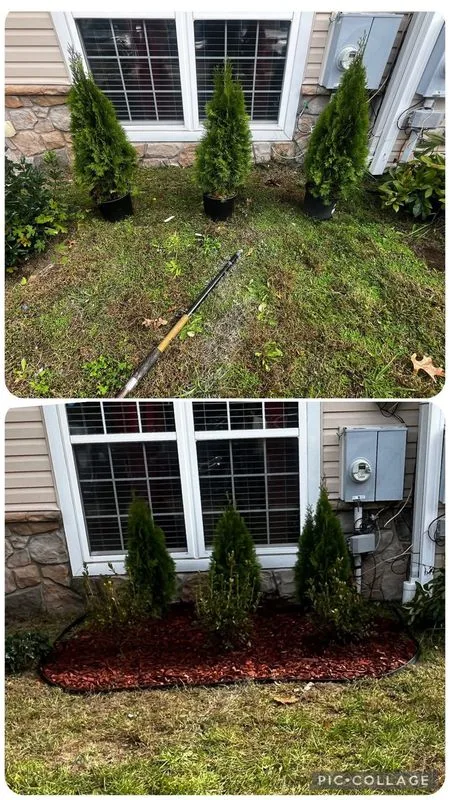
Serviceberry (Amelanchier canadensis) solves this problem better than anything else available. It is a native small tree, rarely exceeding twenty-five feet, that fits the scale of Pleasantville's tighter lots without swallowing the yard. In early April, serviceberry covers itself in clouds of white blossoms -- the first real show of spring, weeks before most other trees leaf out. By June, the branches carry clusters of small, blue-purple berries that taste remarkably like blueberries. Catbirds, bluebirds, and thrushes fight over them. In October, the leaves turn a warm orange-red. Even in winter, the smooth gray bark has a sculptural quality that earns its keep in the landscape.
Serviceberry grows naturally in the wet thickets and woodland edges near Pleasantville's tidal creek corridors, so it handles both the clay and sand found across town. As a front-yard street tree, a patio shade tree, or a specimen near the driveway, it scales perfectly to the compact residential lots along Main Street and New Road.
"I want to help pollinators, but I don't want my yard to look like an abandoned field."
This is the concern we hear most frequently, and it is completely valid. A native garden should look deliberate. The difference between a thriving pollinator planting and a messy vacant lot comes down to structure and editing.
Joe-Pye Weed (Eutrochium purpureum) provides the vertical backbone. At four to seven feet tall, it anchors the back of a border with large, domed flower clusters in dusty pink that bloom from July through September. Monarchs, fritillaries, and native bumble bees swarm the blooms. Joe-Pye weed reads as intentional because of its sheer stature -- it looks planted, not accidental. Give it the damp, partially shaded conditions common in Pleasantville backyards where the lot backs up to trees or creek corridors, and it will return reliably every spring. Cut the dead stalks to the ground in late February.
In front of the Joe-Pye, layer in Virginia Sweetspire (Itea virginica) at three to five feet. The arching branches carry drooping white flower racemes in June and July, and the fall foliage turns a crimson-purple deeper than any burning bush. Sweetspire spreads gradually by root suckers to form a cohesive colony -- the kind of deliberate massing that reads as designed rather than wild. 'Henry's Garnet' is the cultivar to choose for Pleasantville's smaller urban lots because it stays more compact.
At the front edge of the bed, Black-Eyed Susan (Rudbeckia hirta) provides the low, bright, familiar element that signals to neighbors this is a garden, not neglect. The golden petals with dark centers bloom from June through September, and the plants reseed each year to fill any gaps. Black-eyed Susans thrive in Pleasantville's sandy front-yard soils, need no fertilizer or irrigation once established, and attract native bees and beneficial predatory insects that keep pest populations in check across your entire yard.
"When should I plant, and how do I keep things alive the first year?"
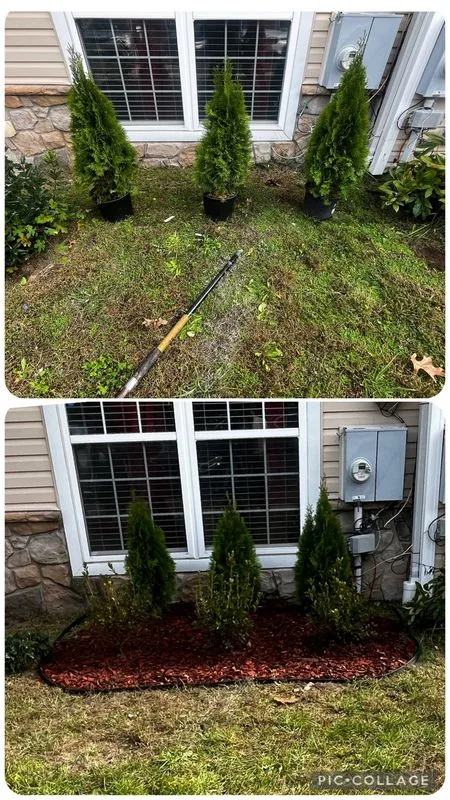
Fall is the best planting window in Pleasantville -- mid-September through the end of October. The soil is still warm enough for root growth, but the cooler air and shorter days reduce the water stress that kills so many spring-planted perennials and shrubs during their first August in the ground.
Before you plant anything, run a simple drainage test. Dig a hole twelve inches deep, fill it with water, and time how long it takes to empty. Under an hour means you have sandy, well-drained soil. Several hours or more means clay. Many Pleasantville lots will give you both results depending on where you dig. Match your plant choices to what the test tells you at each planting location.
For clay areas, do not mix in sand -- that creates something closer to concrete. Instead, top-dress with two to three inches of shredded leaf compost and let earthworms work it in naturally over the first season. For sandy spots, the same compost layer helps hold moisture longer without wrecking the drainage that most natives prefer.
Water new plantings deeply every two to three days through the first growing season. After that initial year, these species will largely take care of themselves -- one of the core reasons native plants make so much financial sense over the long run.
Getting Professional Help in Pleasantville
The mixed soil conditions across Pleasantville -- clay in one corner, sand in another, tidal influence along the eastern border -- make plant placement more consequential here than in most Atlantic County towns. A species that thrives on the high ground along Franklin Boulevard may rot in the low ground two blocks east. Our landscape design process starts with an on-site walkthrough to map drainage, soil type, shade patterns, and microclimates across your specific lot. From there, we build a planting plan that puts every species exactly where it will succeed.
Our plant care team handles bed preparation, installation, first-year watering management, seasonal cutbacks, and mulch renewal. We source native plant material from South Jersey growers whose stock is adapted to local genetics and soil chemistry -- an important distinction from the big-box nursery plants trucked in from out of state.
Neighboring towns face different but related challenges. If you are curious about how salt exposure changes the equation just a few miles away, read our native plant guides for Absecon and Somers Point.
Need Help With Your Property?
Sean Patrick Services provides professional lawn care and landscaping across Atlantic County, NJ. From native plant installations and landscape design to weekly mowing and seasonal cleanups, we handle it all so you can enjoy your yard without the work. Call us at 609-783-5287 or get a free estimate online.