
Best Native Plants for Landscaping in Northfield, NJ
Every property in Northfield has a story written in its terrain. Maybe your lot on Burton Avenue backs up to a stand of pitch pines and the soil is bone-dry sand. Maybe your yard off Davis Avenue slopes toward a low spot where water pools after every thunderstorm. Maybe you are on the Shore Road corridor and your lot gets full sun from dawn to dusk, or maybe you are tucked behind the tree line near Birch Grove Park and your backyard barely sees direct light past noon. The point is, Northfield is not one landscape -- it is several, packed into a small borough between Linwood and Pleasantville, and a native planting strategy has to address each zone on your property individually.
That is exactly how we approach native plant design at Sean Patrick Services. Instead of handing you a generic plant list, we think about your yard the way nature does: as a collection of distinct habitats determined by sun, soil, moisture, and wind exposure. This guide breaks a typical Northfield property into five functional zones and recommends specific native plants for each one.
Zone 1: The Front Foundation -- What Visitors See First
The beds directly against your house are the most visible part of your landscape and carry the most visual weight. In Northfield, the front foundation typically gets a mix of morning and afternoon sun, with some shade thrown by the roofline and any mature trees in the front yard. The soil here is often drier than the rest of the lot because roof overhangs deflect rain.
Inkberry holly (Ilex glabra 'Shamrock') is the native answer to boxwood. It stays three to four feet tall, holds dark evergreen foliage through winter, and never gets the blight, bronzing, or deer damage that plagues imported hedge plants. Space them two feet apart along the front wall for a clean, year-round presence. Between the inkberry, plant clusters of butterfly milkweed (Asclepias tuberosa) -- its vivid orange flowers from June through August are visible from the street and announce that your garden does something most gardens on Tilton Road do not: it feeds monarchs. Female monarchs seek out milkweed to lay their eggs, and the caterpillars that hatch on your plants contribute directly to a species fighting for survival. Milkweed sends a deep taproot into Northfield's sandy soil and never asks for supplemental water after its first season.
Zone 2: The Sunny Open Yard -- Meadow Potential
If your Northfield property has a section of open, south-facing yard that bakes in full sun all summer, you are sitting on prime meadow ground. This is where most homeowners fight to keep a lawn alive in the dry sand, pouring on water and fertilizer for a result that still browns out by August. A native meadow planting in the same spot will look better, cost less, and feed an ecosystem.
Little bluestem (Schizachyrium scoparium) is the anchor grass. It grew across this entire coastal plain long before anyone subdivided it into borough lots. Two to three feet tall, blue-green in summer, it transforms into copper and rust in October and holds fluffy white seed heads that catch December frost like jewelry. Little bluestem actually weakens if you fertilize or overwater it, so the hot, dry, sandy conditions that kill conventional turf make this grass thrive.
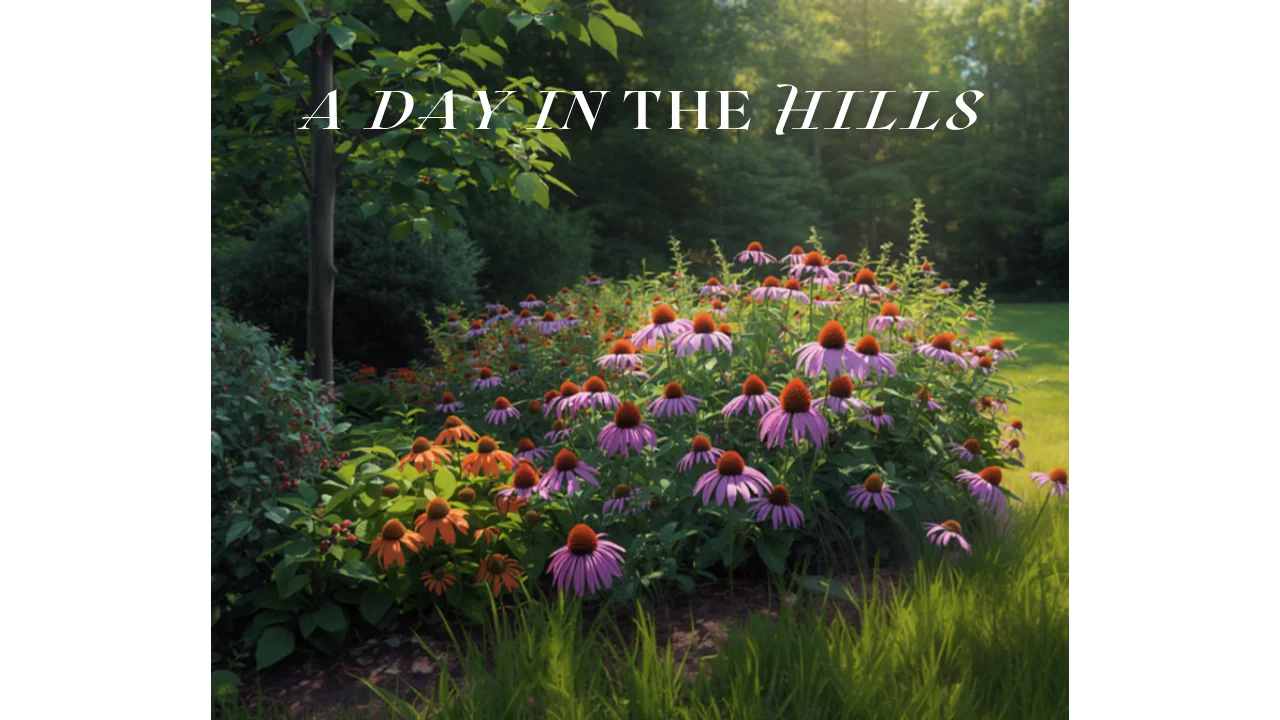
Thread purple coneflower (Echinacea purpurea) through the grass -- its pink-purple daisy blooms rise two to four feet and attract every pollinator in the neighborhood from June through August. Let the spent seed heads stand through winter. Goldfinches will pick them clean. Add drifts of black-eyed Susan (Rudbeckia hirta) for golden-yellow contrast that blooms on the same schedule. Together, these three species create a meadow strip that looks intentional, attracts constant wildlife activity, and needs nothing more than a single late-winter mow to reset for spring.
Zone 3: The Wet Spot -- Turning a Problem Into an Asset
Many Northfield properties, particularly those closer to the creek corridors and the low-lying areas near Birch Grove Park, have patches where clay pockets in the otherwise sandy soil trap water after rain. These soggy spots kill most conventional shrubs and turn lawn into a muddy mess. Native plants did not just adapt to these conditions -- some of them require them.
Sweet pepperbush (Clethra alnifolia) is built for this zone. It grows four to six feet tall in moist to wet soil and produces bottlebrush spikes of white flowers in July and August that smell so intensely sweet you can detect them from twenty feet away. The scent stops people mid-stride. The cultivar 'Ruby Spice' produces pink flowers for a warmer look. Either way, hummingbirds and native bees swarm the blooms all summer, and the foliage flares golden-orange in autumn.
Pair the pepperbush with winterberry holly (Ilex verticillata), a deciduous holly that drops its leaves in fall to reveal dense clusters of fire-engine-red berries packed along every branch. The effect against a grey November sky or a dusting of January snow is dramatic enough to stop traffic on a Northfield side street. Winterberry handles wet clay soil that would rot most ornamentals. You need one male plant for every six to ten females to get berries, but the payoff is huge -- cedar waxwings descend on winterberry in flocks during late winter, stripping a shrub clean in hours.
For groundcover in the wet zone, blue flag iris (Iris versicolor) sends up stunning violet-blue flowers on two-foot stems in May and June, then holds attractive sword-shaped foliage for the rest of the season. It thrives in the same saturated soil that sweet pepperbush loves and never needs dividing or fussing.
Zone 4: The Woodland Edge -- Where Lawn Meets Trees
This is Northfield's signature landscape feature. Many properties here border stands of existing trees -- the wooded patches that give places like Birch Grove Park their character. The transition from mowed lawn to tree canopy is where a native planting makes the most visual impact and ecological sense. Instead of mowing right up to the tree trunks, pull the lawn edge back six to ten feet and plant a layered native border.
Start with eastern redbud (Cercis canadensis) as a small understory tree. It erupts in rosy-pink flowers along bare branches in April, before anything else has leafed out, and the display is jaw-dropping against a backdrop of still-bare oaks. The heart-shaped leaves provide dappled shade in summer and turn soft gold in fall. Redbud fixes nitrogen in the soil, quietly enriching the ground for its neighbors. One specimen planted at the edge of a wooded lot on a Northfield property becomes the single most talked-about plant in the yard each spring.
Beneath the redbud and along the shaded edge, mass wild geranium (Geranium maculatum) as a knee-high groundcover. Lavender-pink flowers appear in April and May, followed by deeply lobed foliage that knits together into a weed-suppressing carpet. Behind it, plant a row of highbush blueberry (Vaccinium corymbosum) -- this Pine Barrens native grows six to ten feet tall in Northfield's acidic sandy soil without any amendment. White bell flowers in spring, edible berries in summer, blazing red foliage in fall, and warm reddish bark in winter. It is the only ornamental shrub that also feeds your family from July through August. Plant at least two cultivars so they cross-pollinate and set heavy fruit.
Zone 5: The Back Corner -- The Low-Maintenance Privacy Screen
Every Northfield yard has that back corner or rear property line where you want screening but do not want to spend your weekends pruning. Conventional privacy hedges -- privet, arborvitae, Leyland cypress -- demand constant shearing, get hammered by deer, and provide zero ecological value. A native screen does the job better and asks for almost nothing in return.
Northern bayberry (Myrica pensylvanica) anchors this zone. Five to eight feet tall, dense and semi-evergreen, bayberry forms a thick visual barrier that smells fantastic when you brush against it. It fixes its own nitrogen, improves the sandy soil it grows in, and produces waxy grey berries that migrating warblers strip bare each October. Three bayberry plants spaced four feet apart will knit together into a solid screen within two growing seasons.
In front of the bayberry, plant aromatic aster (Symphyotrichum oblongifolium) for a two-foot-tall mound of violet-blue flowers that erupts in September and October, right when everything else in the neighborhood is fading. It blooms for weeks, feeds late-season monarchs stocking up for migration, and its foliage smells like balsam when crushed. This is the kind of plant that makes a back corner worth visiting rather than ignoring.
Bringing It All Together
The zone approach works in Northfield because it matches each plant to the conditions it actually evolved to handle. You stop fighting dry sand in sunny spots. You stop fighting wet clay in low spots. You stop fighting shade under trees. You start working with what your property already gives you, and the result is a landscape that looks better, costs less to maintain, and supports the birds, butterflies, and pollinators that make Birch Grove Park and the surrounding corridors such valuable habitat.
If you are ready to rethink your Northfield property zone by zone, our design team will walk your lot, map the conditions, and build a planting plan tailored to your specific terrain. We also handle ongoing lawn care and maintenance for the turf areas you choose to keep, so every part of your yard gets professional attention.
For a different perspective on native plants in a sheltered inland setting, read our guide to native plants in Linwood, or see how the game changes entirely on the coast in our Margate City native plants article.
Need Help With Your Property?
Sean Patrick Services provides professional landscaping and native plant design across Northfield, NJ and all of Atlantic County. Whether you want to convert a section of lawn to native meadow or add native shrubs to your foundation, our crew has the expertise to bring your vision to life. Call us at 609-783-5287 or get a free estimate online.