
Best Native Plants for Landscaping in Longport, NJ
Longport occupies barely half a square mile at the southern tip of Absecon Island, and nearly every inch of it is spoken for. Fewer than 1,000 year-round residents share this exclusive borough with some of the most meticulously maintained properties in Atlantic County. The homes along Atlantic Avenue, Beach Drive, and the numbered avenues from 33rd down to 11th sit on compact lots where every planting decision is visible from the street and expected to meet a high standard. That expectation is precisely why so many Longport landscapes fail.
Here is the problem nobody at the garden center will tell you: Longport is not a suburb with a beach view. It is a sliver of sand caught between the Atlantic Ocean on one side and Risley Channel and the back bay on the other. Salt does not just blow in from the east during storms. It arrives from the west, too. Your plants are being hit from both directions, constantly. The species that line the driveways of homes in Cherry Hill or Haddonfield will not last two full seasons here. But the right native plants will not only survive this environment, they will make your property look better than any imported ornamental ever could.
The Double-Exposure Problem
Most barrier island communities at least have one sheltered side. Longport does not. The borough is narrow enough that a strong northeast wind pushes ocean spray clear across to the bay side, and a southwest blow off Risley Channel returns the favor. During nor'easters, the entire island is essentially submerged in airborne salt. This double exposure is the single biggest reason conventional landscapes fail here, and it is the reason native species selection is not just a nice idea in Longport but a financial necessity.
Consider what that salt does to a standard residential planting. Boxwood foliage absorbs salt through microscopic pores, causing cell death from the leaf edges inward. By mid-July, the windward side is brown and crispy. Leyland cypress follows the same trajectory. Hybrid tea roses defoliate. Even so-called tough foundation plants like burning bush and privet develop chronic dieback that no amount of pruning can outrun. Homeowners replace them, and the cycle starts again. Over a decade, the replacement costs on a Longport property can easily exceed the original landscape installation.
Native coastal species break that cycle permanently. Their foliage evolved waxy cuticles, trichomes, and cellular salt-exclusion mechanisms that function under exactly the conditions Longport delivers. Their roots reach deep into the sand column to find moisture that surface irrigation cannot match. And because they are genetically calibrated to this environment, they look healthy and full when everything around them is struggling. The result is a landscape that actually improves your property value rather than depreciating it. For homeowners who understand that landscape design is an investment, native plants are the highest-return option available.
Six Native Plants That Meet Longport's Standards
Longport is not a place for sprawling meadow plantings or untamed cottage gardens. The aesthetic here leans toward clean, composed, tailored. The following species deliver that refined look while handling double salt exposure, fast-draining sand, and relentless wind without flinching. Each one earns its place on a compact lot where there is no room for plants that do not perform.
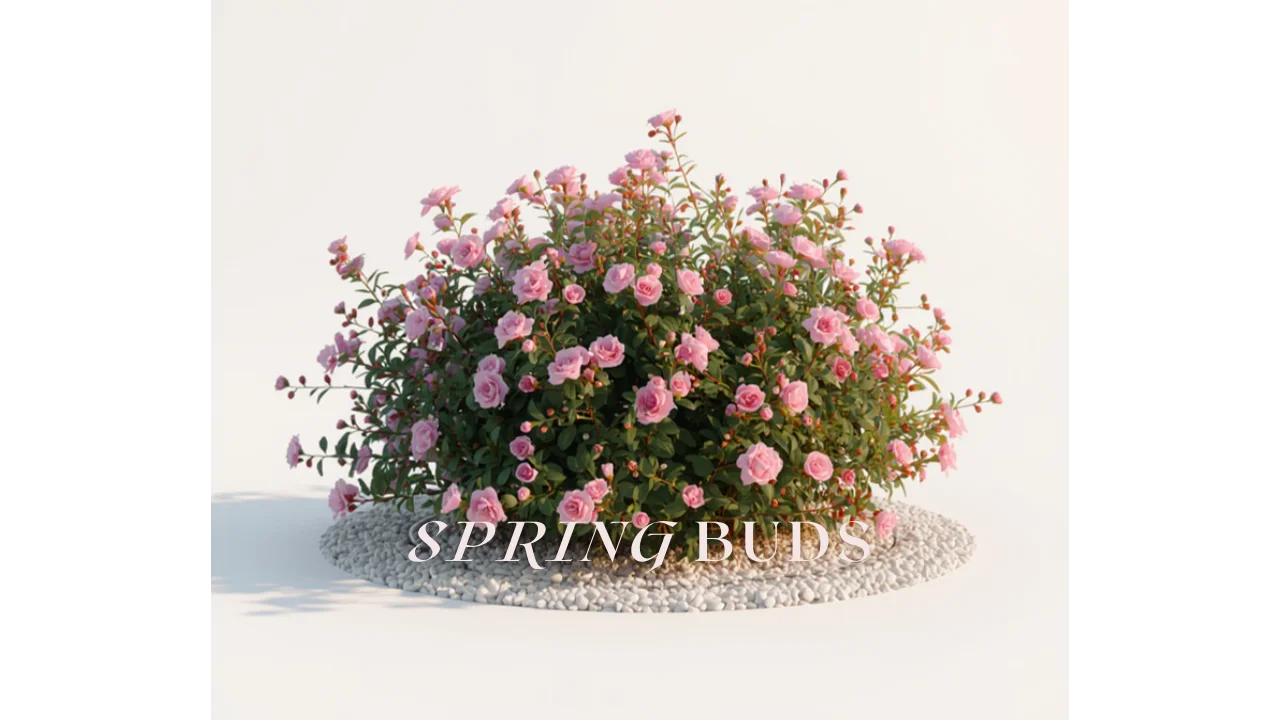
Shore Rose (Rosa rugosa)
The role it fills: Flowering hedge, property-line definition, fragrance near entryways. Size: 3 to 6 feet tall, spreading by suckers. Why it works in Longport: Large, fragrant pink or white blooms arrive in June and repeat through September, followed by red-orange hips that hold through winter. The heavily textured, rugose leaves are among the most salt-resistant of any flowering shrub. Shore rose forms dense, thorny masses that double as a privacy barrier between neighboring lots. On the tight avenues between 20th and 11th, where properties sit close together, a shore rose hedge along the side yard provides screening, color, and year-round structure in a planting strip barely three feet wide. Leave the hips on the stems through winter for bird forage and visual interest against the gray sky.
Inkberry Holly (Ilex glabra)
The role it fills: Evergreen foundation, formal hedge, year-round structure. Size: 3 to 6 feet, compact and rounded. Why it works in Longport: This is the plant that replaces every scorched boxwood and dead Japanese holly on the island. Glossy, dark green foliage stays tight and clean through winter, salt storms, and summer heat. Select dwarf cultivars for foundation beds flanking front doors, or use full-sized specimens as a clipped hedge along walkways and patios. Inkberry handles both the soggy drainage of low-lying bay-facing properties and the fast-draining sand on the ocean side. On a borough where streetscape appearance matters as much as it does in Longport, inkberry delivers the manicured, green-year-round look that homeowners want without the maintenance treadmill that boxwood demands. One pruning in early spring keeps it sharp all year.
Little Bluestem (Schizachyrium scoparium)
The role it fills: Ornamental grass, textural accent, lawn replacement. Size: 2 to 3 feet tall, upright and narrow. Why it works in Longport: Through summer, its blue-green stems offer a cool contrast against the sand-toned hardscape. In autumn, the entire plant shifts to a coppery bronze column with silver-white seed heads that catch late-afternoon light off the ocean. Little bluestem is scaled perfectly for Longport lots. It does not flop, does not spread aggressively, and does not need rich soil. In fact, it becomes weak and floppy in amended soil. It thrives in the nutrient-dead sand that Longport sits on. Mass it along a driveway, cluster it around a patio, or fill a sunny front bed where turf grass has given up. Cut it back to four inches in late February and the fresh blue-green growth returns within weeks.
Eastern Prickly Pear (Opuntia humifusa)
The role it fills: Low accent, conversation piece, rock garden focal point. Size: 6 to 12 inches tall, slowly spreading. Why it works in Longport: A cactus on the Jersey Shore sounds wrong until you see one thriving in pure sand, blooming bright yellow with orange centers in June, and producing reddish-purple fruit by late summer. Eastern prickly pear is native to the dunes and exposed sandy sites along the entire Atlantic coast. It requires zero irrigation, zero fertilizer, zero maintenance. On Longport properties, it works in the baking-hot strip along a south-facing foundation wall, in a gravel-mulched rock garden beside the front steps, or in a large container on a deck or patio. Guests will ask about it. It tolerates conditions that would kill every other plant on this list, and it does so while flowering. For the homeowner near the jetty or along the Beach Drive blocks who is tired of replacing burned annuals every season, prickly pear is the permanent solution.
Bayberry (Morella pensylvanica)
The role it fills: Windbreak, mass planting, wildlife habitat. Size: 5 to 8 feet tall, dense and rounded. Why it works in Longport: Aromatic, leathery foliage coated in a waxy layer that actively repels salt spray. Waxy gray berries that feed overwintering songbirds from November through March. Root nodules that fix atmospheric nitrogen, gradually enriching the barren sand it grows in. Bayberry is the workhorse that anchors a Longport landscape. Position it along the windward property edge, whether that faces the ocean or the bay, and it absorbs the punishment that would otherwise reach your house and your more ornamental plantings. Three to five specimens planted in a staggered row create a living wall that reduces wind speed by 40 to 60 percent across the rest of the lot. No maintenance after the first year. No irrigation. No excuses.
Seaside Goldenrod (Solidago sempervirens)
The role it fills: Late-season perennial color, pollinator support, border accent. Size: 2 to 4 feet tall. Why it works in Longport: When September arrives and the summer annuals are spent, seaside goldenrod is just hitting its peak. Arching plumes of golden-yellow flowers bloom from late August through October, and they pull in monarchs, native bees, and painted ladies at a time when little else is flowering. The thick, fleshy, glossy leaves handle direct salt spray from either direction without showing damage. Tuck it into sunny border plantings, along a front walkway, or at the base of a bayberry screen where it catches light from the street. It seeds modestly and spreads gently by rhizomes, filling in gaps over time without swallowing its neighbors. And no, it does not cause allergies. Ragweed, which blooms at the same time and looks completely different, is the culprit. Goldenrod is pollinated by insects, not wind.
Making It Work on a Longport Lot
Small lots leave no room for trial and error. Every plant needs to perform from day one and earn its square footage for years afterward. Here is how to approach a native installation on a Longport property.
Prioritize structure over filler. On a 40-by-100-foot lot, you might have 300 square feet of actual plantable space after the house, driveway, and walkways are accounted for. Choose plants that deliver multiple seasons of interest rather than species that peak for two weeks and spend the rest of the year looking ordinary. Inkberry gives you twelve months of green. Little bluestem gives you summer blue, fall bronze, and winter seed heads. Shore rose gives you blooms, hips, and barrier function. Every plant here pulls double or triple duty.
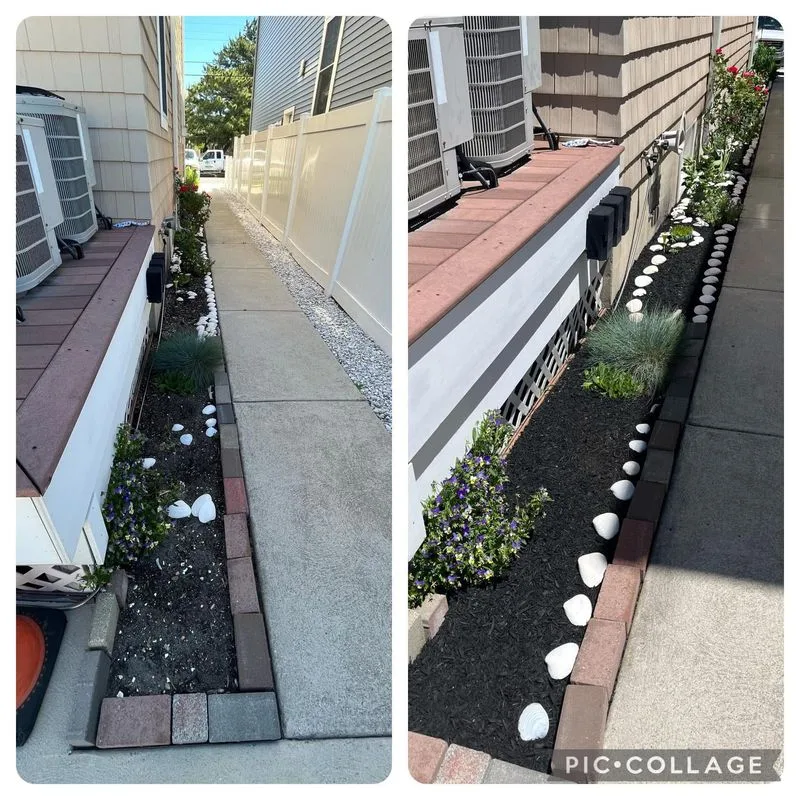
Use stone or shell mulch exclusively. Shredded bark and wood chips become airborne in the first strong wind event. Crushed shell or pea gravel stays in place, gives beds a clean, tailored appearance that matches Longport's streetscape expectations, and reflects excess heat away from root zones during summer. A two-inch layer is sufficient.
Do not import topsoil. Clay-based soil dumped onto barrier island sand creates a drainage trap that pools water against root crowns and causes rot. These plants evolved in pure sand. Trust that. If you want to add a small amount of organic matter, work a thin layer of composted leaf mold into the top three inches of existing sand, but keep it light.
Install in October or November. Fall planting gives roots time to establish in cooler, less saline conditions before the demands of summer. Spring installations work too, but summer planting on a double-exposure barrier island is asking for transplant failure. Provide consistent deep watering through the first full growing season. After establishment, these species handle themselves. Reduced ongoing care requirements are one of the primary financial advantages of going native.
Let Sean Patrick Services Handle the Details
We design and install native landscapes for Longport properties with the understanding that this borough demands a different caliber of work. Compact lots, double salt exposure, and high aesthetic standards mean every plant needs to be positioned with precision and sourced from coastal nurseries that grow salt-hardened stock rather than greenhouse specimens that have never seen ocean air.
Our design process starts with an honest assessment of your property's exposure from both the ocean and bay sides, your soil drainage, and your goals for the space. From there, we build a planting plan that delivers year-round structure and seasonal color within the footprint your lot allows. We also provide seasonal cleanups and storm response for island properties that take hits during heavy weather. If you have been cycling through burned-out conventional plantings and are ready for something that actually lasts, call us or request your free estimate. For a look at how native plant selection changes on a larger barrier island, see our Brigantine native plants guide, or check out our Margate City guide for another Absecon Island perspective.
Need Help With Your Property?
Sean Patrick Services provides professional lawn care and landscaping across Atlantic County, NJ. From native plant installations and landscape design to weekly mowing and seasonal cleanups, we handle it all so you can enjoy your yard without the work. Call us at 609-783-5287 or get a free estimate online.