
Mulch Installation: How Much and When for South Jersey Beds
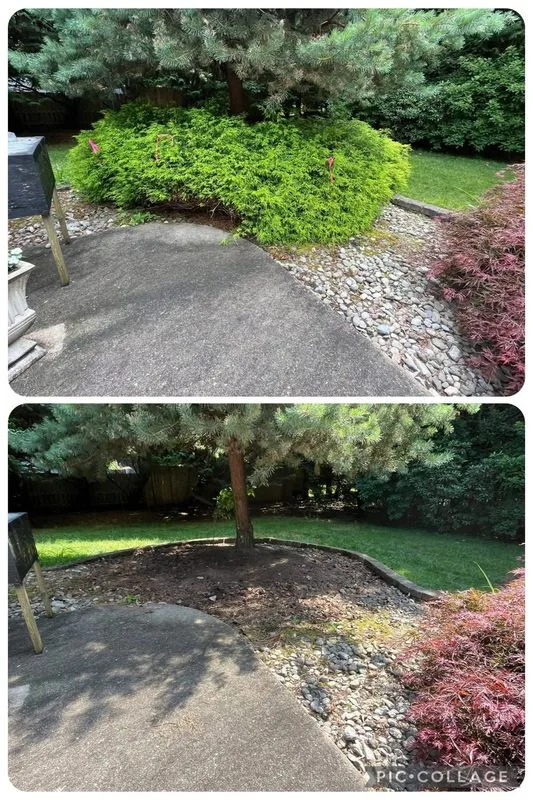
Mulching is one of the most straightforward things you can do for your landscaping beds, but it goes wrong more often than it should. Too early, too deep, piled against the trunk, or laid over weeds that were never cut back — any one of those mistakes costs you the benefits and sometimes costs you a plant. Getting it right is mostly about timing and doing the prep work first.
South Jersey adds a few wrinkles. The sandy loam soils in Egg Harbor Township and Galloway drain fast, which means beds dry out quicker than people expect. Coastal wind in shore towns like Brigantine and Linwood shreds lighter mulches and blows loose material off beds inside a season. Double-shredded hardwood handles both problems better than a single-ground or nugget product — it knits together as it breaks down and stays put. Here is what you need to know before you order a load.
When Is the Right Time to Put Down Mulch in South Jersey?
Mid-to-late April is the target window for most of Atlantic County. The goal is to mulch after the soil has had a chance to warm from winter but before summer heat kicks in and weed seeds start germinating in force. Mulching too early — March or the first week of April — traps cold, wet soil and slows root activity. Mulching too late means you have already lost the early weed suppression window.
Pair your mulch installation with your spring cleanup. Beds should be cleaned out, edges cut, and any winter debris removed before a single wheelbarrow of mulch goes in. Laying mulch over dead leaves and old stems just buries the problem.
How Deep Should Mulch Be Applied?
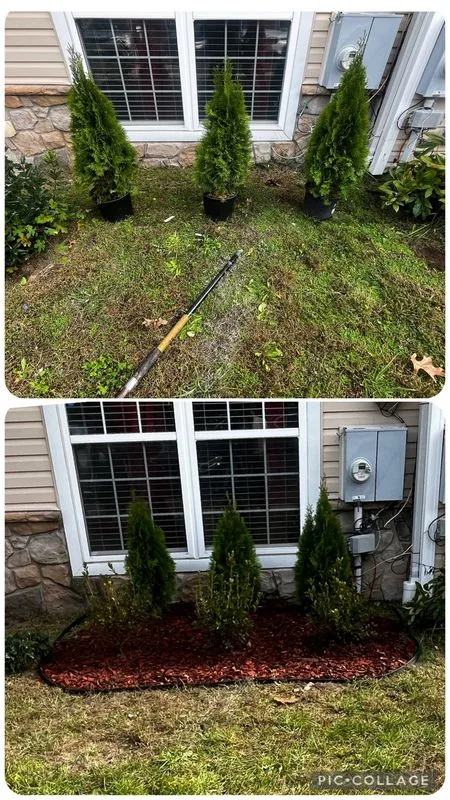
Two to three inches is the correct depth — not one, not four, not six. One inch does almost nothing for weed suppression or moisture retention. Anything over three inches starts restricting airflow and water penetration into the soil below. Four or more inches of mulch can actually repel rain, sending it sheeting off the bed surface instead of soaking in.
The single biggest mistake homeowners and some landscapers make is the mulch volcano: piling mulch up against the base of shrubs and trees so it looks like a cone. That keeps the bark constantly moist, invites rot, and gives rodents a sheltered spot to chew through the cambium. Keep mulch at least two to three inches away from any trunk or woody stem. Flat and even across the bed, clear of plant bases.
How Do You Estimate How Much Mulch You Need?
Mulch is sold by the cubic yard. A cubic yard covers 108 square feet at three inches deep. The formula is straightforward:
- Measure square footage. Length times width for rectangular beds. Irregular shapes — break them into sections and add them up.
- Divide by 108. That gives you cubic yards at a three-inch depth.
- Round up. It is better to have a half yard left over than to come up short mid-bed.
A typical residential property in Linwood or Northfield with foundation plantings and a few landscape beds usually runs three to six cubic yards. Larger corner lots or properties with extensive island beds can push eight to ten. If you are unsure, measure first and call for a quote — guessing leads to either wasted material or a second delivery fee.
Double-Shredded Hardwood vs. Other Mulch Types — Which Holds Up?
In South Jersey, double-shredded hardwood is the practical choice for most beds. It breaks down at a reasonable rate, feeds the soil as it does, and holds its position in wind better than large nuggets or single-ground material. Pine bark nuggets look clean when fresh but blow around, float out of beds in heavy rain, and take a long time to break down in a way that benefits soil biology.
Color is a preference call, but keep it honest. Black mulch looks sharp when fresh but fades fast in direct sun. Brown and natural hardwood tones hold their look longer. Dyed red mulch is fine if it fits the property aesthetic, but the dye does nothing for the soil and the color can look artificial next to plant material. Whatever you choose, stay consistent across the property.
Should You Refresh Existing Mulch or Do a Full Replacement?
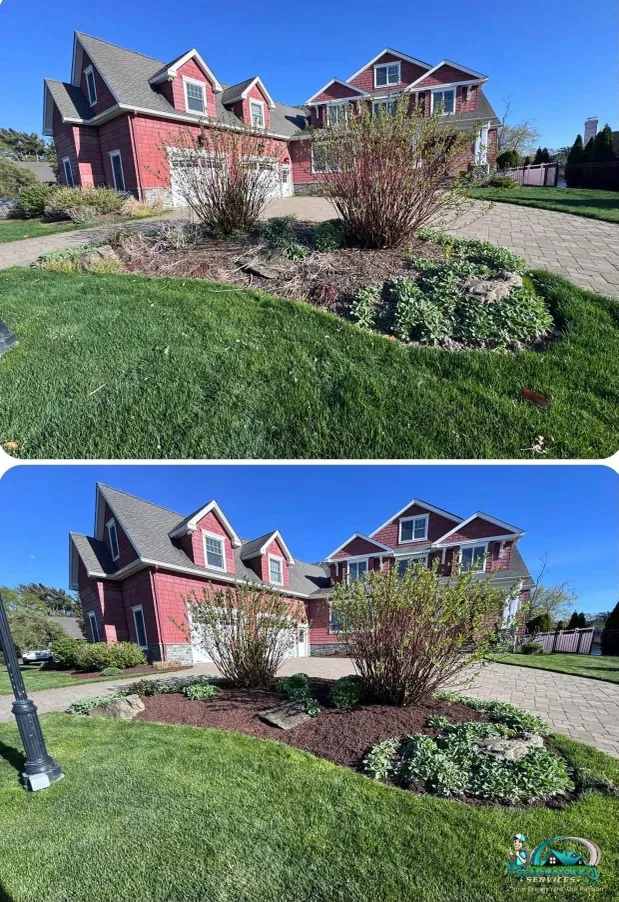
If last year's mulch is still a full inch deep and has not fully decomposed into the soil, a refresh — raking the existing material and topping it to the two-to-three-inch mark — is usually sufficient. You are just adding an inch or so to restore depth and color.
Full replacement makes sense when the old mulch has gone matted and dense, forming a crust that sheds water instead of absorbing it. You will notice this if rain beads on the surface rather than soaking in, or if you pull back the mulch and the bottom layer is compacted and grey rather than still decomposing. In that case, rake out what you can and start with a fresh two-to-three-inch layer.
What Do You Actually Get From Mulching Your Beds?
Done right, mulch does four things simultaneously that no other single maintenance step can match:
- Weed suppression. A proper two-to-three-inch layer blocks light to the soil surface and prevents most annual weed seeds from germinating. It does not stop perennial weeds with established root systems, but it significantly reduces the total weed load.
- Moisture retention. Sandy soils in Atlantic County lose water fast. Mulch cuts evaporation from the soil surface, which matters most in July and August when you are running irrigation or hand-watering.
- Soil temperature regulation. Mulch moderates the temperature swings between hot days and cooler nights, which reduces stress on shallow-rooted perennials and new plantings.
- Curb appeal. Clean, uniform mulch makes every planting look more intentional and the entire property more maintained. It is one of the highest-return cosmetic investments per dollar spent.
For properties where the bed layout itself needs work before mulch makes sense, we handle landscape design and mulch installation as part of larger bed renovation projects. Fresh mulch on a poorly designed bed just makes the layout problems more visible. Get the structure right first, then maintain it annually.
If you want to see the full range of what we handle in Atlantic County, the landscaping services page covers everything from bed installation to drainage work.
Need Help With Your Property?
Sean Patrick Services handles lawn care, landscaping, drainage, cleanups, and outdoor improvements across Atlantic County, NJ. Call 609-783-5287 or get a free estimate online.