
Pavers & Retaining Walls in Atlantic County, NJ
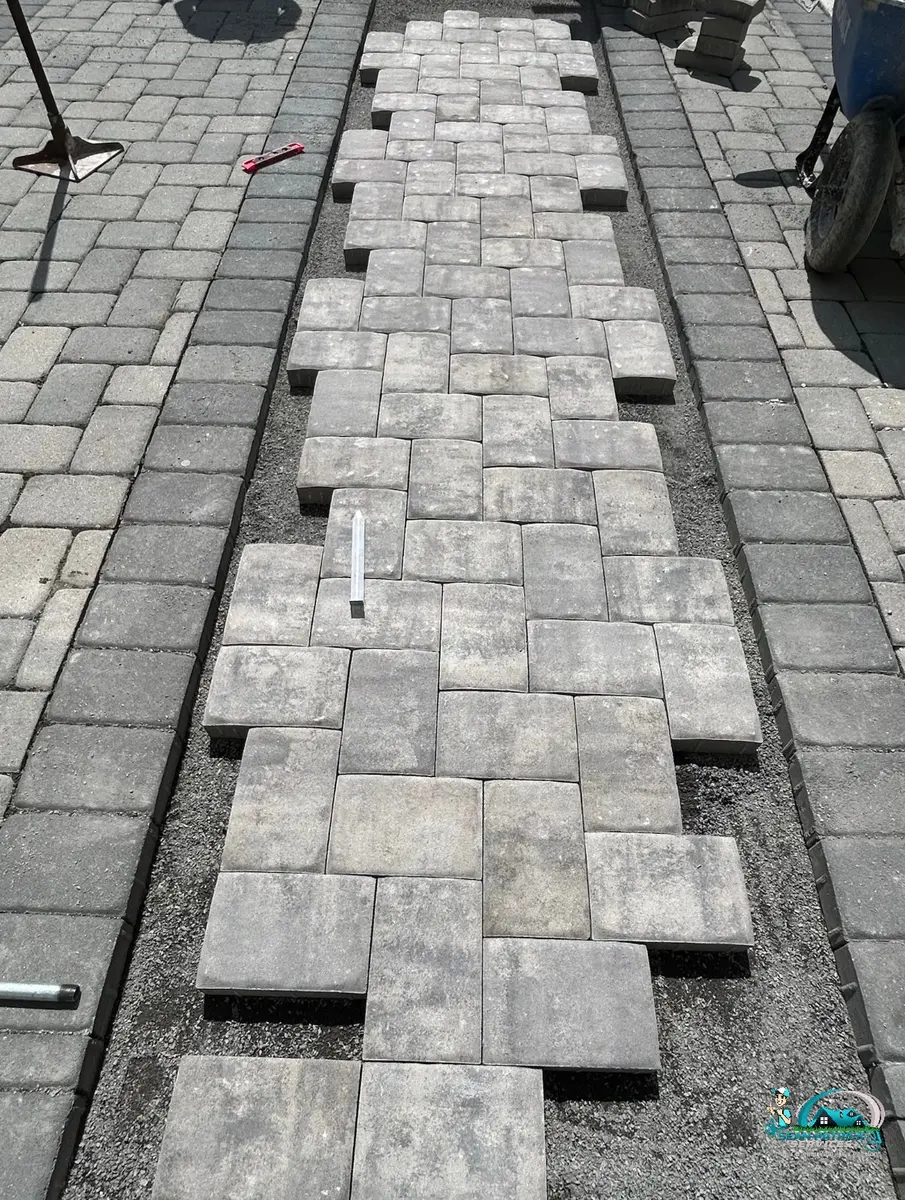
Are Pavers the Right Choice for Your Patio or Walkway?
Pavers are individual concrete or stone units set on a compacted base and locked together with joint sand. Because each piece can move a little on its own, a paver patio flexes with the ground instead of cracking. That matters here. Inland soil in Egg Harbor Township and Galloway holds water and moves with every freeze and thaw, and a solid slab can crack when it does. A paver surface rides it out.
Pavers also come up and go back down. If a section settles, or you need to run a line under the walk years from now, we pull the pavers, fix what’s underneath and reset the same pieces. Poured concrete doesn’t give you that option.
Pavers vs. Poured Concrete
Neither one is right for every yard, and we lay out the tradeoffs at the estimate. Pavers take more labor to install: more digging, more base, and a lot of hand work cutting and fitting. In return you get patterns, colors and borders, a surface that handles freeze-thaw well, and repairs that don’t leave a patch. The joints need sand topped off now and then, and weeds can show up in joints that get ignored.
Poured concrete goes in faster and gives you one smooth, solid surface that’s easy to shovel and sweep. The catch is that concrete eventually cracks, and a repair usually means cutting out a whole section, which never quite matches the old. For a plain side walk, a pad or a driveway apron, concrete is often the practical pick. For a patio you’ll look at every day, pavers usually win.
Paver Walkways & Borders
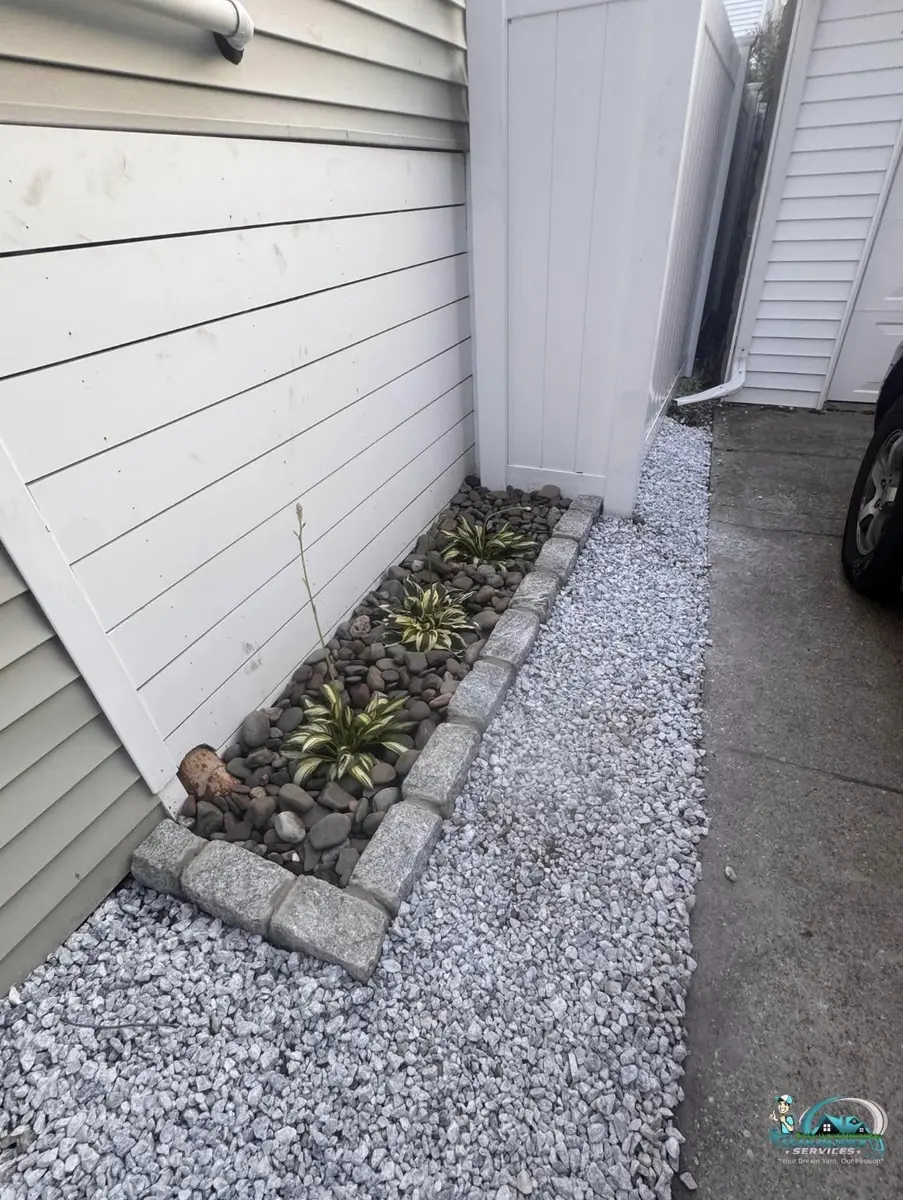
A paver walk fits the path from the driveway to the front door, a side yard or the route out to the shed. In Ventnor we put in a paver walkway with fresh mulch beds on both sides, so the walk and the landscaping went in as one job. Paver borders work too: a row of pavers along the edge of a concrete driveway, a band around a patio, or an edge that keeps mulch and stone out of the lawn.
Retaining Walls & Raised Beds
Retaining walls hold back soil on a slope, square off a raised bed or level a yard that falls toward the house. A wall needs a solid footing and a way for water to get out from behind it. Skip either one and it will start to lean.
At one shore home we built a curved block retaining wall that turned a worn-out slope into a raised planting bed, then filled it with fresh soil and new plantings. Walls and pavers often go in together: a raised bed beside a new patio, or a low wall that lets a walkway run level across a sloped front yard.
Fixing Sunken & Shifted Pavers
If your pavers have dipped, spread apart or started rocking underfoot, the problem is almost always the base. Either there wasn’t enough gravel, it was never compacted, or water has been washing out the sand underneath. Shore homes in Margate, Longport and Ventnor see a lot of this because loose sand under a thin base moves easily when a nor’easter sends water across it. We lift the bad area, rebuild and compact the base, fix the edge restraint if it failed, and relay the pavers. When water is the cause, we’ll look at drainage or regrading so it doesn’t come back.
Planned With Your Landscaping & Lighting
A new patio looks half finished if the ground around it is a mess. We usually handle the planting, beds and edging in the same job, so the stone and the plants line up and the beds drain the right way. If the yard needs regrading or drainage work, that gets done first, before anything permanent goes in. Adding a walkway or patio out front? Plan the permanent lighting at the same time so you know how the whole house will look at night.
What’s Included
- Paver Patios
- Paver Walkways & Front Entry Paths
- Paver Borders & Driveway Edging
- Block Retaining Walls & Raised Beds
- Stone & Stepping-Stone Paths
- Excavation & Compacted Gravel Base
- Sunken & Shifted Paver Repair
- Mulch Beds & Planting Around New Work
Pavers and retaining walls are part of our hardscaping work, along with concrete, grading and drainage. Sean Patrick Services is fully licensed, insured & bonded (NJ HIC #13VH14215100), and estimates are free. Call 609-783-5287 or start your estimate online.
Get a Free Estimate Call Sean — 609-783-5287 →What Does Our Stone & Paver Work Look Like?
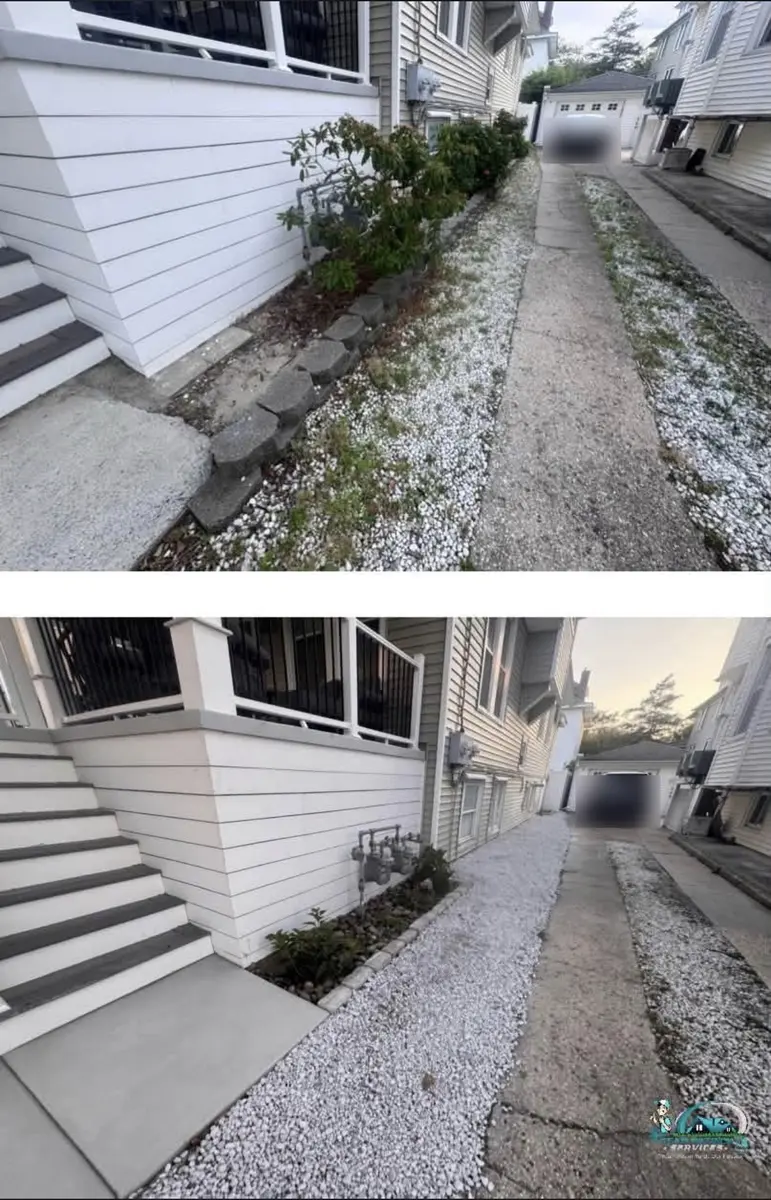
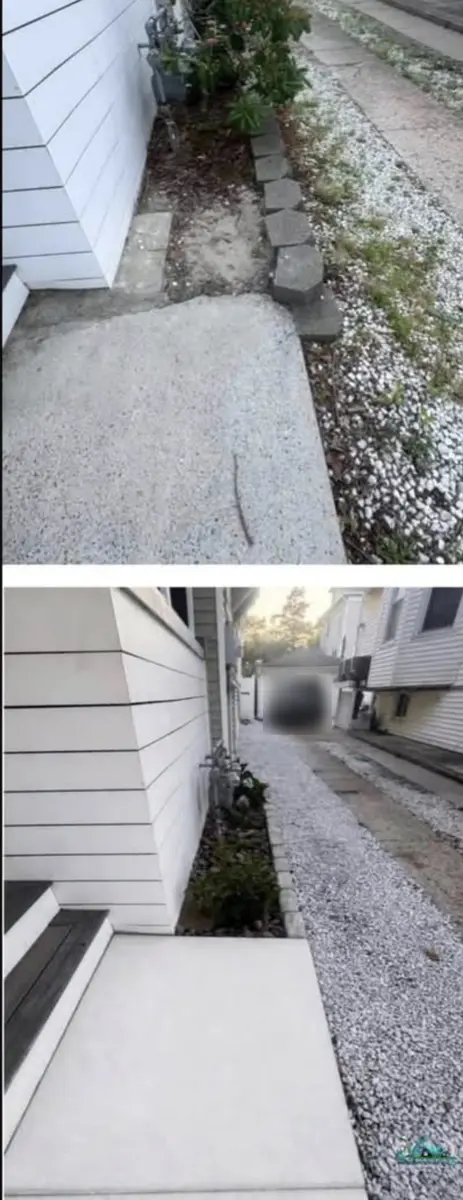
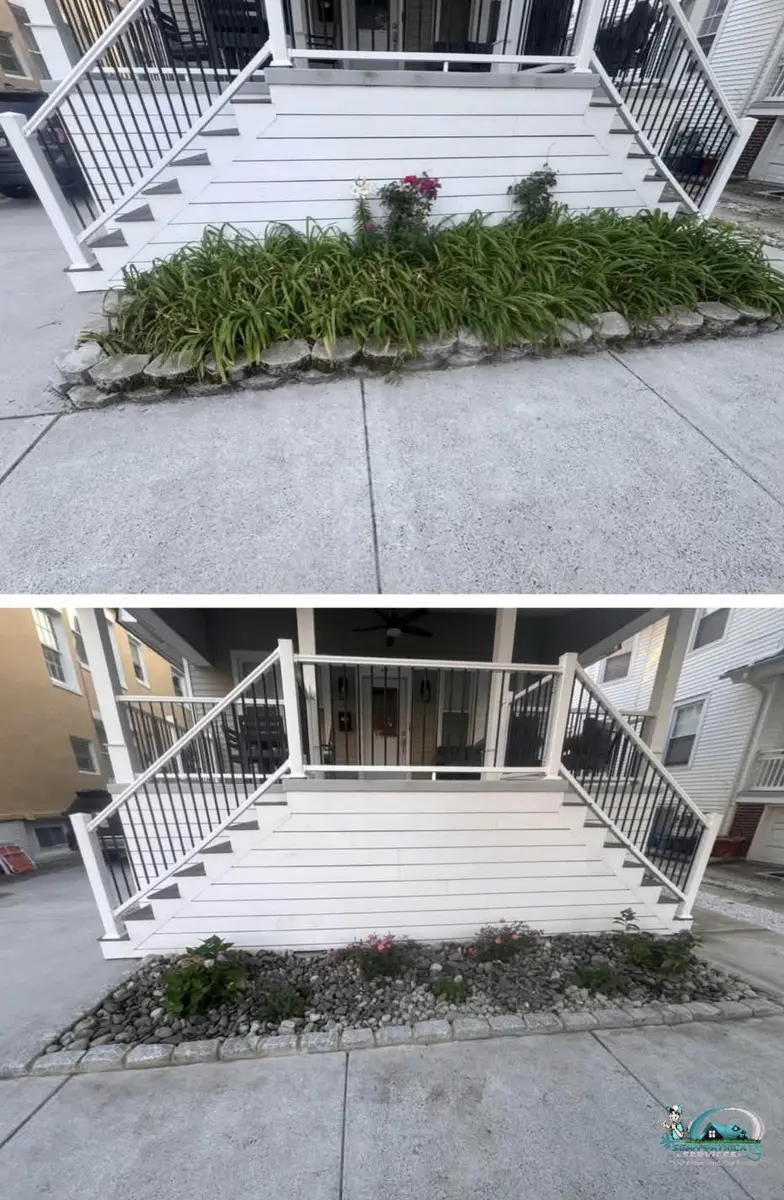
Before-and-after photos from recent Sean Patrick Services jobs.
What Other Services Do We Offer?
🏗 Concrete Work
Concrete sidewalks, walkways, pads, patios and driveway aprons, formed and hand finished, including tear-out of cracked concrete.
Learn More →⛏ Grading & Excavation
Yard regrading, finish grading for seed or sod, site prep for patios and concrete, land clearing and topsoil.
Learn More →💧 Drainage Solutions
French drains, swales, regrading and buried downspout lines that move water away from the house and dry out soggy yards.
Learn More →💡 Permanent Outdoor Lighting
Govee and Minleon permanent roofline lighting, app-controlled and up all year.
Learn More →What Do Homeowners Ask About Pavers & Retaining Walls?
More questions? See our full FAQ page or get a free estimate.