
If part of your yard turns into a pond after every heavy rain, or one corner stays soft and squishy for days, the water is telling you something. Standing water almost always comes down to a grading problem, a drainage problem, or both. Here is how we figure out which one a yard has, and what actually fixes it.
Why does water sit in some yards and not others?
Water follows the shape of the ground. If the yard slopes toward a low spot with no way out, water collects there and waits for the soil to absorb it. These are the causes we run into most around Atlantic County:
- Low spots and settled ground. Rotted-out stumps, old utility trenches and loose fill all sink over time and leave dips that hold water.
- Compacted soil. After construction, or years of foot traffic and parked equipment, soil gets packed so tight that water can't soak in, even in sandy areas.
- A high water table. In yards near the bays and back bays, in places like Somers Point, Linwood, Northfield, Absecon and Brigantine, the ground can already be close to saturated before the rain even starts.
- Heavier soil. Not every yard here is beach sand. Some inland lots have heavier soil or clay-rich fill that drains slowly.
- Roof and hardscape runoff. Downspouts that dump right at the foundation, or a driveway and patio that shed water straight onto the lawn.
- The lot next door. If the neighbor's yard sits higher than yours, their runoff becomes your problem.
Nor'easters make all of it worse. A long, steady soaking rain finds every low spot in the yard, and a saturated yard has nowhere to put the next storm.
Is it a grading problem or a drainage problem?
The easiest way to tell is to walk the yard during or right after a heavy rain and watch where the water goes.
- If water runs toward the house or pools against the foundation, the grade around the house is likely wrong. Ground should slope away from the foundation, not toward it.
- If water collects in one low area and soaks in within a day or so, regrading that area is often enough.
- If water sits for days even where the slope looks fine, the soil can't take the water or the water table is high, and the water needs a way out, like a French drain.
Take a few photos and note how long the water hangs around. That helps a lot when we come out for the estimate, since the yard is usually dry by then.
What does regrading a yard actually involve?
Regrading means reshaping the surface so water runs where you want it to go. On a typical job we:
- Clear the area of old turf, weeds, brush and debris.
- Check the existing slope and find the true high and low points.
- Cut down high spots, fill low ones, and shape a gentle slope away from the house toward a spot that can take the water.
- Compact the soil so it doesn't settle into new low spots after the first few storms.
- Finish with topsoil and seed or sod so the new grade holds and doesn't wash out.
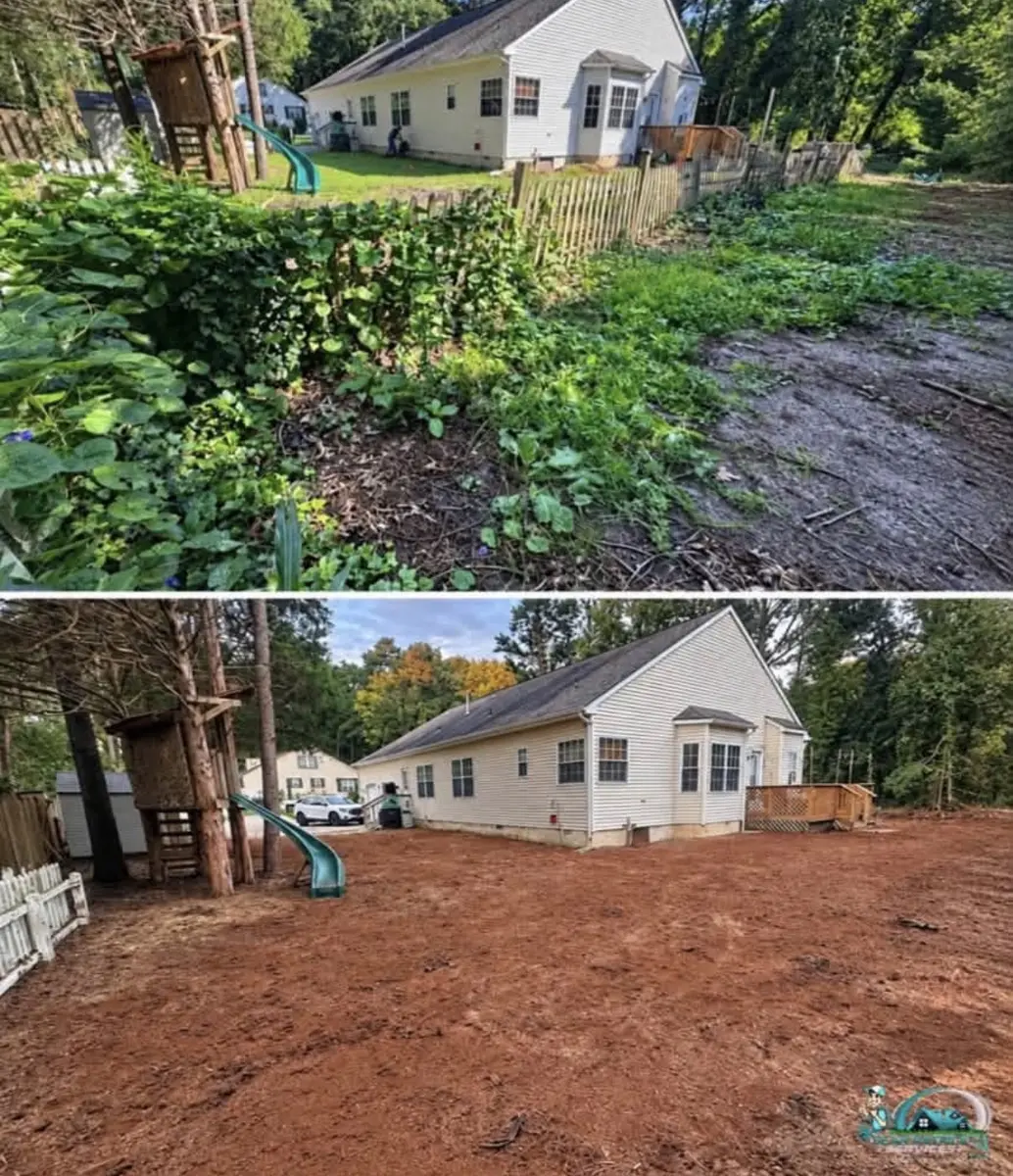
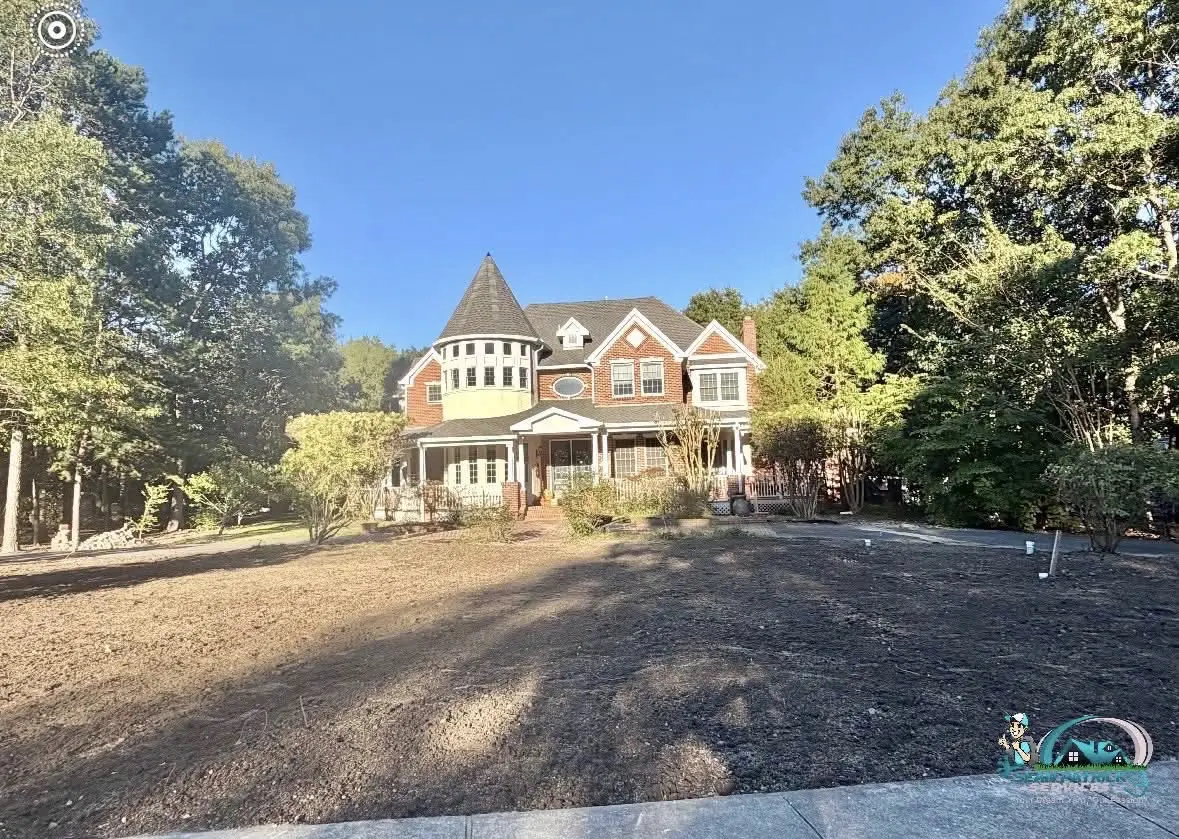
The before-and-after at the top of this page is a backyard we cleaned up, regraded and seeded. The photo above shows a yard that has been graded and is ready for seed. If you're deciding what goes on top once the grading is done, read our post on sod vs. seed for a new lawn in South Jersey.
When does a yard need a French drain instead of regrading?
Grading moves water across the surface. A French drain collects water and carries it underground. It is a trench lined with fabric, filled with stone, with a perforated pipe that moves the water to a spot where it can drain out or soak in.
A French drain makes sense when:
- There's no room to slope the ground, like a narrow side yard between two houses.
- Water is coming from uphill or from a neighbor's lot and needs to be caught before it reaches your yard or foundation.
- The soil stays soaked even after the grade is corrected.
One honest note for bayside yards: a drain only works if the water has somewhere lower to go. Where the water table is high, where the drain discharges matters as much as the drain itself, and we'll tell you at the estimate if a drain won't do much on your lot. A lot of yards end up needing both: regrading to move surface water and a drain to handle what the slope can't. We go deeper on this in our post on French drains and yard drainage in Atlantic County.
What affects the cost of grading and drainage work?
Every yard is different, so we price after we've walked it. These are the variables that matter most:
- Size of the area. Fixing one low corner is a much smaller job than reshaping a whole backyard.
- How much soil has to move. Including whether fill or topsoil has to be brought in.
- Access for equipment. Fences, gates and tight side yards can mean smaller machines or more hand work.
- Drain length and depth. Plus how far the water has to travel to a good discharge point.
- What's in the way. Roots, stumps, old concrete and buried debris all slow the dig.
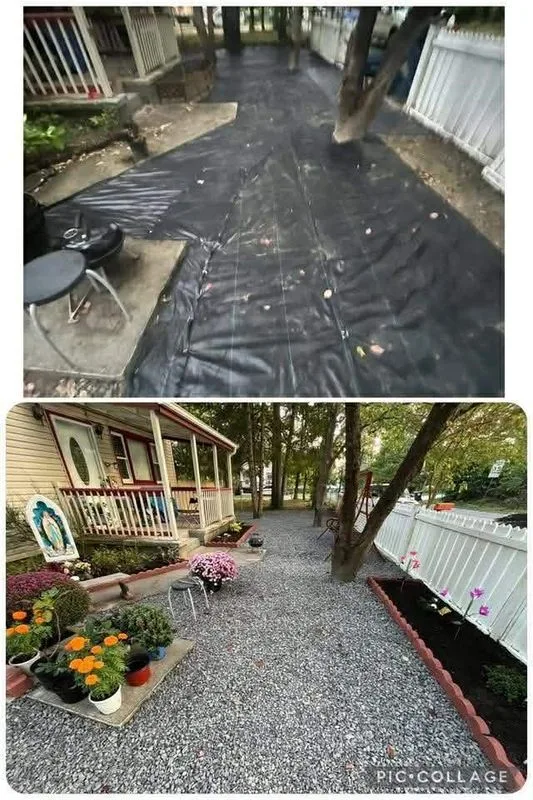
- Finish work. Seed, sod, planting beds or stone once the grade is set.
Fixing water problems early is almost always simpler than fixing them after they've damaged a patio, a walkway or a foundation. If you're planning hardscaping, get the grade right first. Our grading and excavation and drainage pages cover what we do, and the lawn care side helps keep the new seed or sod healthy once it's in.
Tired of the soggy corner? Call Sean at 609-783-5287 for a free estimate. We'll walk the yard with you, look at where the water is coming from and where it wants to go, and tell you plainly whether it needs grading, a drain, or both. We serve all of Atlantic County 7 days a week, 8am to 8pm, and we're fully licensed, insured and bonded. Prefer to write it out? Send us a message.