
Most people who call us about a new patio already have a picture in their head. Some want the clean, simple look of a poured slab. Others want the pattern and texture of pavers. Both can work in Atlantic County, but they behave differently in our soil and our winters, and that matters more than how they look in a catalog. This is how we explain the choice when we're standing in your backyard.
What is the real difference between a paver patio and a poured concrete patio?
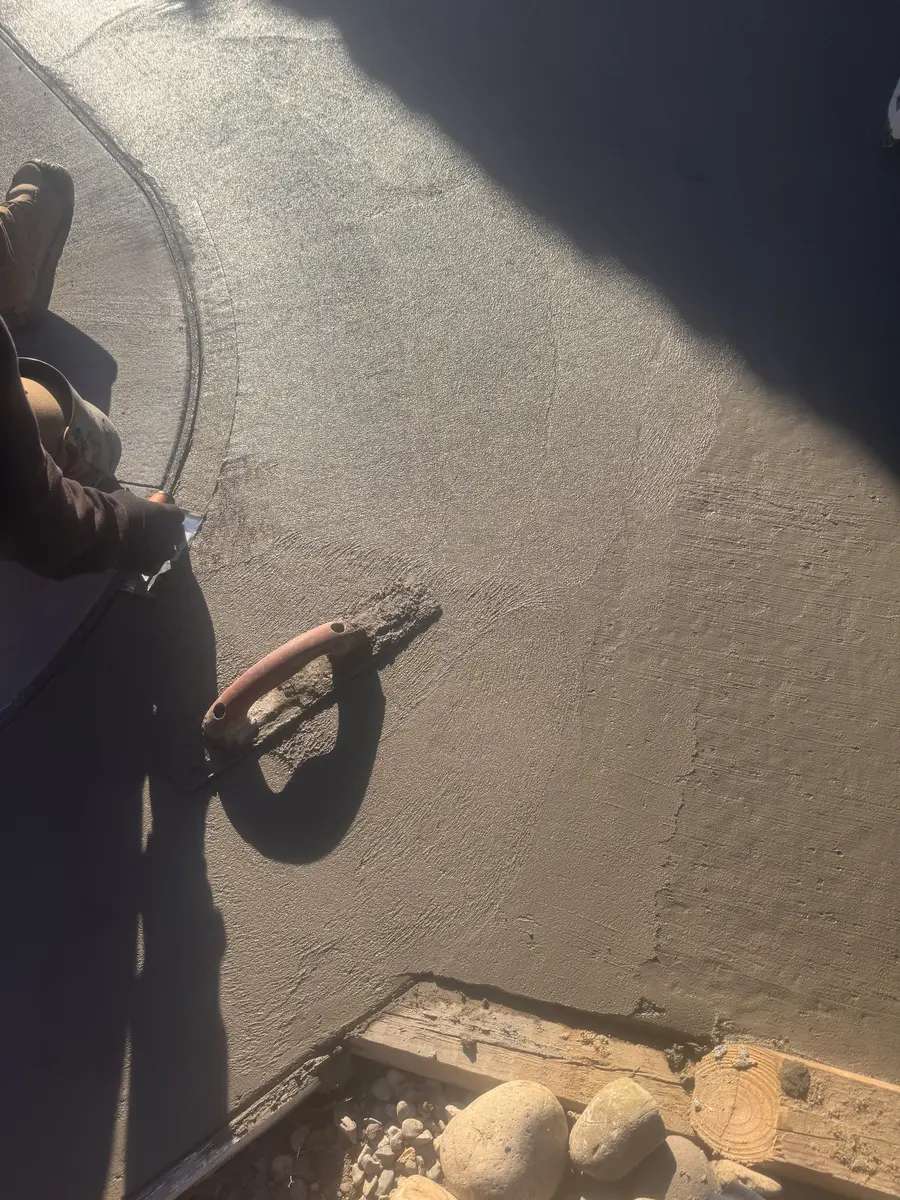
A poured concrete patio is one continuous slab. We dig out the area, build up and compact a base, set forms, pour, and finish the surface by hand. Once it cures it is a single rigid piece. Control joints get cut in so that when concrete does crack, it cracks in a straight line inside the joint instead of across the middle of the slab.
A paver patio is built from many individual pieces laid over a compacted gravel base and a bedding layer, held in place by edge restraint and locked together with joint sand. It is flexible on purpose. When the ground shifts a little, the pavers move with it instead of breaking.
That is the core trade-off. Concrete is one strong, stiff piece. Pavers are a lot of small pieces that can flex. Almost everything else in this decision comes back to that.
How do South Jersey soil and weather change the answer?
Near the bay and in the beach towns like Margate City, Ventnor City, Brigantine and Longport, the ground is mostly sand. Sand drains well, which helps both options, but loose sand settles if the base isn't compacted in layers. Yards close to the back bays also deal with a high water table, so the ground under a patio can stay wet after a storm. Further inland you can hit heavier soil or old fill that holds water longer, and that is where poor drainage shows up fast.
Then there's freeze-thaw. Our winters swing above and below freezing over and over. Water that gets under a patio freezes, expands and pushes up. A slab sitting on a weak, wet base can crack or heave. Pavers handle that kind of movement better because the units can shift slightly without breaking, and the joints let water drain through instead of sitting on top.
Salt is the other shore factor. Salt air and winter de-icing salt can wear on a concrete surface over time, especially if it was salted during its first winter. Pavers wear too, but a damaged paver is one piece you can pull and replace.
The common thread: whichever you pick, the base and the drainage decide how long it lasts. If water already sits where you want the patio, fix that first. Our drainage and grading and excavation work often comes before the patio itself.
Which one is easier to repair down the road?
Pavers win this one. If a section settles, a root pushes up a corner, or you need to run a line underneath for lighting, we can lift the pavers in that spot, fix the base and relay the same pavers. Done right, you'd have a hard time finding the repair.
Concrete repairs are harder to hide. A crack can be sealed, but you'll still see it. A badly settled or heaved section usually means cutting it out and pouring a new piece, and new concrete rarely matches the color of old concrete right away.
That doesn't make concrete a bad choice. A slab on a well-compacted base, with proper control joints and water draining away from it, gives you a flat, low-maintenance surface for a long time. It just means the prep has to be right the first time, because you can't easily go back under it later.
What affects the cost of a paver or concrete patio?
We don't post patio prices because no two yards are the same. These are the things that move the number up or down:
- Size and shape. A simple rectangle goes faster than curves, angles and borders that need a lot of cutting.
- Site prep. How deep we dig, whether an old patio or overgrown area has to come out first, and whether the yard needs regrading so water runs away from the house.
- Access. Whether equipment and material can get straight into the backyard or have to go through a narrow side gate.
- Materials and finish. Paver style, color and pattern, or the finish you want on poured concrete.
- Extras. Steps, retaining walls, lighting, and planting beds around the edges.
As a general rule, a basic poured slab takes less labor than a paver patio of the same size, because laying and cutting pavers is detail work. With pavers, that extra labor buys you more design options and easier repairs. The free estimate is where we put real numbers to your yard.
How do you decide which one is right for your yard?
Go with poured concrete if you want a clean, modern surface, the flattest possible footing for a table and grill, or a simple pad off the back door, and your yard drains well or can be graded to drain well.
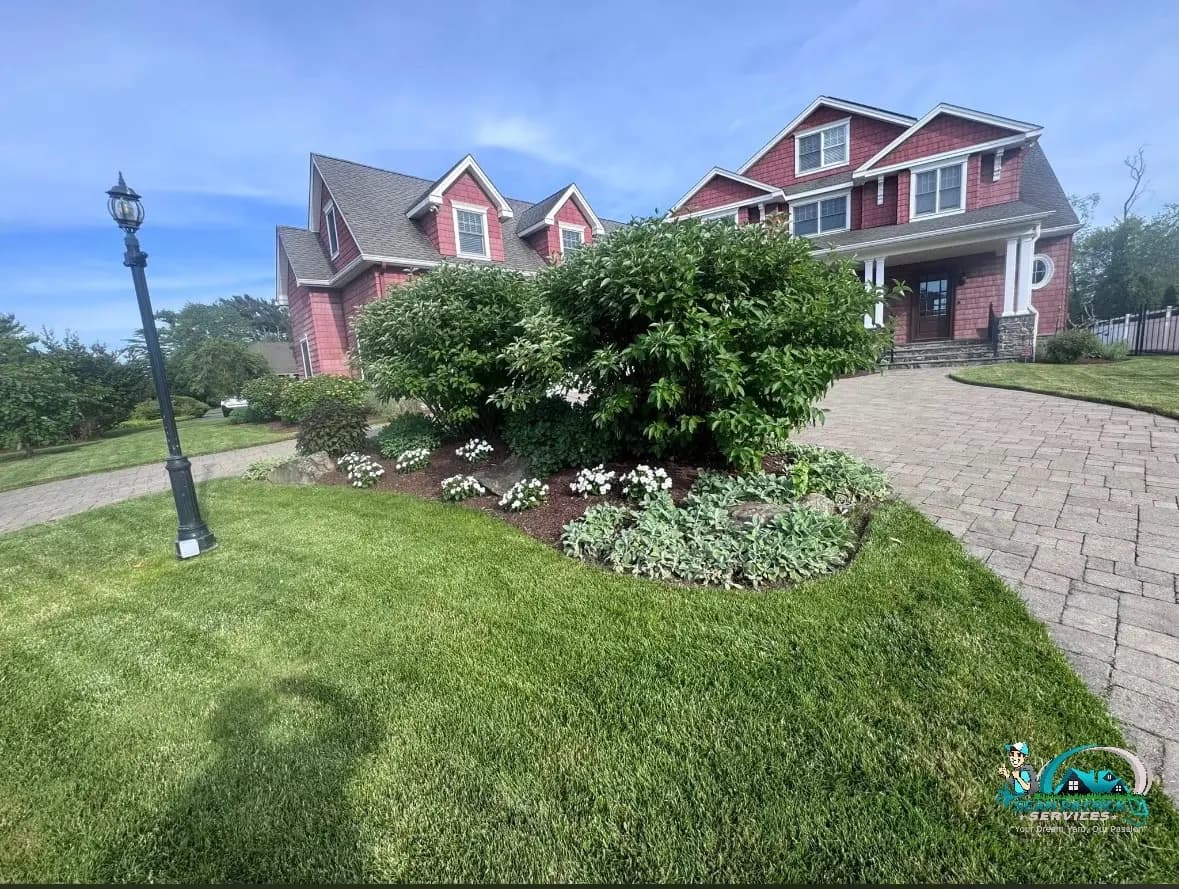
Go with pavers if you want pattern, color or curves, a patio that ties into a walkway, or the option to fix one spot later without tearing out the whole thing. They are also the safer bet where the ground has a history of moving.
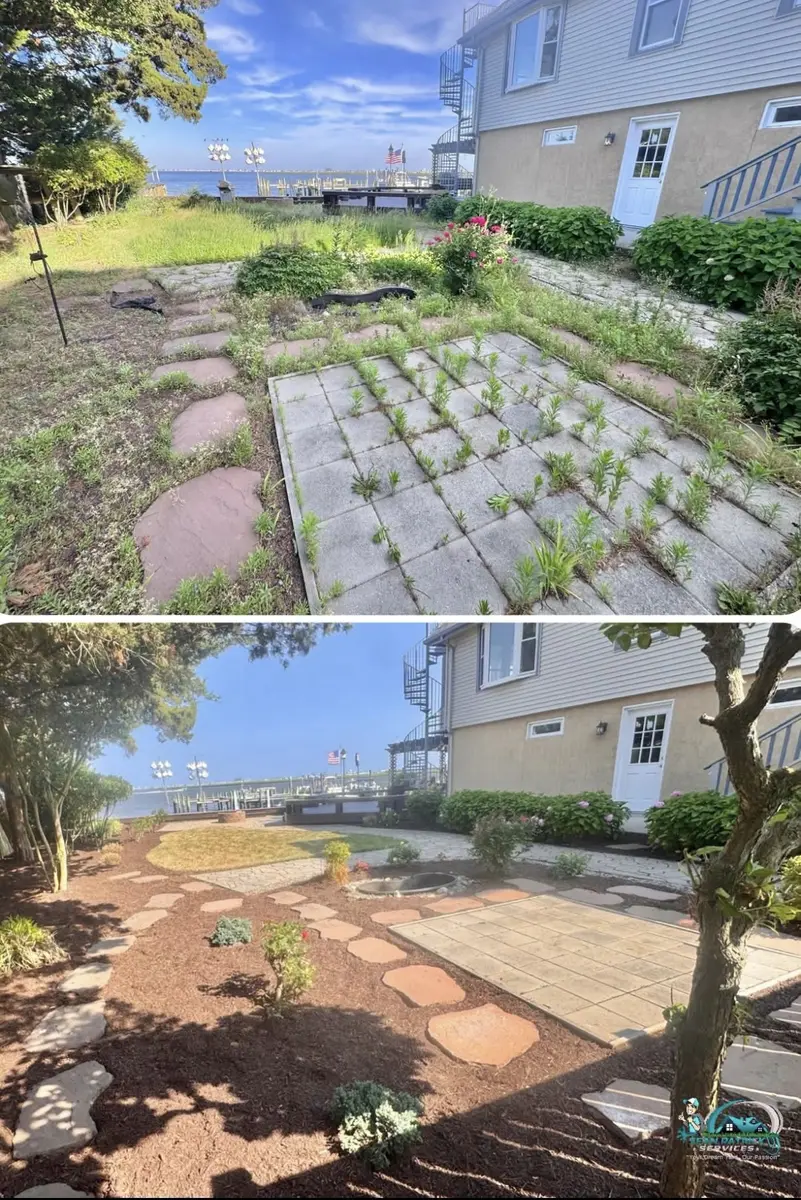
Plenty of yards end up with a mix: a concrete pad where you need flat and simple, and pavers or stone where you want character. Sometimes a stepping-stone path and gravel bed, like the bayfront yard above, is the better fit for the space than either one. You can see more finished work in our project gallery, read about decorative stone beds for shore yards, or browse our paver and retaining wall services.
Want a straight answer on pavers or concrete for your own yard? Call Sean at 609-783-5287 for a free estimate. We work 7 days a week, 8am to 8pm, across all of Atlantic County, and we're fully licensed, insured and bonded. You can also check out our paver installation and concrete pages or send us a message.