
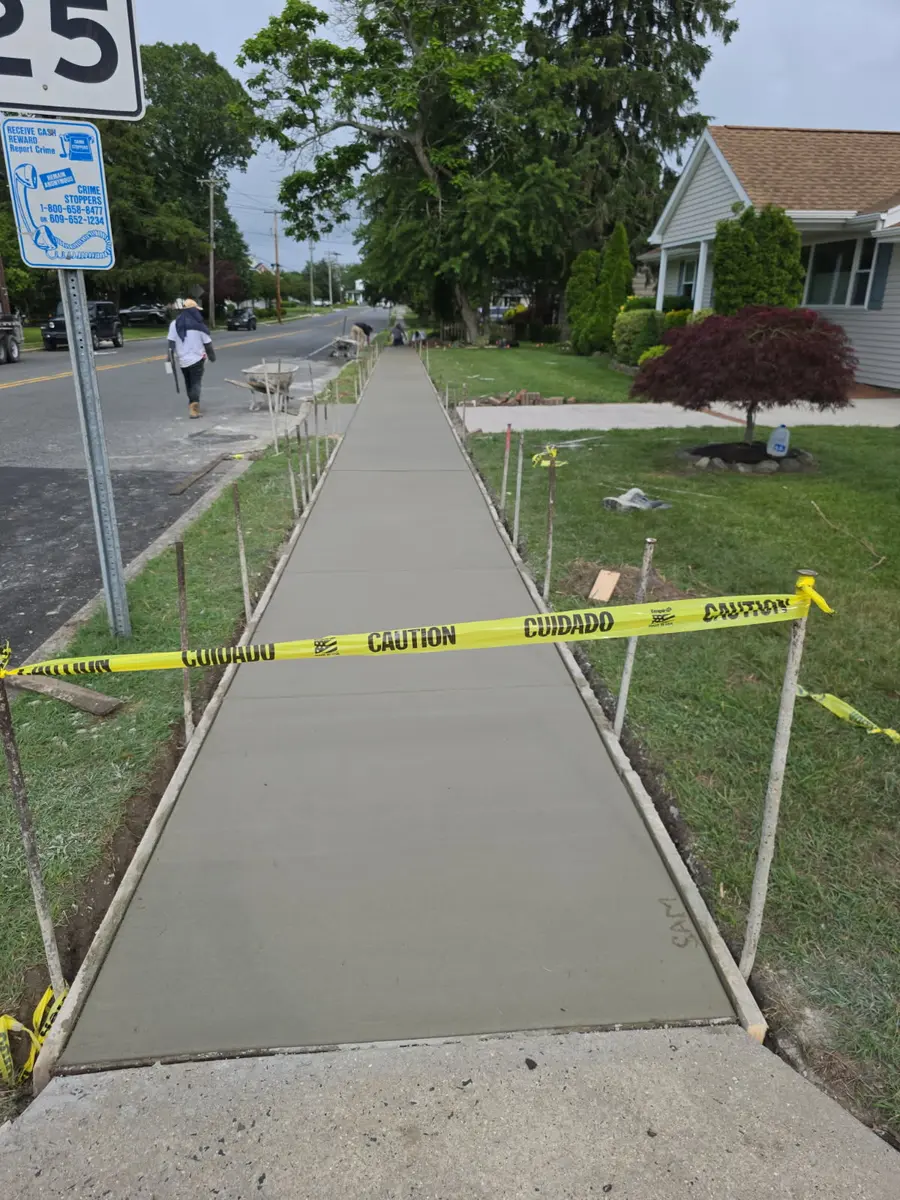
A slab that heaved up and trips people. A crack that gets wider every spring. A walkway that sank below the front step and holds a puddle every time it rains. Concrete in South Jersey takes a beating from freeze-thaw, tree roots and settling ground, and at some point patching stops making sense. Here's what replacing a sidewalk or walkway looks like, from the first call to the day you can walk on it again.
Should a cracked sidewalk be repaired or replaced?
Not every crack means a full tear-out. Thin cracks that aren't moving are mostly cosmetic. Replacement makes sense when:
- One side of a crack sits higher than the other and creates a trip edge.
- Slabs have sunk or tilted, or they're sending water toward the house.
- Tree roots have lifted sections.
- The surface is flaking or crumbling, which shows up a lot where rock salt gets used every winter.
- The same cracks keep getting worse after each winter.
Often we replace only the damaged sections instead of the whole run. Just know that new concrete won't match the color of old concrete right away, so if the damaged sections are scattered, replacing a full stretch can look cleaner.
Who is responsible for the sidewalk in front of your house?
This catches a lot of homeowners off guard. In many New Jersey towns, the public sidewalk in front of a house sits in the town's right-of-way, but the homeowner is often responsible for keeping it in repair. Replacing it can also require a permit from the town, and some towns have their own requirements for things like width, thickness or finish.
Rules vary from town to town, so check with your town before work starts. A walkway on your own property, like the path from the driveway to the front door or along the side yard, usually isn't handled the same way, but it's still worth a quick call if you're not sure.
How does a sidewalk replacement go, step by step?
- Estimate. We measure, look at what failed and figure out why, so the new concrete doesn't fail the same way.
- Break out and removal. The old concrete gets broken up and removed.
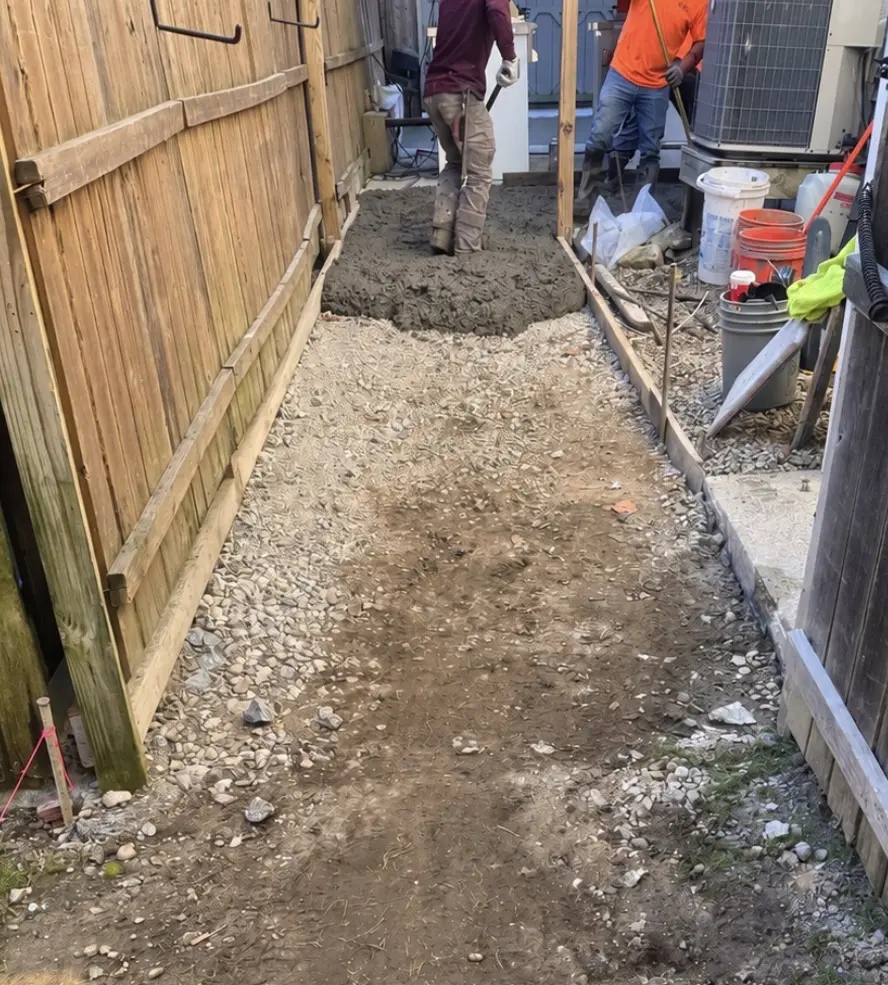
- Base prep. We dig to the right depth, deal with soft or wet spots, then bring in gravel and compact it.
- Forms. Wood forms get set to the right height and pitch so water runs off the finished walk instead of sitting on it.
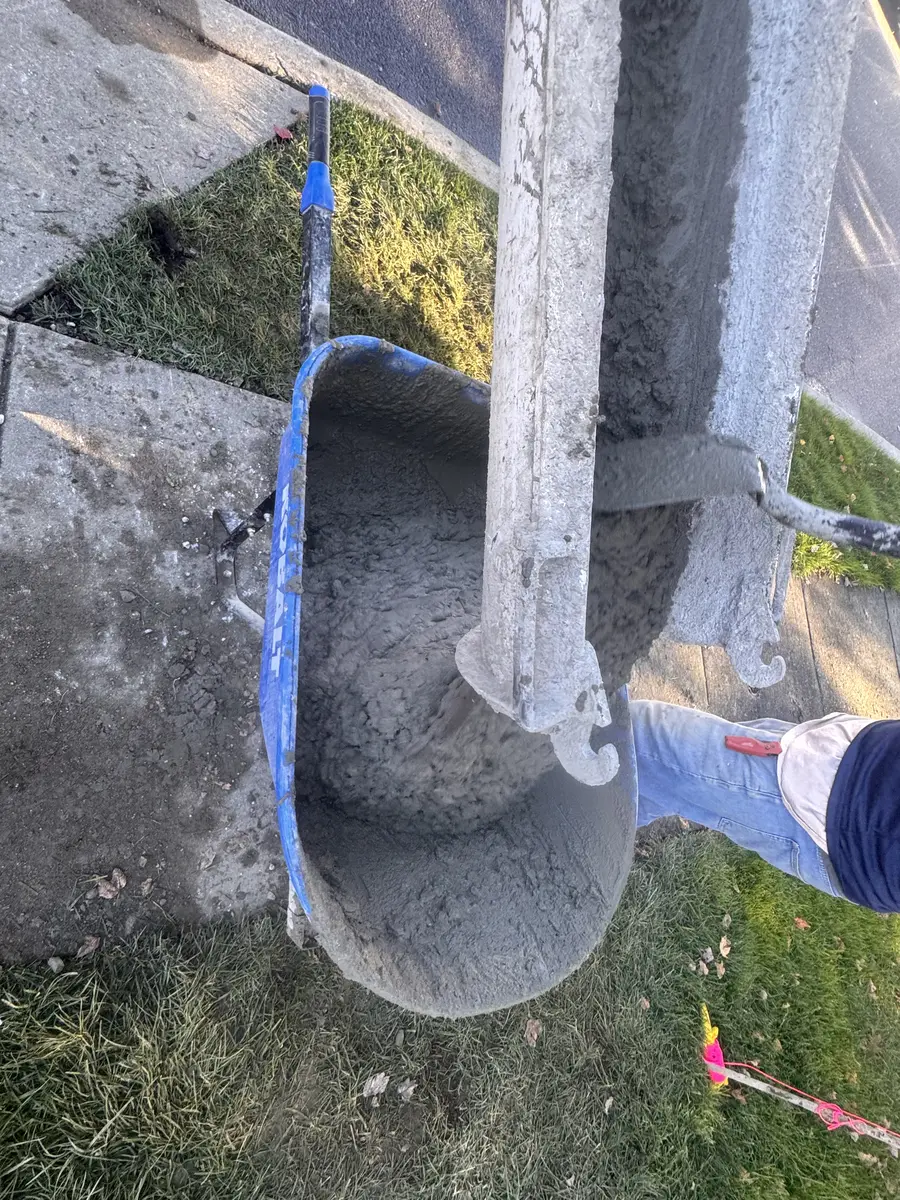
- Pour. Concrete comes off the truck chute into the forms, then gets spread and leveled.
- Finish. We float and hand-trowel the surface and edges, cut control joints, and add a broom finish for traction when it's wet.
- Cure. The area gets taped off while the concrete cures, like the public sidewalk at the top of this page.
Why does the base under the concrete matter so much?
When we tear out failed concrete, the problem is very often what was underneath it. Sandy shore soil drains well, but it shifts and settles if it isn't compacted. Heavier soil holds water, and water trapped under a slab freezes in winter and lifts it. A compacted gravel base gives the slab even support and lets water drain away instead of sitting under the concrete.
Control joints matter too. Concrete shrinks as it cures and moves with temperature changes. Joints cut at the right spacing give it a place to crack in a straight line, hidden in the joint, instead of across the middle of a slab. And the finished surface needs a slight pitch so rain runs off the walk and away from the foundation.
If tree roots lifted the old sidewalk, they can lift the new one. We'll talk about that at the estimate, and if it's a street tree, your town may have its own rules about it.
How long before you can walk or drive on new concrete?
The caution tape stays up for a reason. Fresh concrete needs time to gain strength, and foot traffic comes well before cars or anything heavy. The exact timing depends on the weather and the job, so we'll give you a timeline for yours. Until then, keep pets, bikes and delivery carts off it.
Weather plays a big part. Hot sun and wind can dry the surface too fast, and cold nights slow curing down, which is why late-fall pours need an eye on the overnight lows. For the first winter, skip the rock salt on new concrete and use sand for traction instead.
What affects the cost of sidewalk or walkway replacement?
We price every job after seeing it. The main variables are:
- Size. Total square footage and how many sections are being replaced.
- Demolition. How thick the old concrete is and what's inside it.
- Base work. How much digging, gravel and soft-ground repair the site needs.
- Access. Whether the truck chute can reach the forms or the concrete has to be wheeled in.
- Details. Steps, curves, tying into a driveway, or matching a town's requirements.
If water problems helped break the old walk, it may be worth looking at drainage or grading at the same time. For a different look, a paver walkway is another option. See more of our concrete work and other hardscaping.
Got a cracked sidewalk or a sunken walkway? Call Sean at 609-783-5287 for a free estimate. We serve all of Atlantic County 7 days a week, 8am to 8pm, and we're fully licensed, insured and bonded. You can also send us photos and a message to get started.