
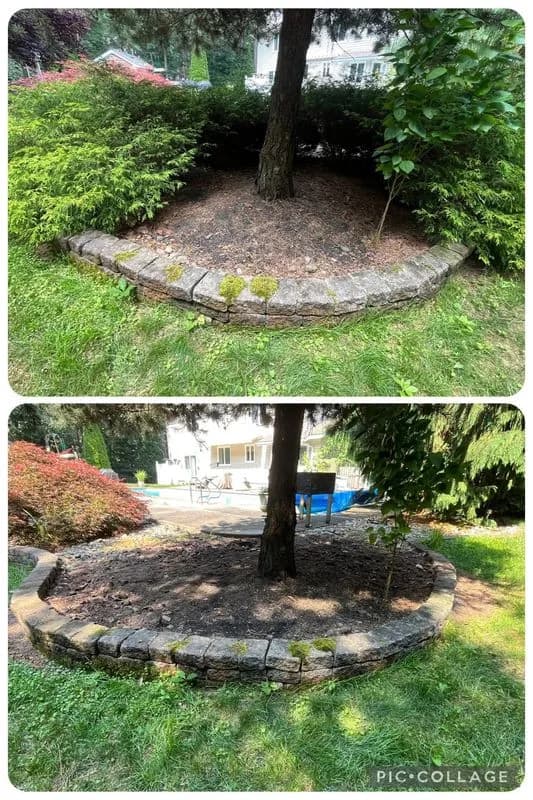
If your lawn looked clean on Saturday and had pale green spikes standing an inch above the turf by Wednesday, you have yellow nutsedge. Every July we get the same calls from Egg Harbor Township, Linwood, and Ventnor: the grass is fine, the mowing schedule has not changed, but something keeps shooting up out of it days after the mower goes through. Meanwhile the mulch beds that looked sharp in May are filling in with flat mats of spurge, fleshy purslane, and clover-looking oxalis. Mid-summer is when both problems arrive at once.
How do I know it is nutsedge and not grass?
Pull a blade and look at it in the sun. Nutsedge is glossy, almost waxy, a lighter yellow-green than the turf around it, and the blade folds into a sharp V down the middle. Roll a stem between your fingers: sedge stems are triangular, not round like grass. It also grows faster than your lawn, which is why it is invisible the day you mow and obvious three days later. If it looks like grass but stands a full inch taller than everything else by midweek, it is sedge.
Why does nutsedge thrive in Atlantic County yards?
Nutsedge wants two things: moisture and sun. Shore soil hands it both. Plenty of properties from Pleasantville out to Margate sit on sand over a clay or hardpan layer, so water drains fast through the top few inches and then stalls. The surface looks dry while the root zone stays damp, which is exactly what sedge is built for. Add a downspout dumping at the corner of a bed, an irrigation head that overlaps its neighbor, or a low spot that still holds water two days after a July thunderstorm, and you have mapped where the sedge shows up first. Fixing the grade or the drainage removes the invitation, and that is usually a landscape design conversation rather than a weed-control one.
Why does pulling nutsedge make it worse?
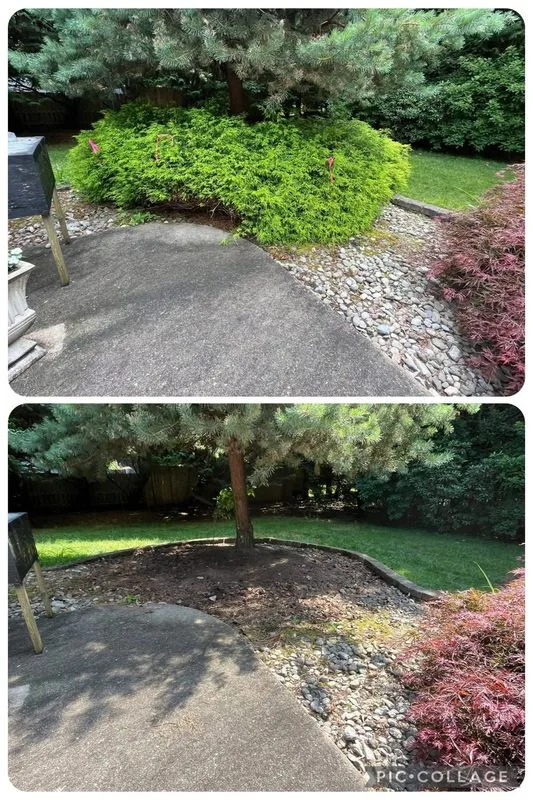
This is the part that surprises people. Nutsedge spreads underground through tubers, the little nutlets that give the plant its name. One established plant can carry dozens of them strung along rhizomes several inches down. When you grab the top and pull, the stem snaps, the tubers stay put, and the disturbance signals them to sprout. Pull one plant and you often get three back in the same square foot two weeks later. Hand-weeding works on almost everything else in your yard. On sedge it is a losing trade.
Why does regular weed control not touch it?
Because nutsedge is neither a broadleaf nor a grass. It is a sedge, its own family. The products that clean up dandelion, clover, and plantain have no mode of action against it, and a spring crabgrass pre-emergent does nothing to a tuber already sitting underground. It takes targeted nutsedge treatments applied to actively growing plants, usually more than once, so the material travels down into the tuber system instead of burning off the tops. Plan on a season or two of consistent applications rather than one visit. Timing drives the result here the same way it does in spring, which we covered in our post on crabgrass and weed control timing in NJ. Regular lawn care visits are what keep it from re-establishing once it is knocked back.
How deep should mulch be to stop bed weeds?
Two to three inches. Below two, enough light reaches the soil for spurge and purslane seed to germinate, and both are built for a hot July: spurge runs flat across warm bare ground, purslane stores water in its leaves and shrugs off the dry stretch that stresses everything around it. Above three or four inches you start smothering shallow shrub roots and holding moisture against stems. Mulch settles and breaks down roughly an inch a year, so a bed done last spring is probably sitting at an inch and a half right now. Top it up instead of burying the old layer, and pull existing mulch back off stems and crowns first. Our mulch installation guide for South Jersey walks through depth and prep in detail.
Do edging and pre-emergent actually help?
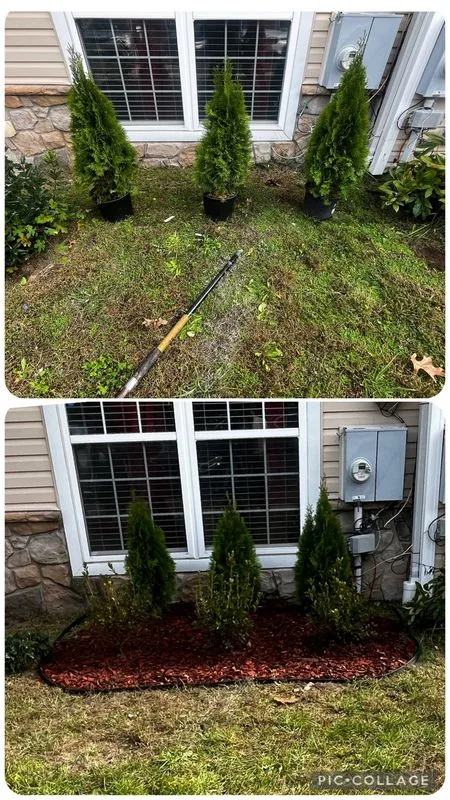
They are the cheapest insurance in the yard. A clean cut edge, whether a spade-cut trench or a solid steel or poly edge, does two jobs. It stops turf and its runners from creeping into the bed, which is where a surprising share of bed weeds start, and it holds mulch at depth instead of letting it wash into the lawn every time we take a shore downpour. A pre-emergent on the bed surface adds a second layer, blocking new seed from germinating for a few months. Neither one kills what is already growing, so the sequence matters: weed first, edge, treat, then mulch. In that order a bed stays clean for months. Out of order, you are back out there in three weeks.
When is a full bed cleanup better than weeding?
Use this rule: once you cannot see soil between the weeds, or once you have pulled the same bed twice already this summer, stop working one plant at a time. Spot-pulling at that stage only opens gaps for the next flush. A mid-summer bed cleanup resets everything in an afternoon: cut the edge, clear down to bare soil, treat, then re-mulch to depth. We run a lot of these in July and August in Linwood, Northfield, and Somers Point, usually on beds mulched thin in April that never had a chance. Anything allowed to set seed this summer is next summer's weed pressure, so clearing early pays you back twice.
If the sedge is winning or your beds have gotten away from you, get on the schedule before August. Call Sean Patrick Services at 609-783-5287 for a walkthrough of your lawn and beds, and check our service areas to confirm we cover your town across Atlantic County.