
If your lawn looked fine through spring and then fell apart in September, you probably did not have a drought problem. You had a grub problem, and it started back in June.
White grubs are one of the most common reasons good-looking lawns in Egg Harbor Township, Galloway, and Northfield collapse late in the season. The frustrating part is that by the time the damage shows, the window to prevent it closed two or three months earlier. Here is how the timing actually works in South Jersey and what to do about it.
What Exactly Are White Grubs?
White grubs are the larval stage of several beetles, most commonly Japanese beetles and masked chafers here in Atlantic County. The adults you see in July chewing holes in rose leaves, linden trees, and grape vines are the parents. They mate, and the females burrow an inch or two into moist turf to lay their eggs.
Those eggs hatch into small, C-shaped, cream-colored larvae with brown heads. They live in the top few inches of soil and eat one thing: grass roots. A newly hatched grub in early August does modest damage. By late September that same grub has grown considerably and cut away enough root mass that the turf above it has nothing anchoring it to the ground.
They feed through fall, burrow deeper to overwinter, feed briefly again in spring, then pupate and emerge as beetles in early summer to repeat the cycle. That one-year clock is exactly why timing matters more than product choice.
What Are the Warning Signs of a Grub Problem?
- Spongy turf. Grass that feels soft or springy underfoot, almost like walking on a thin mattress, usually means the root layer has been chewed loose.
- Patches that peel up like carpet. This is the giveaway. Grab a handful of brown turf and pull. If it lifts in a sheet with no roots attached, grubs took the roots.
- Skunks, raccoons, and crows digging. Animals tearing up your lawn overnight are not attacking the grass, they are eating what is underneath it. Heavy overnight digging in Somers Point and Linwood yards almost always traces back to a grub population.
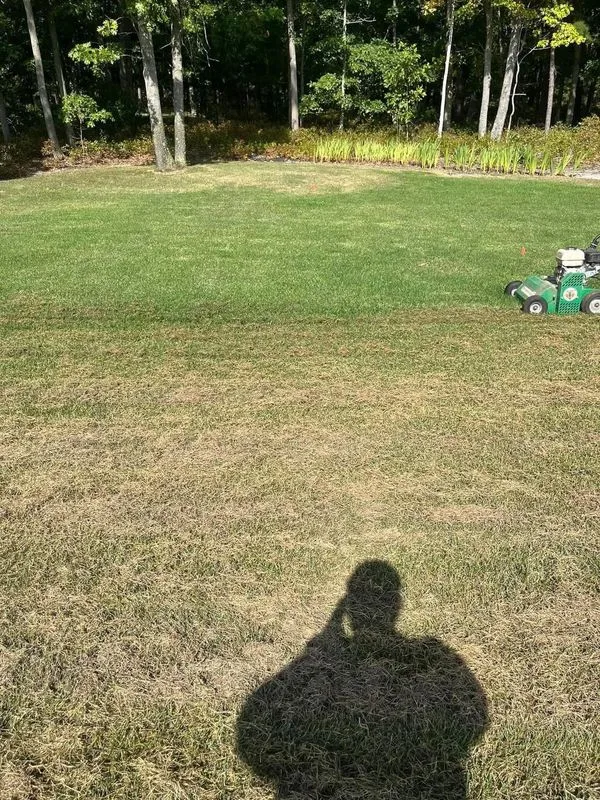
- Brown patches that ignore watering. Drought stress recovers after a good soaking. Grub damage does not, because there are no roots left to take the water up.
- Damage that spreads. Irregular patches that grow week over week through September and October rather than staying put.
Confirm it before you assume. Cut a one-foot square of sod on three sides, fold it back like a flap, and count what you find. A few grubs per square foot in dense, healthy turf is normal and not worth treating. Consistently finding eight, ten, or more, especially in thin areas, is a real treatment threshold.
Why Do Atlantic County Lawns Get Hit So Hard?
Two local factors stack against us.
The first is soil. Much of Atlantic County sits on sandy, fast-draining coastal plain ground. Sand is easy for a female beetle to push into when she is laying, and it is easy for larvae to move through. It also holds less water, so lawns here tend to be shallow-rooted to begin with. A grub only has to remove a small amount of root before the turf above it is in real trouble.
The second is irrigation. Beetles lay where soil stays consistently moist, because eggs dry out and fail in bone-dry ground. During a hot, dry stretch in late June, the greenest, best-watered lawn on the block becomes the most attractive egg-laying site on the block. Irrigated lawns in Egg Harbor Township and Galloway frequently take more grub pressure than the neglected lawn next door. That is not a reason to stop watering, it is a reason to plan on prevention. Our guide to summer lawn maintenance in Atlantic County covers how to water deeply without creating other problems.
When Should Grub Control Actually Go Down?
Early to mid summer. That is the whole answer.
Preventive grub treatments work on newly hatched, very small larvae. The material needs to be watered into the root zone and already in place before eggs hatch, which in South Jersey generally means applying in June or July while adult beetles are still flying and laying. Put it down in that window and hatching grubs feed on treated roots and never build a damaging population.
Wait until you see damage and you have missed it. By September you are in curative territory: a shorter list of options, larger and tougher grubs, and a lawn that is already thin. Curative treatments have a place and they do stop active feeding, but they do not bring dead turf back. You still have to rebuild what was lost.
This is also why grub timing belongs inside a season-long plan rather than a panic phone call in October. A structured fertilization program puts someone on your property at the right points in the year, which is how the preventive window gets hit instead of missed. Our lawn care programs are built around that calendar.
What If the Damage Is Already Done?
Control the population, then rebuild the lawn. Skipping the second half is the mistake most homeowners make. Killing grubs in October does not regrow roots, and dead patches left alone become the crabgrass and nutsedge you fight next June.
Fall is the right time for repair in New Jersey, and the timing lines up neatly. Cool nights, still-warm soil, and more reliable moisture make September and October the strongest seeding window of the year for cool-season grass.
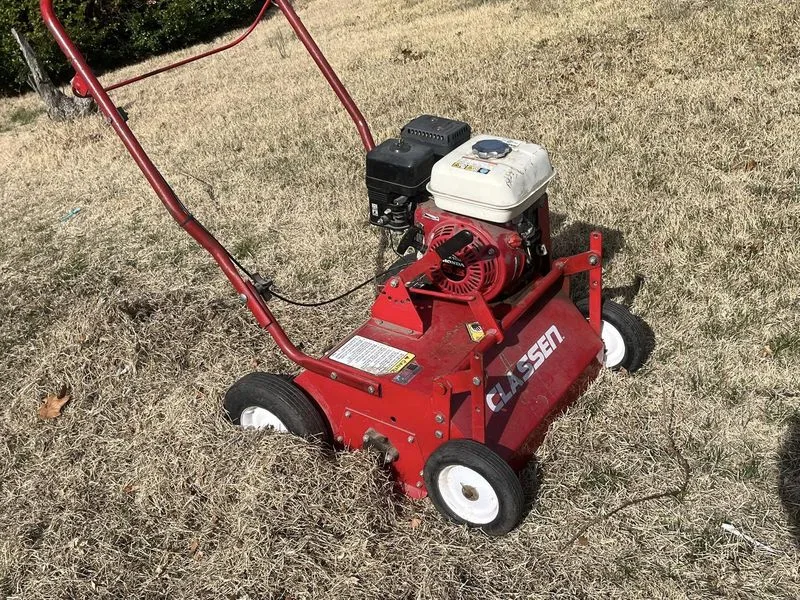
Core aeration pulls plugs from compacted soil, opens the root zone, and gives new seed somewhere to make real contact. Following it with power seeding places seed directly into the soil rather than on top of it, which matters a lot on sandy ground where broadcast seed dries out and washes or blows off. For thin, grub-chewed lawns, that combination accomplishes more in one fall than a whole spring of spot patching. We lay out the full schedule in our guide on when to aerate and overseed a New Jersey lawn.
Should You Handle Grub Control Yourself?
Homeowner products exist and some people get results with them. Two things usually trip people up. The first is timing, which we have already covered. The second is watering in: most preventive materials do nothing sitting on top of the grass blades and have to be irrigated down into the root zone shortly after application.
New Jersey also regulates lawn applications more tightly than most states, including what can be applied and when. Sean is a NJ Certified Fertilizer Applicator, and treatments on our programs are handled by properly licensed applicators following state rules. If you are not certain what you are allowed to put down or at what point in the season, that alone is a good reason to hand it off.
If beetles are already showing up around your yard, this is the month to act rather than the month to wait and see. Call Sean Patrick Services at 609-783-5287 for a look at your lawn and a straight answer on whether preventive grub control makes sense for your property. We cover Egg Harbor Township, Galloway, Northfield, Linwood, Somers Point, and the surrounding towns listed on our service areas page.